
2027 ICD-10-CM Changes: Avoid Costly Coding Errors

The federal fiscal year (FY) 2027 ICD-10-CM code set took effect October 1, 2026, and it is already reshaping claims. The 2027 ICD-10-CM changes — the new, revised, and deleted diagnosis codes in this release — show up as rejections and denials wherever deleted codes still sit in templates or documentation falls short. A strong Revenue Cycle Management Services process, built on solid revenue cycle management (RCM) habits, catches these gaps early. This guide covers the codes that matter most by specialty, why they trigger denials, five steps to reduce coding errors, a timeline, and whether to handle it in-house or outsource it.
What Are the 2027 ICD-10-CM Changes, and When Do They Take Effect?
The FY 2027 update to ICD-10-CM, the diagnosis set the CDC maintains, took effect October 1, 2026, and applies through September 30, 2027. The fiscal year runs October through September and is named for the year it ends, which is why “2027” codes arrived in October 2026, not January. The date of service decides which version applies: dates before October 1 use FY 2026 codes; dates on or after use FY 2027, with no grace period.
For small practices — lean staff, shared duties, reliance on an EHR vendor for updates — the 2027 ICD-10-CM changes for small practices often arrive with no compliance team watching. This release covers new, revised and deleted ICD-10-CM codes only; CPT and ICD-10-PCS are separate sets. HIPAA applies ICD-10-CM to every covered entity, so every payer expects it. Full detail is on CDC’s National Center for Health Statistics ICD-10-CM files page.
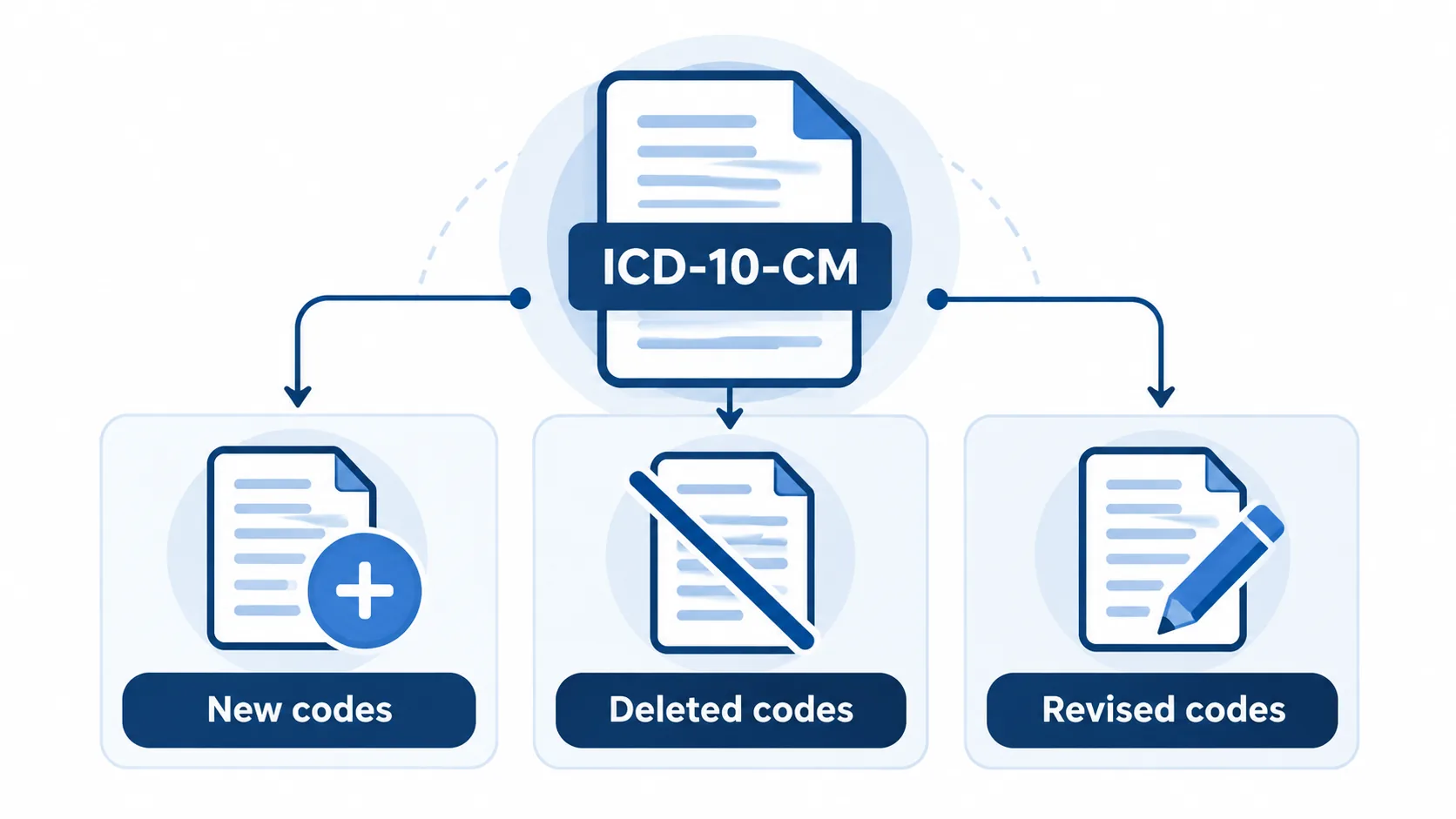
2027 ICD-10-CM Changes by Specialty: New, Revised and Deleted Codes
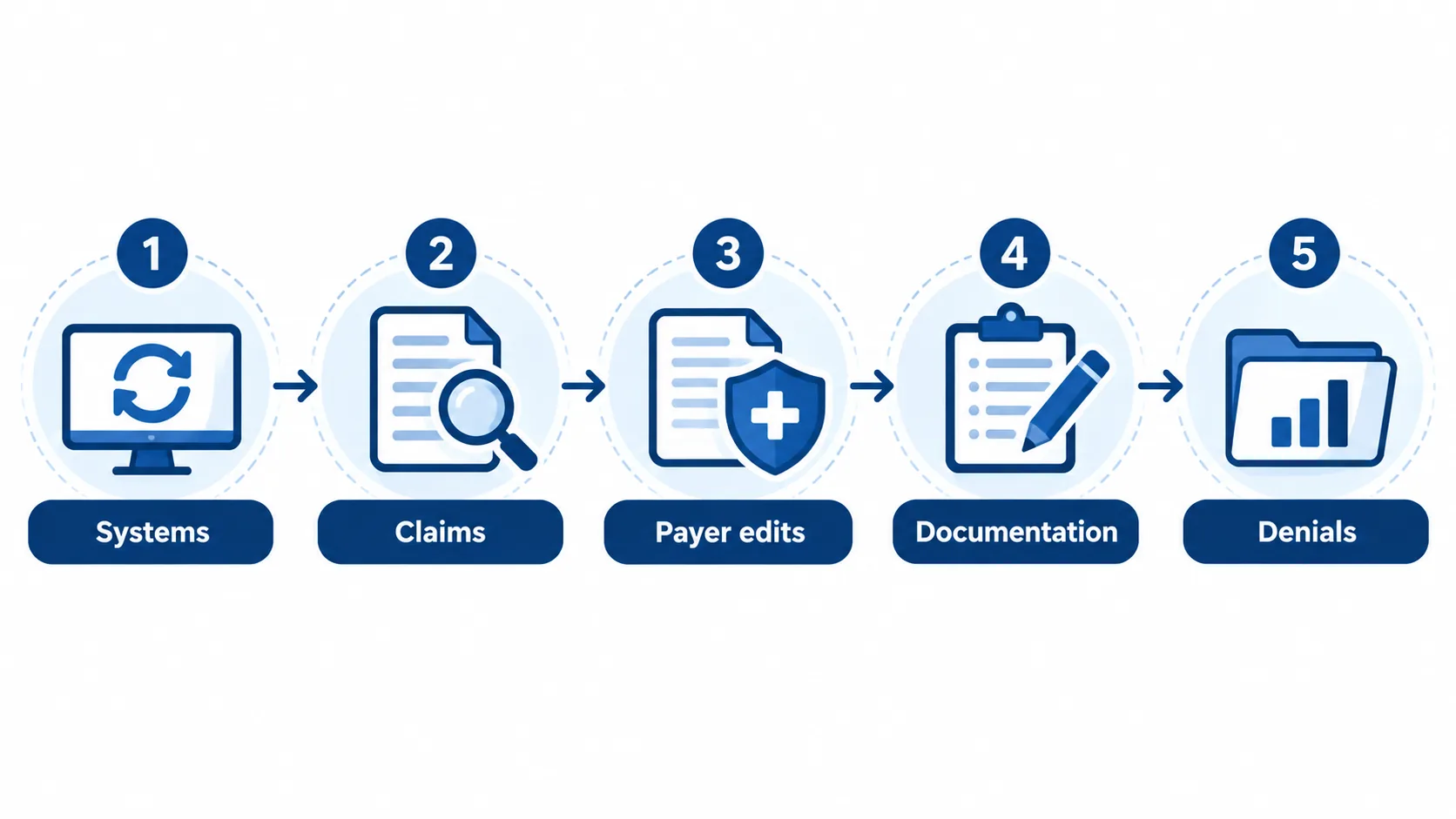
The 2027 ICD-10-CM changes took effect October 1, 2026, adding 190 new diagnosis codes, deleting 30, and revising four. To reduce rejections and denials, practices should update systems, scrub claims against the new code set, check payer edits, train providers on documentation specificity, and track denials.
These totals come from the CMS and CDC release, as reported by ACDIS; confirm every code below against the official FY 2027 addendum before it reaches a claim.
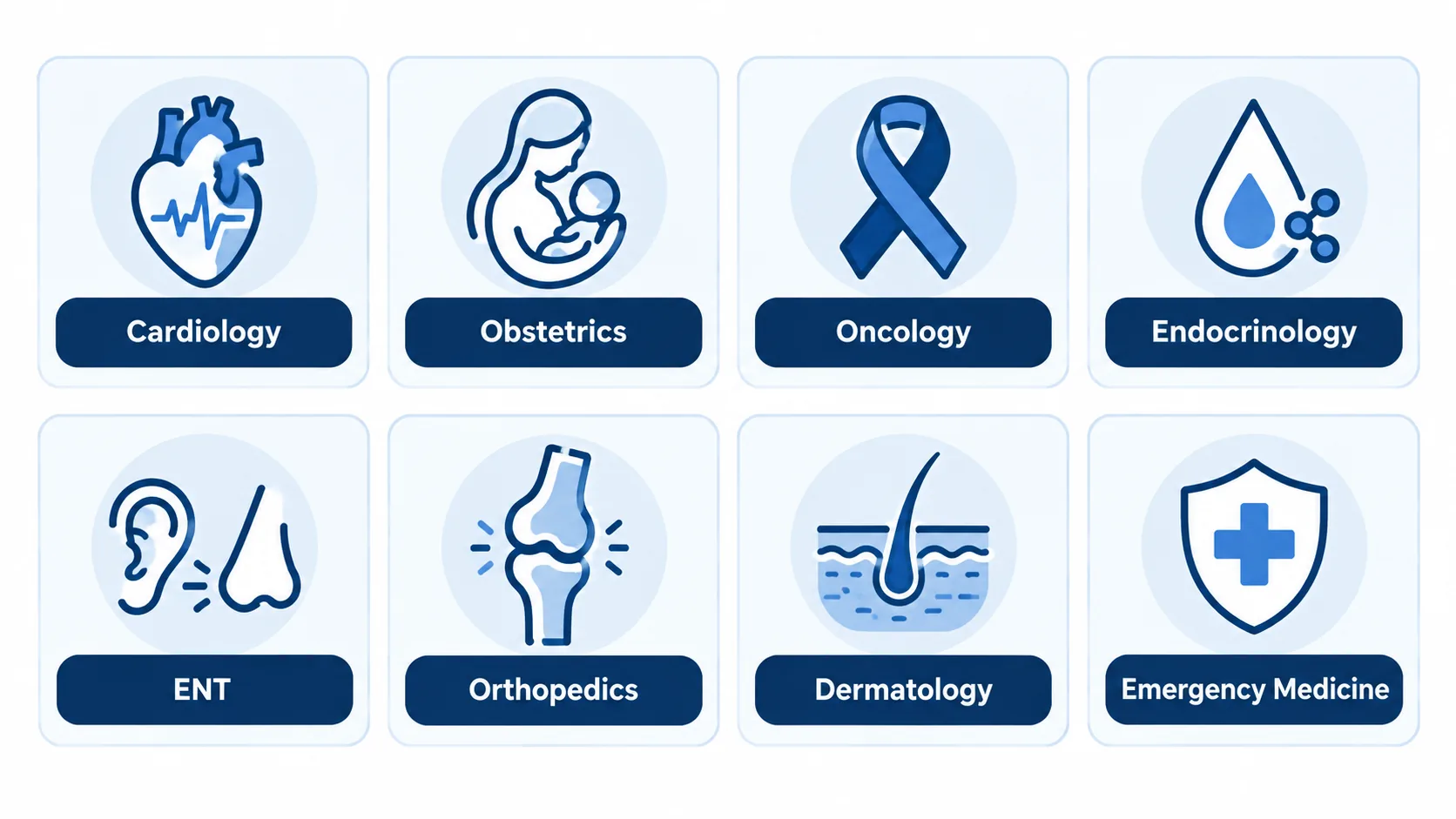
Cardiology
Cardiology sees two notable deletions. I42.0, for dilated cardiomyopathy, was replaced by I42.00 (unspecified), I42.01 (familial or genetic), and I42.09 (other). I49.8, for other specified cardiac arrhythmias, gives way to I49.81 (Brugada syndrome), I49.82 (ventricular bigeminy), and I49.89 (other specified). Any template still carrying I42.0 or I49.8 for a date on or after October 1, 2026, needs an update, with documentation noting the specific type when known.
Obstetrics and Maternal-Fetal Medicine
Obstetric and maternal-fetal medicine coding picks up a new category, O31.4-, for continuing pregnancy after vanishing twin syndrome affecting one fetus or more, with codes that vary by trimester. Documentation stating the trimester and the vanishing twin history supports accurate selection here. Older pick lists have no matching entry, so practices managing these cases should confirm their systems carry the new codes.
Oncology
Oncology gains three site-specific secondary malignancy codes: C78.31 for the larynx, C78.32 for the pharynx, and C79.83 for the oral cavity. Each requires the record to name the metastatic site directly; a coder cannot select one from a general mention of metastatic disease. Practices treating head and neck cancers should flag these for oncology providers and update related templates.
Endocrinology and Primary Care
Endocrinology and primary care see two additions worth noting. E89.830 and E89.838 cover post-bariatric hypoglycemia, under category E89.83, while Z68.18 and Z68.19 add adult body mass index ranges of 18.4 or less and 18.5 to 19.9. Practices that see these diagnoses often should update pick lists accordingly and confirm each code’s reporting requirements in the Official Guidelines for Coding and Reporting, since BMI and post-bariatric codes carry their own sequencing rules.
Otolaryngology (ENT)
Otolaryngology gains subcategory J34.83- for odontogenic sinusitis, with a sixth character identifying the affected sinus — J34.830, for example, reports the maxillary sinus. Documentation must identify which sinus is involved. Practices treating dental-related sinus infections should review their templates for this new level of detail.
Orthopedics
Orthopedics loses the S23.420- series for sternoclavicular sprain, deleted in this release. The addendum lists the replacement codes directly; coders should not guess at a mapping from memory. Practices billing shoulder and clavicle injuries should pull the addendum before the next claim with this diagnosis goes out.
Dermatology
Dermatology sees revised descriptions, not new codes, for L02.232 (carbuncle of back), L03.312 (cellulitis of back), and L03.322 (acute lymphangitis of back); each now clarifies that “back” excludes the flank. A new code, L02.237, reports carbuncle of the flank. Practices documenting trunk infections should confirm which body region the record supports.
Emergency Medicine and Other Specialties
Emergency and occupational medicine gain new toxic effect codes in subcategory T52.82- for cycloparaffins, where a seventh character identifies the encounter type. Specialty societies often publish their own coding guidance; the American Society of Interventional Pain Physicians is one example worth checking. Practices adding a provider this fiscal year should also budget for credentialing cost, since enrollment runs alongside code updates.
Why the Code Update Leads to Claim Denials
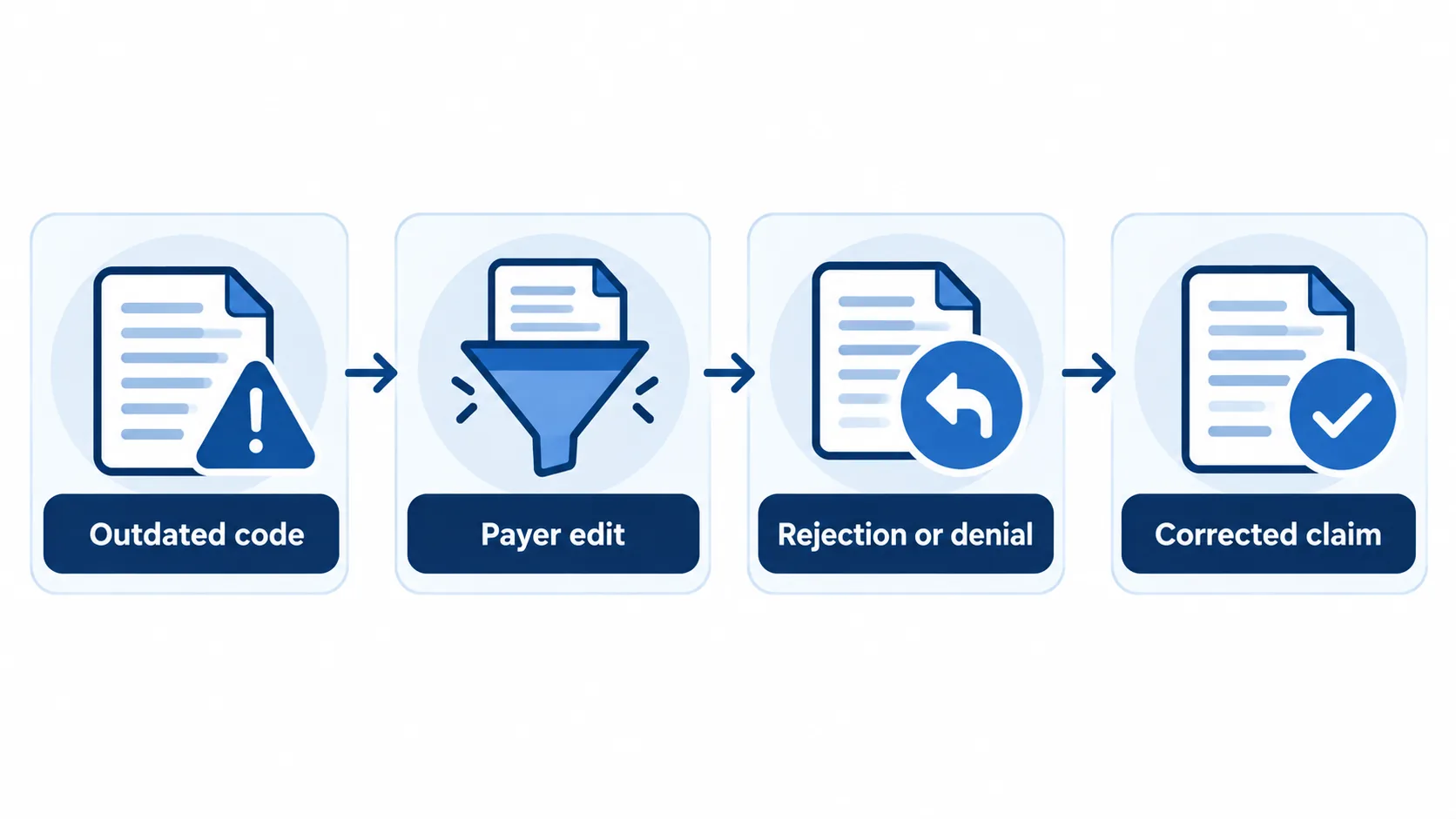
A claim often fails when its diagnosis code is no longer valid for the date of service, lacks the specificity a payer requires, or falls out of step with coverage edits. Deleted codes left in templates — I42.0 is a common example — keep generating claims a payer will not recognize. Thin documentation forces an unspecified diagnosis code, tying deleted ICD-10-CM codes and claim rejections to provider notes.
A rejection returns before adjudication, often from the clearinghouse, while a denial is adjudicated and reported with a claim adjustment reason code (CARC). Payers cite CARC 146 for a diagnosis invalid for the date of service, CARC 11 when it does not support the procedure, and CARC 167 when it is not covered. X12 maintains the list — worth knowing before the 2027 ICD-10-CM changes pile up.
5 Steps to Avoid Costly Coding Errors and Claim Denials
Work these steps in order, starting with systems — nothing downstream is reliable until the new code set is installed. Here is how to avoid coding errors.
1. Update Your EHR, Practice Management System and Clearinghouse
Confirm with your EHR, practice management system, claim scrubber, and clearinghouse vendors that the FY 2027 set is installed, and get the version date in writing. This is the moment to update EHR for new ICD-10-CM codes in every pick list and template, while keeping FY 2026 codes available for earlier dates of service. CMS’s ICD-10 codes page hosts the FY 2027 files. Test a September claim and an October claim to confirm each validates correctly.
2. Scrub Claims Against the FY 2027 Code Set
Hold any claim dated October 1 or later that was created before the update went live, and run it through your claim scrubber diagnosis edits. The scrubber checks validity against the date of service and applies National Correct Coding Initiative procedure edits, which update quarterly. Valid codes protect your clean claim rate, and a clearinghouse rejection deserves same-day attention. Done means no October-or-later claim still carries a deleted code.
3. Check Payer Edits and Coverage Code Lists
Local coverage determinations (LCDs), national coverage determinations (NCDs), and related coding articles list the diagnoses that support medical necessity, and those lists shift whenever the code set changes — payer edits and LCD code lists do not always move on the same calendar. Check the Medicare Coverage Database for policies covering your highest-volume procedures, and ask commercial payers how their edits will reflect the new codes. Done means your top procedures’ diagnoses appear on the applicable list.
4. Train Providers on Documentation Specificity
Review the FY 2027 Official Guidelines for Coding and Reporting alongside the codes your specialty relies on most, then show providers where the new codes call for more detailed clinical documentation. Specificity should reflect the clinical picture the record supports, never detail added to chase a higher code — an unspecified diagnosis stays appropriate when the chart does not justify more. Done means every provider has reviewed their changes and templates prompt for the new detail.
5. Track Denials and Fix Root Causes
Group every rejection and denial by its CARC and remark code, trace each back to code validity, specificity, medical necessity, or a lagging payer edit, and keep ICD-10-CM denial monitoring running against your denial rate and clean claim rate. Correct and resubmit within each payer’s corrected-claim window; Medicare fee-for-service applies a one-calendar-year timely filing limit under its Claims Processing Manual, though other payers vary. Done means each recurring denial reason carries a named owner and a fix date.
When to Act: A 2027 ICD-10-CM Changes Timeline
The right move is to act now: the new codes already apply, and the first weeks after go-live tend to reveal where systems and payer edits fall short. This ICD-10-CM update timeline spreads the work across four months. Diagnosis codes work alongside procedure codes, and the American Medical Association’s CPT code set updates each January 1 to support medical necessity on the same claims.
| Month | Priority Tasks | Steps |
|---|---|---|
| October | Confirm code tables are live, scrub claims, work rejections | 1, 2 |
| November | Review payer edits and coverage lists, start provider training | 3, 4 |
| December | Track denial reasons, fix templates and pick lists, retrain where gaps remain | 4, 5 |
| January | Check quarterly coverage updates and January 1 CPT changes | 3, 5 |
Keep Code Update Work In-House or Outsource It?
There is no universal answer; whether outsourced billing fits better depends on claim volume, denial trends, staff stability, EHR vendor reliability, and spare capacity during a window like this one.
In-house billing still makes sense with a stable coding team, a reliable EHR vendor, and solid denial tracking in place. Outsourced billing fits better with frequent turnover, a growing rework queue, or too little capacity after October 1. Staffing costs factor in; MGMA’s 2026 Management and Staff Compensation Data Report tracks compensation trends without pointing to one answer. Comparing medical billing pricing models is a useful next step.
A mental health billing cost comparison on the TMS Billings blog offers one worked example of how in-house and outsourced cost categories stack up, which can help frame the decision for your own specialty.
How TMS Billings Supports Your ICD-10-CM Update Readiness
TMS Billings’ medical billing support team handles claim scrubbing and coding review, electronic remittance advice (ERA) and denial follow-up, accounts receivable (A/R) follow-up, credentialing coordination, and monthly KPI reporting.
Outsourced denial follow-up can add capacity during a window like this, without promising a specific outcome, and many practices bring in extra RCM support for the 2027 ICD-10-CM changes without pulling staff off other duties. The team also coordinates Credentialing Services for practices adding providers this fiscal year — a fit for teams wanting extra capacity or an independent review, not a judgment on in-house teams already working well.
In one hypothetical scenario, a small multi-provider practice compared its most-used diagnosis codes with the FY 2027 addendum. The billing team updated EHR pick lists, asked providers to document specific causes, and reviewed the first week of claims for rejections, catching one outdated code still stored in a template.
Key Takeaways
- The code set version follows the date of service, with no grace period for late claims.
- Update your EHR, scrubber, and clearinghouse first, then replace every deleted code in templates.
- Check payer edits and coverage code lists often, since they can lag behind the new codes.
- Document to the specificity the medical record actually supports, never beyond it.
- Tracking the 2027 ICD-10-CM changes by specialty helps your team catch gaps before a denial does.
Related reading: medical billing services cost in California and medical billing services cost in Texas.
Final Thoughts
Your practice does not need to treat the 2027 ICD-10-CM changes as a one-time project finished on October 1; the codes, the payer edits around them, and your documentation habits will keep settling into place for months. Payer rules vary, so confirm every code example here against the official FY 2027 files and the Official Guidelines for Coding and Reporting before relying on it for a real claim. For a second set of eyes on where things stand, Book a Free Consultation.