
Medical Billing Services Cost Texas: The Complete 2026 Pricing Guide
Written by: TMS Billings Coding & Compliance Team — a group of certified professional coders and billers (CPC, CPB) with more than 12 combined years managing revenue cycle operations for Texas medical practices, including primary care, behavioral health, and multi-specialty clinics.
Reviewed by: Jacob White, CPC, CPCO — Director of Compliance, TMS Billings
Three billing quotes are sitting on a Texas practice manager’s desk: one at 4% of collections, one at 7%, and one flat $2,500 a month. Medical billing services cost Texas practices anywhere from a few hundred dollars a month to well over ten thousand a year, and the lowest number on the page isn’t automatically the better deal. A 4% vendor that collects slowly or doesn’t know Texas Medicaid rules can cost more in lost revenue than a 7% company that gets claims paid the first time.
This guide breaks down the real pricing models Texas billing companies use, what pushes a quote up or down in this state specifically, and what a fair quote should include before anyone signs anything.
Medical Billing Services Cost Texas: Quick Answer
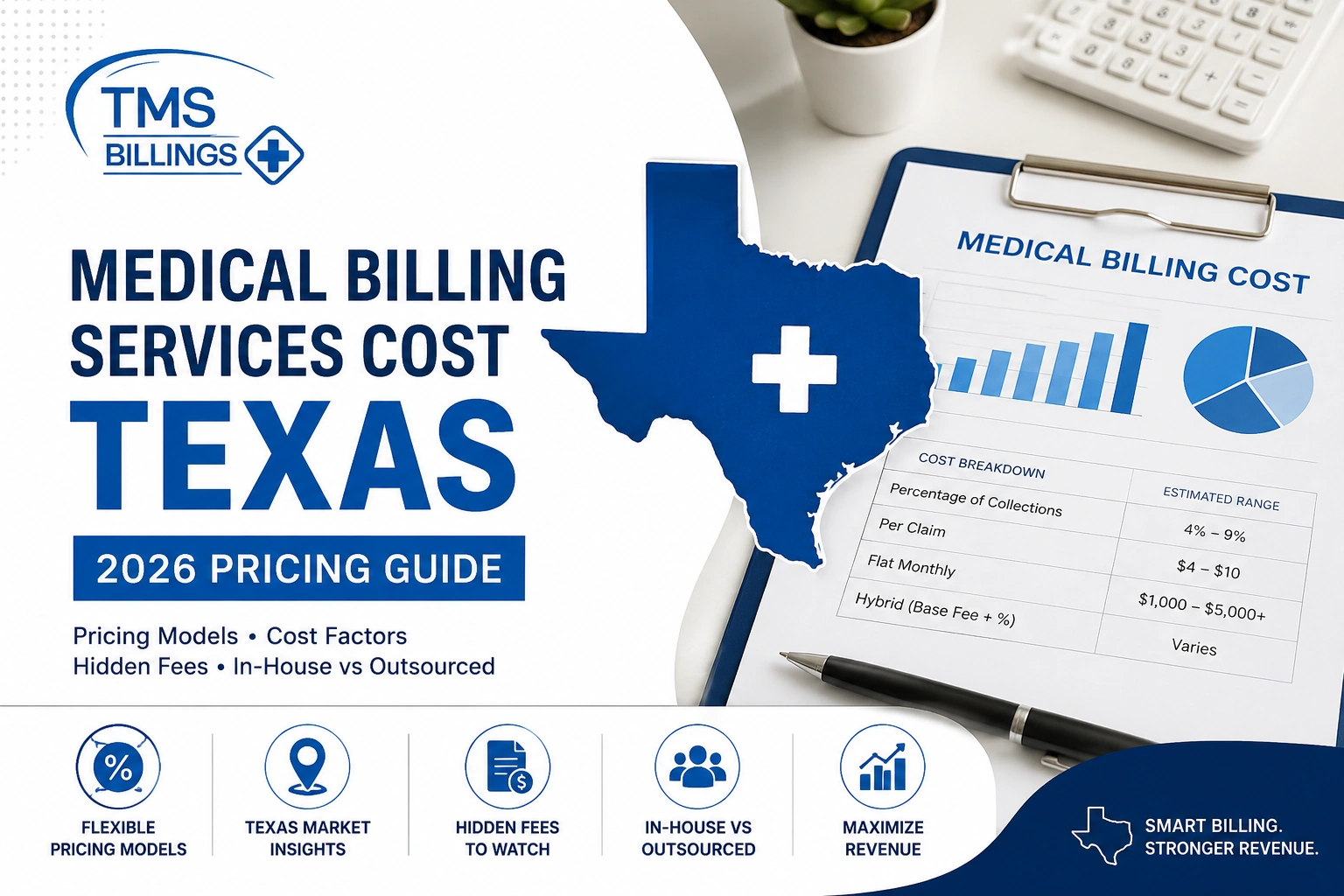
Quick Answer: Medical billing services cost Texas practices between 4% and 9% of monthly collections for percentage-based pricing, $4 to $10 per claim for per-claim pricing, or $1,000 to $5,000+ per month for a flat fee — the right model depends on your specialty, claim volume, and payer mix.
For a closer look at what’s typically included at each price point, see our full guide to medical billing services in Texas.
Common Pricing Models for Medical Billing Companies
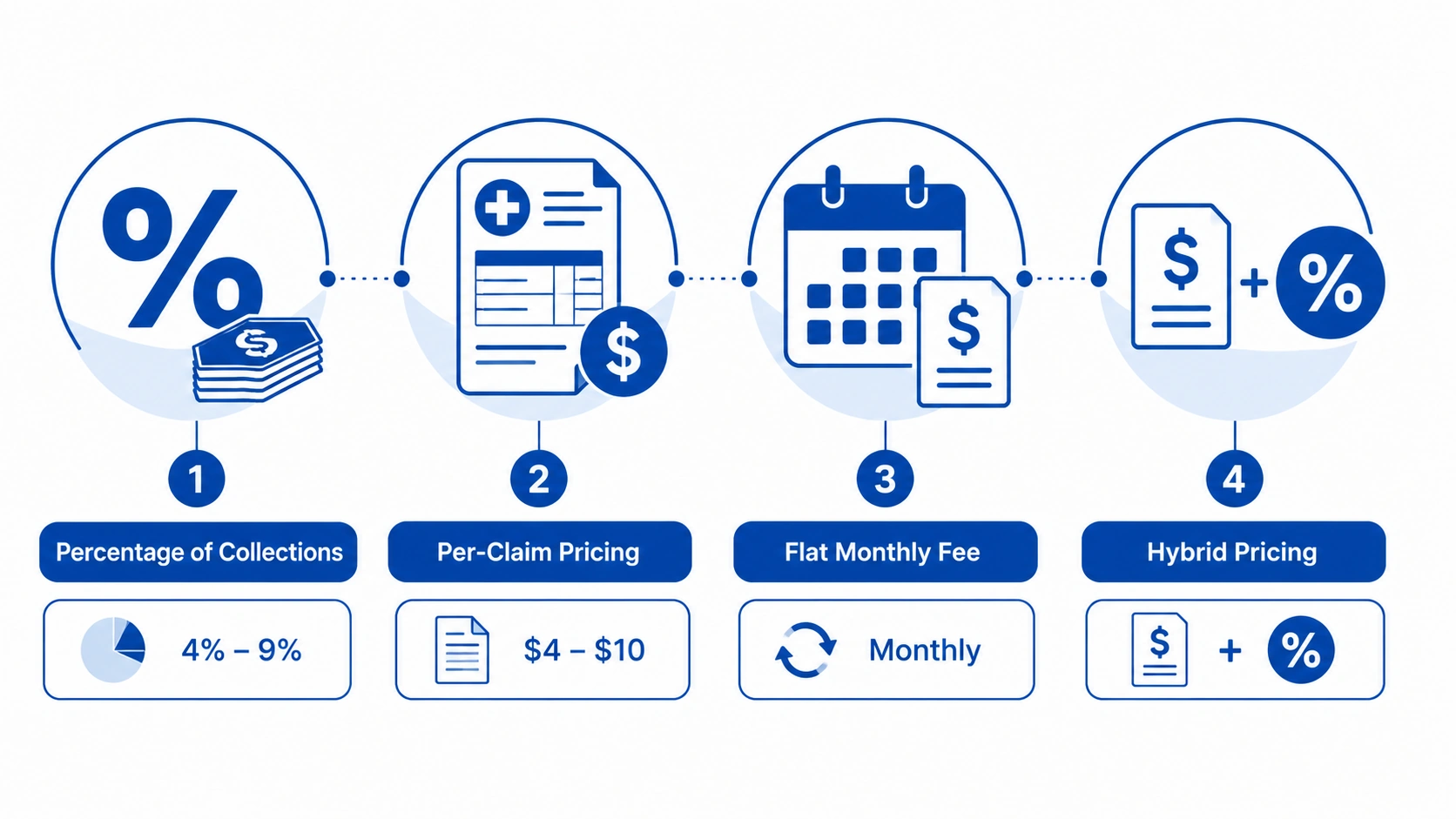
Medical billing pricing models fall into four basic structures, and almost every quote a Texas practice receives is some version of one of these — which is exactly why medical billing company pricing Texas practices see on paper can look so different for two offices doing similar volume. Once you know how each model works, a confusing three-way comparison turns into a fairly simple math problem.
Percentage of Collections
Percentage of collections is the most common pricing model in Texas medical billing. It charges a flat percentage — typically 4% to 9% — of whatever the billing company actually collects on your behalf, so nothing collected means nothing owed. That’s the appeal: it ties the vendor’s income directly to your revenue instead of just their effort, with no ceiling on what they earn from getting your claims paid faster or more completely.
The catch is that a lower percentage doesn’t always mean lower cost. A company charging 5% but only collecting 82% of what you’re owed can leave less money on the table than a 7% company collecting 96%. Ask any vendor for their average clean claim rate before comparing percentages side by side — that number tells you more about your real cost than the figure on the contract does.
Per-Claim Pricing
Per-claim pricing charges a set dollar amount for every claim submitted — usually $4 to $10 depending on complexity and specialty — regardless of whether that claim gets paid in full, partially, or denied. High-volume practices with simple, repetitive claims, like primary care or urgent care, often do best under this model because the per-unit cost stays predictable even as claim counts climb.
The risk runs opposite to percentage pricing: a billing company gets paid whether or not it chases down denials, so the financial incentive to fight for full reimbursement is weaker. Before choosing per-claim pricing, ask what happens to a denied or underpaid claim — is resubmission included in the per-claim fee, or billed again separately? That question alone separates a fair contract from one that quietly bills you twice for the same claim.
Flat Monthly Fee
A flat monthly fee charges the same amount every month — commonly $1,000 to $5,000 or more — no matter how many claims go out or how much actually gets collected. Smaller practices and specialists with predictable, lower claim volume tend to prefer this model because it makes budgeting simple; the bill doesn’t move even if collections have a slow month.
The downside shows up at scale. Once claim volume grows past what the flat fee was priced for, practices are often quietly bumped into a higher tier, so it’s worth asking upfront exactly what volume the fee assumes and what happens if you exceed it. A flat monthly fee also removes the billing company’s direct financial incentive to maximize your collections, since their revenue doesn’t change whether they collect 80% or 98% of what you’re owed.
Hybrid Pricing Models
Hybrid pricing models combine a smaller base fee with a reduced percentage of collections, giving the billing company a guaranteed floor while still tying part of their pay to performance. A typical hybrid structure might charge a $500–$1,000 monthly base plus 2%–4% of collections, landing somewhere between a pure percentage deal and a pure flat fee.
This hybrid pricing model tends to appeal to mid-sized Texas practices that want cost predictability without losing the performance incentive that pure flat-fee pricing removes. It’s usually the hardest quote to compare apples-to-apples, since two hybrid offers with different base-fee-to-percentage ratios can land at very different effective costs depending on your collection volume — run the math against your actual monthly collections before assuming a hybrid deal is automatically cheaper than a straight percentage model.
For a transparent look at how these models translate into an actual number, see our pricing.
Medical Billing Services Cost Texas: 2026 Average Rates
Medical billing services cost Texas providers a wide range depending on which pricing model they choose, but 2026 market data narrows that range considerably once the models are separated out. The average cost of medical billing services nationally clusters around the same bands Texas vendors quote, though Texas practices should expect pricing toward the higher end of each range in competitive metros and the lower end in smaller markets. The table below lays out what’s typical for each model this year, plus which kind of practice each one tends to fit best.
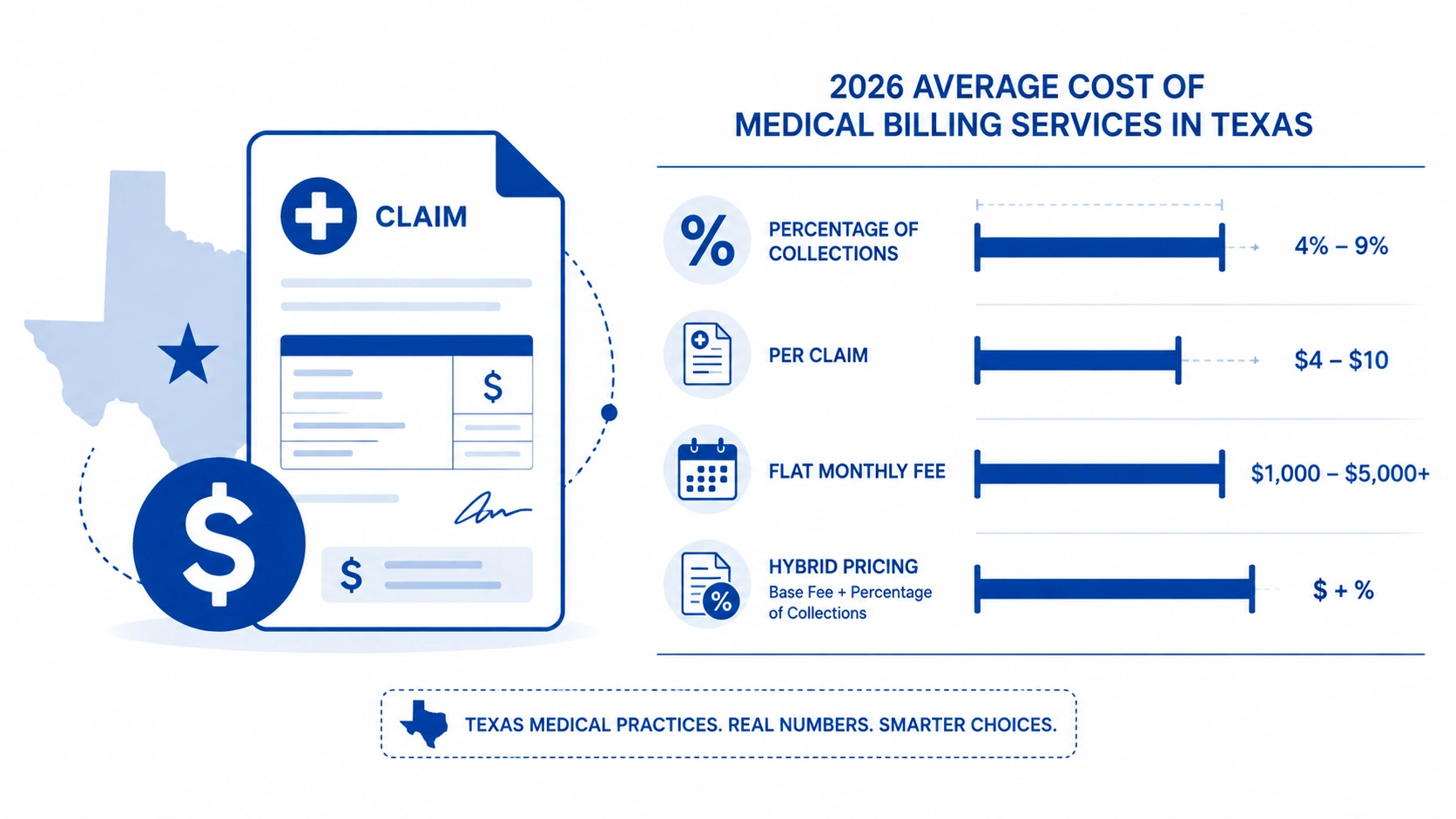
Table 1: Medical Billing Services Cost Texas — 2026 Pricing at a Glance
| Pricing Model | Typical Range | Best For |
|---|---|---|
| Percentage of Collections | 4%–9% of monthly collections | Practices wanting cost tied to performance |
| Per-Claim Pricing | $4–$10 per claim | High-volume, lower-cost-per-claim specialties |
| Flat Monthly Fee | $1,000–$5,000+/month | Predictable, small-to-mid claim volume |
| Hybrid Model | Blended base fee + smaller % | Practices wanting a fee floor with upside alignment |
Practices in Houston, Dallas, Austin, and San Antonio tend to see quotes cluster near the top of each range, since demand for experienced medical billing companies is highest in those metros. Smaller Texas markets often see quotes a point or two lower for comparable specialty and volume.
Where TMS Billings sets itself apart is the starting point: plans begin from 1.99% of collections (writer note: confirm this figure is still current with sales/pricing before publishing) — well under the 4%–9% range most Texas vendors quote. That doesn’t mean every practice pays 1.99%; specialty, claim volume, and payer mix still move the final number, but it’s a meaningfully lower floor than the industry average most national guides report.
What Drives Medical Billing Costs Higher or Lower in Texas
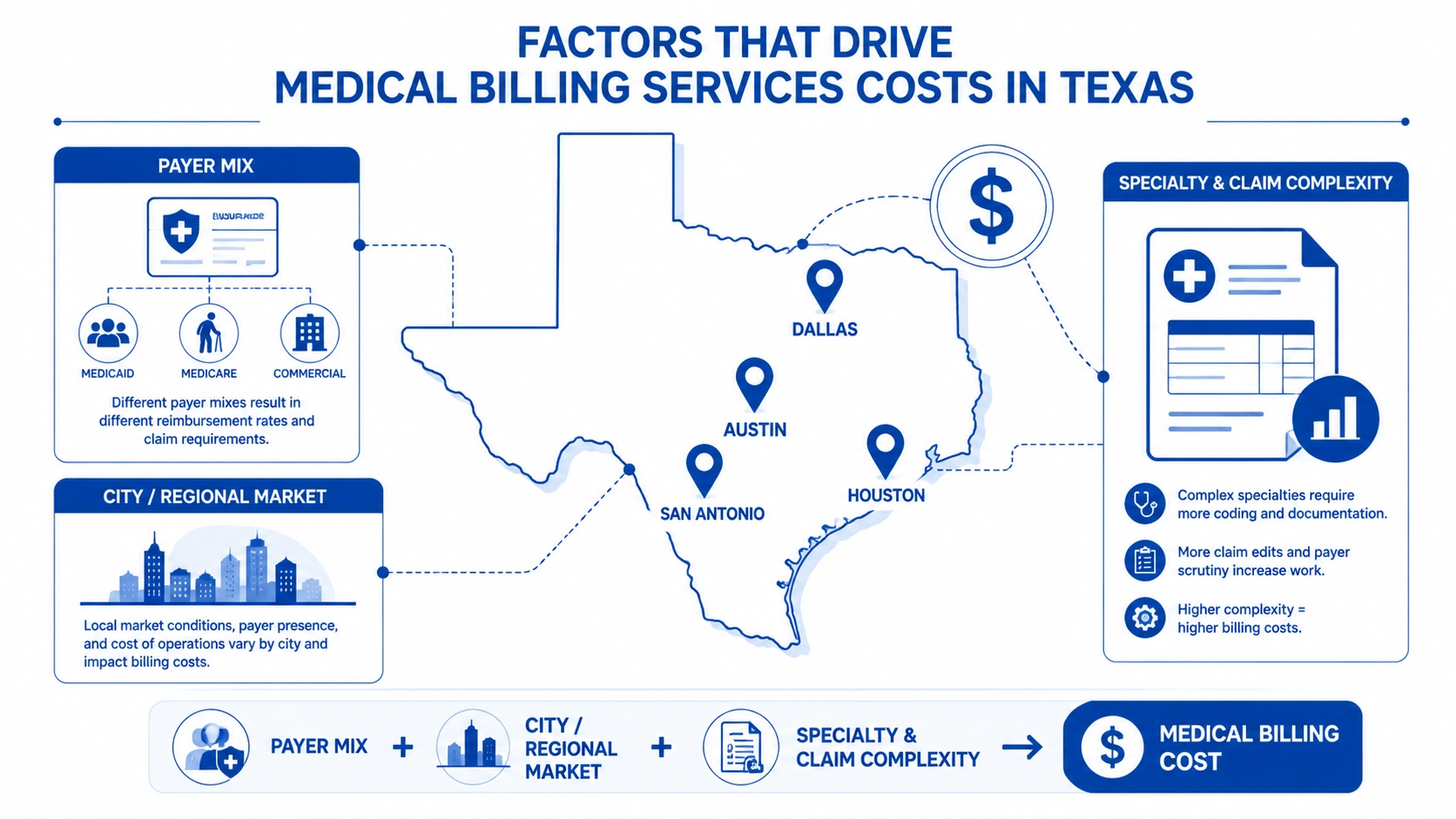
What drives medical billing costs higher or lower in Texas comes down to three factors more than anything else: who’s paying the claims, where the practice is located, and how complex the claims themselves are.
Payer Mix — Texas Medicaid, Medicare & Commercial
Payer mix moves the price of medical billing more than almost any other single factor in Texas. A practice billing mostly commercial insurance is a simpler, faster claim to process than one billing Texas Medicaid or an MCO, where prior authorizations, coding rules, and reimbursement schedules change more often and carry heavier documentation requirements. Texas Medicaid claims and Medicare reimbursement claims both typically require more labor per claim than commercial billing, which is why practices with a heavy Medicaid or Medicare caseload often see quotes toward the top of a vendor’s percentage range.
The Texas Medicaid & Healthcare Partnership publishes rate and code updates that billing teams need to track closely to keep claims from being denied outright.
City and Regional Market Rates
City and regional market rates vary noticeably across Texas because billing companies price against local competition and local cost of living. Houston, Dallas, Austin, and San Antonio all have dense concentrations of billing companies competing for the same practices, which keeps quotes competitive but also pushes experienced vendors toward the higher end of their range to cover higher operating costs.
Practices in smaller Texas markets sometimes find lower quotes, but should weigh that against a smaller vendor’s depth of experience with Texas-specific payer rules — a cheaper quote from a company unfamiliar with TMHP requirements can end up costing more in denied claims than it saves in fees.
Specialty and Claim Complexity
Specialty and claim complexity change the price of medical billing because some specialties simply generate harder claims to get paid. This is where medical billing cost by specialty diverges most sharply from the averages in the pricing table above: behavioral health, physical therapy, and multi-procedure specialties like orthopedics carry more coding nuance and prior-authorization requirements than primary care, which pushes billing companies to quote higher percentages or per-claim rates.
A specialty with a naturally higher claim denial rate also costs more to bill correctly, since more staff time goes into appeals and resubmissions rather than first-pass claims. When comparing quotes, ask what specialties the billing company already handles in Texas — a vendor with existing experience in your specialty usually prices more accurately and denies fewer claims than one learning your specialty on your account.
Practices that want help managing all three factors at once, rather than billing alone, often turn to full revenue cycle management services — bundling coding, claims, and collections so that revenue cycle management (RCM) work doesn’t fall on one in-house employee.
In-House vs. Outsourced Medical Billing Costs in Texas
In-house vs. outsourced medical billing costs in Texas usually isn’t a close call once every expense gets counted, though the salary on a job posting can make hiring look cheaper at first glance. The math behind outsourced vs in-house medical billing cost comparisons rarely favors hiring once every expense is added up. The cost of outsourcing medical billing is a percentage of what actually gets collected, while an in-house hire is a fixed salary whether collections are strong or slow that month — and that fixed cost keeps running through vacations, sick leave, and the weeks it takes to fill the seat after someone quits.
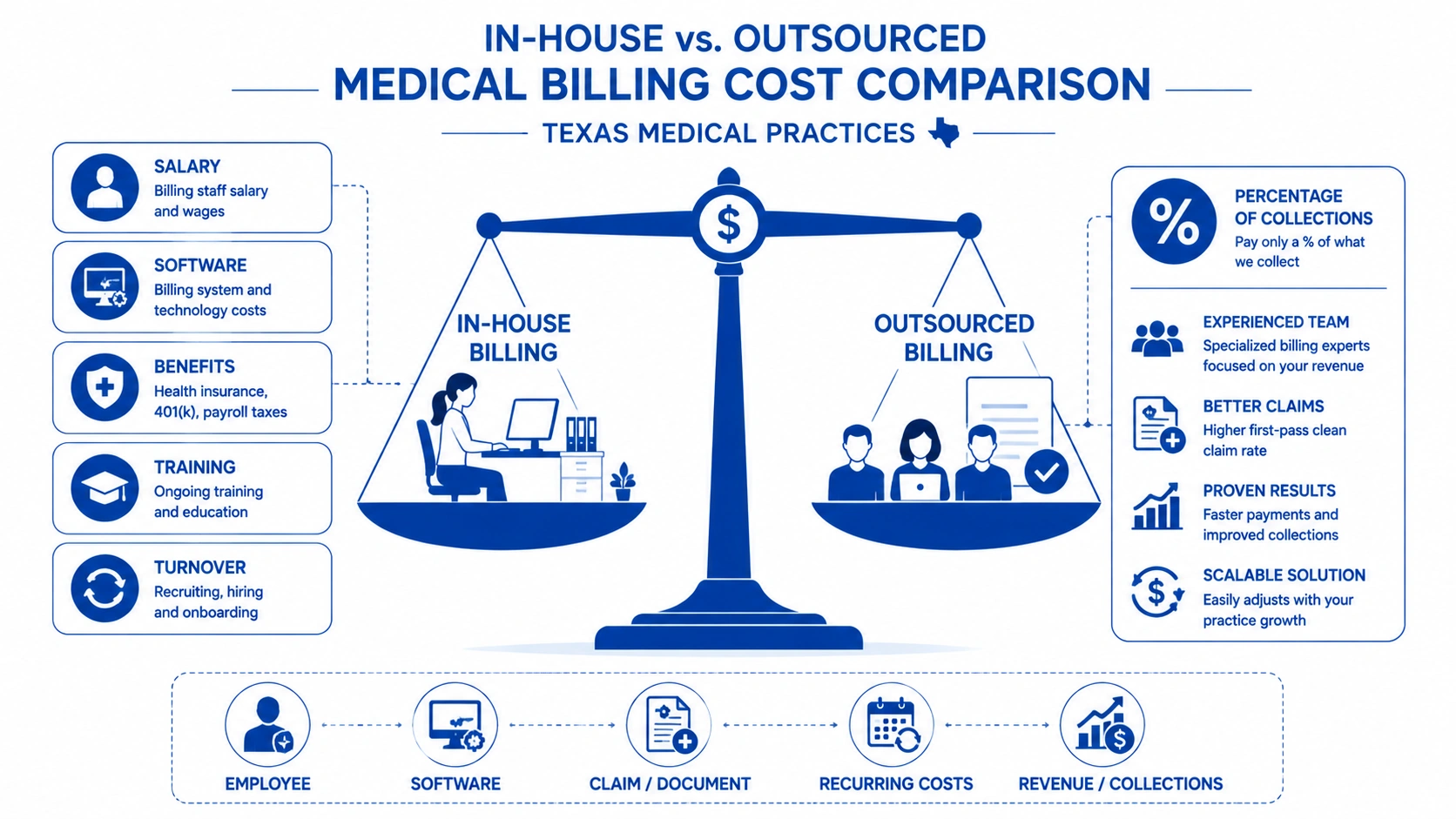
Table 2: In-House vs. Outsourced Medical Billing Costs in Texas
| Cost Factor | In-House Billing | Outsourced Billing |
|---|---|---|
| Annual Cost (avg.) | $60,000–$90,000+ (salary, benefits, software, turnover) | Typically 4%–9% of collections |
| Clean Claim Rate | ~85%–90% industry average | 95%+ at experienced billing companies |
| Staff Turnover Risk | High — disrupts AR follow-up | None — dedicated team continuity |
| Texas Payer Expertise | Limited to one biller’s knowledge | Team-wide familiarity with TX Medicaid/MCOs |
The in-house number starts with a base salary. The U.S. Bureau of Labor Statistics puts the median annual wage for medical records specialists at roughly $50,250 nationally as of its most recent report, then that figure climbs once benefits, billing software, ongoing coding-compliance training, and turnover costs stack on top — consistent with the administrative-overhead guidance the Medical Group Management Association publishes for practice leaders tracking overhead as a share of revenue. In-house billing staff also means the practice absorbs all the turnover risk itself, since AR follow-up stalls every time a seat sits empty.
An outsourced billing company spreads Texas payer expertise across an entire team instead of resting it on one employee’s institutional knowledge. Many Texas practices land on a middle path: keep front-desk intake in-house and hand claims and collections to an outsourced medical billing services partner instead.
Hidden Fees to Watch For in a Texas Medical Billing Contract
Hidden fees in a medical billing contract are where a great-looking percentage or flat rate quietly turns into a bad deal, and they rarely surface until the first invoice arrives — which is exactly why medical billing outsourcing cost Texas practices actually pay often runs higher than the number on the original quote. Reading the contract terms line by line before signing catches most of them; asking the vendor to explain any fee that isn’t in the pricing table catches the rest.
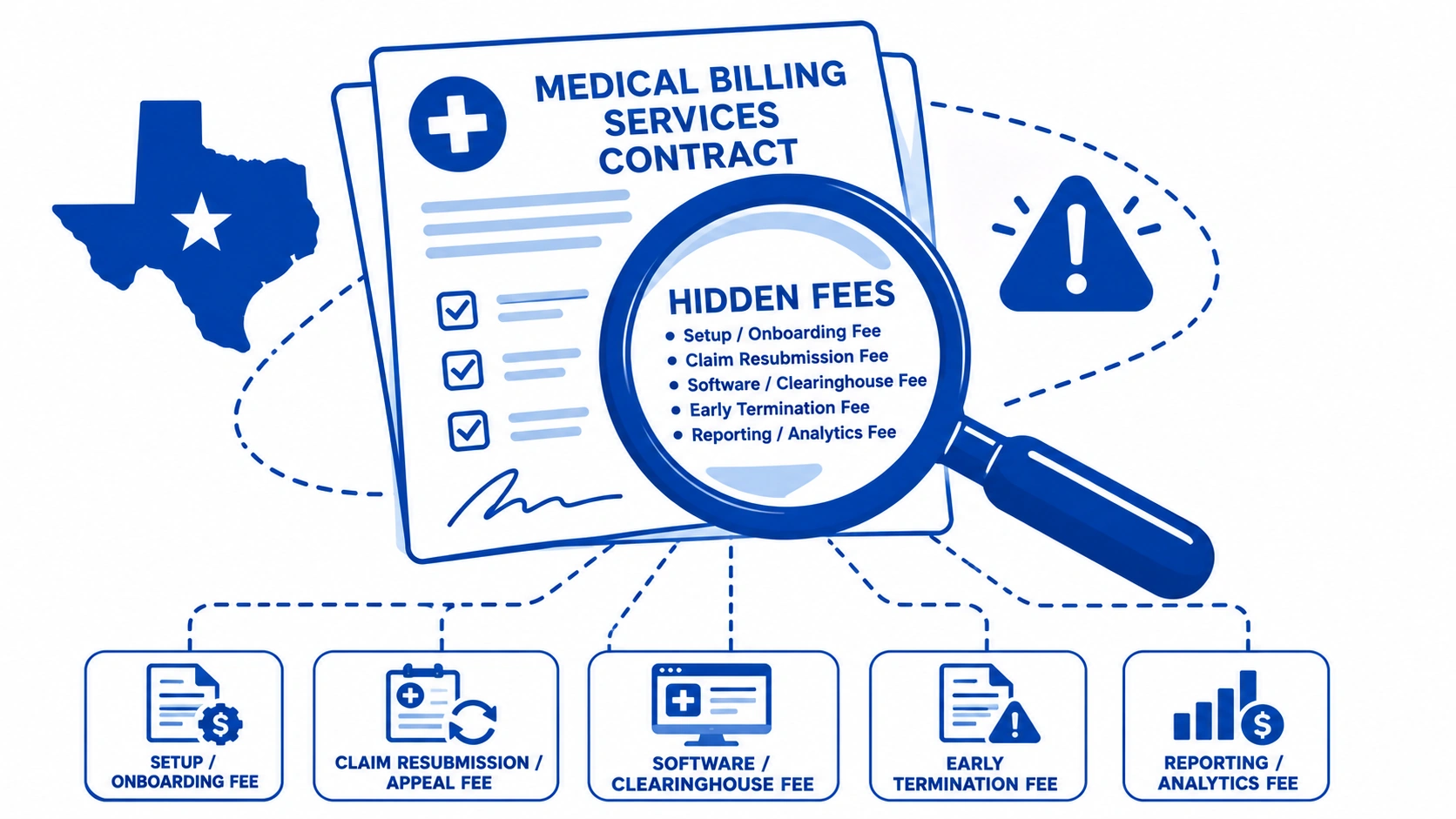
- Setup and onboarding fees — one-time charges, sometimes $500–$2,000, for loading your practice into the billing system, often not mentioned until the contract’s final page.
- Claim resubmission or appeal fees — extra per-claim charges for denied claims the vendor should have gotten right the first time.
- Software or clearinghouse fees — a separate monthly charge for the billing platform itself, on top of the percentage or flat fee already quoted.
- Early termination penalties — a fee for leaving before the contract term ends, sometimes calculated as a percentage of average monthly collections.
- Reporting and analytics fees — a charge for the dashboards and reports many practices assume are already included in the base rate.
HIPAA compliance should never appear as a separate line-item fee — it’s a baseline legal requirement, not an add-on — so treat any vendor who bills for it separately as a red flag worth asking about directly before signing.
Medical Billing Services Cost Texas: Get an Accurate Quote
Medical billing services cost Texas practices real money no matter which model you choose, but the number on a proposal only tells part of the story. Now that the major medical billing pricing models are clear, what actually determines medical billing company pricing Texas practices end up paying is the collection rate behind the percentage, the fees hiding beyond the headline number, and whether the vendor already knows Texas Medicaid and MCO rules cold. In most cases, the cost of outsourcing medical billing still comes in well below what an in-house hire costs once salary, software, and turnover are counted.
A 4% quote isn’t automatically cheaper than a 7% quote if the 7% company collects more of what you’re actually owed — the percentage on the page doesn’t tell you the collection rate behind it, or whether the vendor actually knows Texas Medicaid and MCO rules. TMS Billings quotes start from 1.99% of collections, built around your specialty and payer mix — not a flat number pulled from a national average.
Ready to compare? Get a free billing quote built around your specialty and payer mix — a free medical billing quote Texas practices can hold up directly against whatever’s already on the desk, no national averages included.