CPT Codes for Urgent Care Visits: A Complete Guide
Running an urgent care clinic means operating at a pace most healthcare settings don’t come close to matching. Patients arrive without appointments, presenting everything from a twisted ankle to a high fever, and your billing team has to process each encounter accurately — without slowing anyone down.
At the center of that billing process are urgent care CPT codes. Get them right, and your clinic collects what it has earned. Get them wrong, and you’re facing denied claims, delayed payments, and a revenue cycle that never quite catches up. Whether you’re a practice manager, a coder, or a provider trying to understand the billing side of your work, this guide walks through everything you need to know about CPT codes for urgent care visits — from E&M levels and procedure codes to modifiers, ICD-10 pairing, and the latest 2026 updates.
If your clinic wants hands-on support navigating these complexities, TMS Billings offers specialized Urgent Care Billing Services built specifically for walk-in clinics across the United States.
What Are Urgent Care CPT Codes and Why Do They Matter?
CPT stands for Current Procedural Terminology — a standardized system of numeric codes developed and maintained by the American Medical Association (AMA). These five-digit codes describe every medical service, procedure, and diagnostic test performed during a patient encounter.
In the urgent care setting, urgent care CPT codes tell insurance payers exactly what was done, at what complexity level, and at what cost. Without accurate urgent care billing codes attached to every claim, payers have no basis for reimbursement — and your clinic simply doesn’t get paid.
What makes coding uniquely challenging here is the breadth of what urgent care practices handle. On any given shift, your providers might see a child with an ear infection, an adult with a laceration, someone requiring nebulization for asthma, and a patient with a suspected fracture needing imaging and splinting. Every encounter has different coding requirements, and knowing what CPT codes are used for urgent care visits across all of them takes both training and consistency.
This is where solid medical coding urgent care center expertise becomes essential — not just for revenue, but for compliance and long-term financial stability.
Understanding Evaluation and Management Codes in Urgent Care
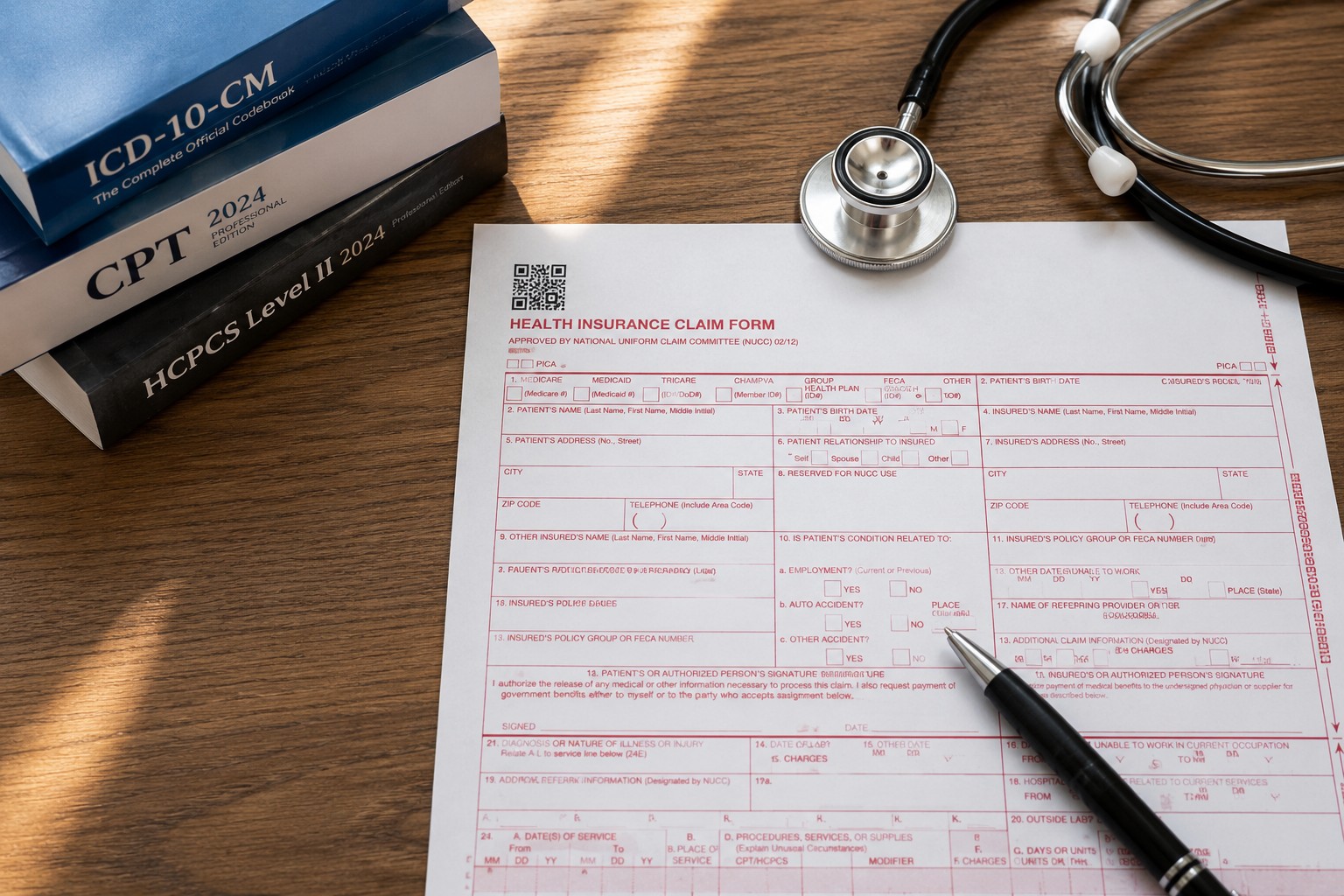
The backbone of urgent care billing codes is the Evaluation and Management (E&M) code set. These codes represent the provider’s clinical assessment — the history taken, the examination performed, and the decision-making that determines the treatment plan.
Following the 2021 AMA revisions, evaluation and management codes urgent care providers use are now determined by either medical decision-making (MDM) or total provider time — whichever best reflects the encounter. This update simplified documentation in many ways, though it still requires disciplined application.
New Patient E&M Codes: 99202 Through 99205
For patients not seen at your clinic in the past three years, new patient codes apply. Here is how CPT 99202 99203 99204 99205 break down in real practice:
99202 — Straightforward MDM, or 15 to 29 minutes of total time. Appropriate for simple, self-limited conditions: a mild URI, a minor rash, or a work release note.
99203 — Low complexity MDM, or 30 to 44 minutes. A sinus infection with one or two pre-existing conditions that require brief consideration.
99204 — Moderate complexity MDM, or 45 to 59 minutes. Situations like a suspected fracture, chest pain evaluation, or wound assessment with meaningful risk factors.
99205 — High complexity MDM, or 60 to 74 minutes. Reserved for encounters where multiple diagnoses intersect, high-risk interventions are considered, or extensive external records need to be reviewed.
These CPT 99202 99203 99204 99205 codes represent the bulk of new patient billing in walk-in settings and are among the codes payers scrutinize most. Documentation must support the level billed every single time.

Established Patient E&M Codes: 99211 Through 99215
For returning patients seen within the past three years, established codes apply:
99211 — Minimal complexity; often used for nurse-only visits requiring no physician decision-making. 99212 — Straightforward MDM, or 10 to 19 minutes. 99213 — Low complexity MDM, or 20 to 29 minutes. 99214 — Moderate complexity MDM, or 30 to 39 minutes. 99215 — High complexity MDM, or 40 to 54 minutes.
Incorrectly classifying a patient as new when they are established — or vice versa — is one of the most common urgent care insurance billing errors. It affects both payment amounts and audit exposure.
Urgent Care E&M Codes: Getting the Level Right Consistently
Urgent care E&M codes follow the same structure as office-based E&M codes, but the clinical environment demands sharper precision. In a fast-moving walk-in setting, providers sometimes underdocument simply because they’re moving fast — which leads to downcoding and uncollected revenue.
To support the level billed, the clinical note should clearly reflect:
- The nature and complexity of the presenting problem
- The amount and type of data reviewed (labs, imaging, prior records, external sources)
- The risk associated with diagnosis and management
If a provider evaluates a patient with abdominal pain, orders a urinalysis and abdominal X-ray, reviews prior visit notes, and prescribes a moderate-risk medication — that encounter likely supports a 99204 or 99214. Without documentation capturing each of those elements, the code won’t survive payer review.
Consistent coder-provider communication and periodic documentation audits are what separate clinics with strong urgent care reimbursement rates from those constantly chasing downcoded claims.
Walk-In Clinic Billing Codes Beyond the E&M Visit
The E&M code covers the visit itself, but urgent care practices regularly bill for much more. Walk-in clinic billing codes extend into procedure codes, diagnostic codes, and add-on services performed within the same encounter.
Here are some of the most commonly used CPT codes for urgent care procedures and office visits:
Laceration Repair:
- 12001 — Simple superficial wound repair, 2.5 cm or less
- 12002 — Simple repair, 2.6 to 7.5 cm
- 12011 — Simple repair, face/ears/eyelids, 2.5 cm or less
Respiratory Services:
- 94640 — Inhalation treatment, pressurized or non-pressurized
- 71046 — Chest X-ray, two views
Musculoskeletal:
- 29125 — Short arm splint, static
- 29515 — Short leg splint
- 73100 — X-ray of wrist, two views
Diagnostics and Labs:
- 81003 — Urinalysis, automated, without microscopy
- 87804 — Influenza A&B antigen rapid test
- 87880 — Streptococcal A rapid test
Injections:
- 96372 — Therapeutic, prophylactic, or diagnostic injection (IM or subcutaneous)
What CPT codes are used for urgent care visits extends well beyond this list — but these cover the high-frequency codes that make up the majority of procedure billing in most clinics.
When billing walk-in clinic billing codes alongside E&M codes in the same encounter, modifier usage becomes critical. Which brings us to one of the most impactful topics in the entire urgent care billing space.
Modifier 25 in Urgent Care Billing: What Every Clinic Must Know
If there is one modifier that every urgent care billing team needs to understand completely, it is Modifier 25.
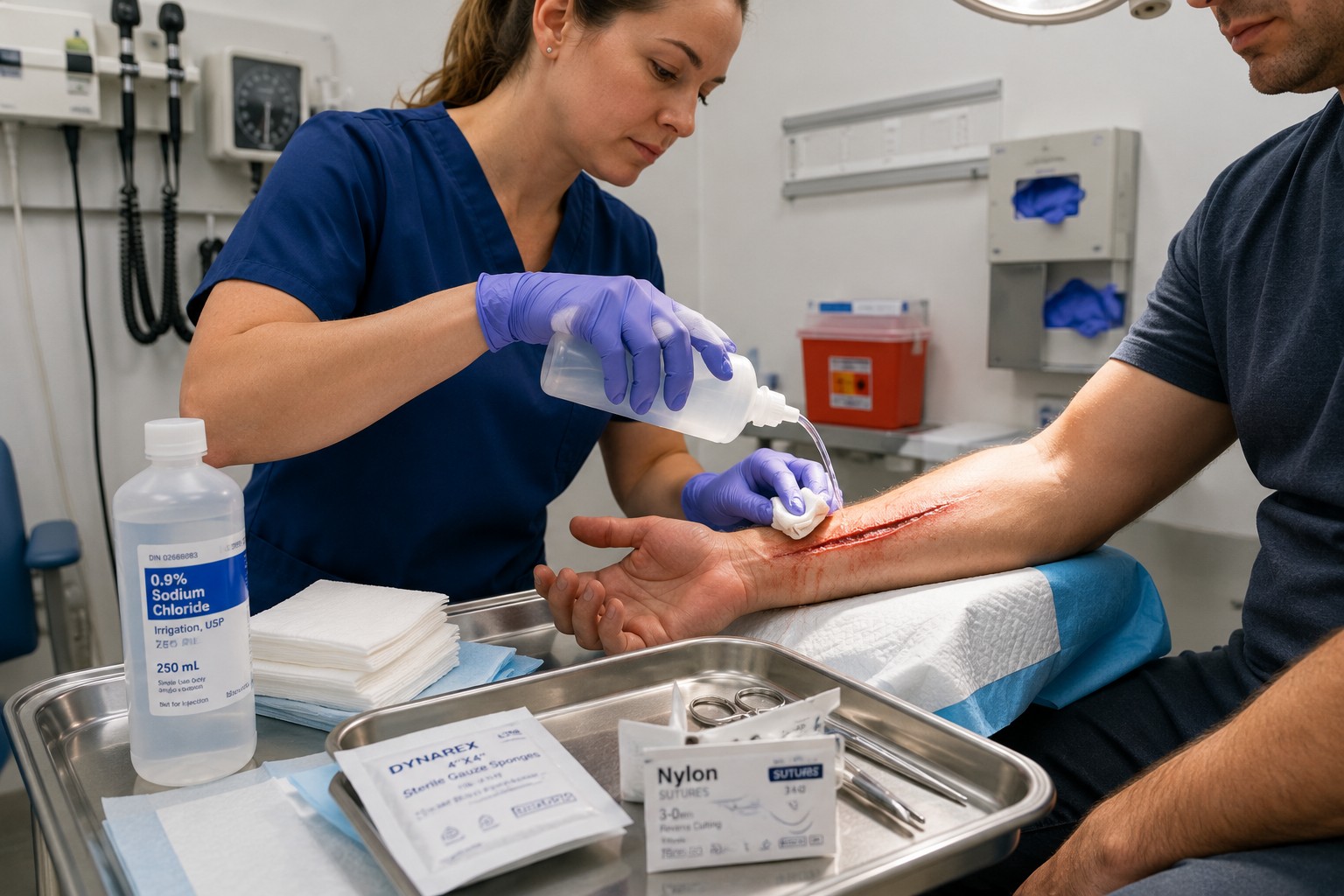
Modifier 25 urgent care billing signals to the payer that a significant, separately identifiable evaluation and management service was provided on the same day as a minor procedure. This situation comes up constantly in a walk-in clinic environment.
A patient arrives with a forearm laceration. The provider evaluates the wound, takes a history, considers tetanus status, documents clinical findings — and then performs the repair. Both the E&M visit and the laceration repair are separately billable. But without Modifier 25 appended to the E&M code, the payer bundles the visit into the procedure reimbursement and denies the separate charge entirely.
On a high-volume day, that lost reimbursement adds up fast.
Using modifier 25 urgent care billing incorrectly, however, draws audit attention. The documentation must clearly show that the E&M service was distinct from the procedure — that it involved clinical assessment beyond what was necessary to perform the repair itself. That distinction has to live in the note, not just in the billing.
The AAPC provides detailed modifier usage guidance and urgent care-specific coding education that billers and coders will find genuinely useful.
ICD-10 Codes and Their Role in Urgent Care Claim Submission
Accurate urgent care CPT codes do not work in isolation. Every procedure and E&M code must be supported by ICD-10 diagnosis codes that establish medical necessity. Without properly linked ICD-10 codes urgent care claims will face denials regardless of how precisely the CPT codes were selected.
Some of the most frequently billed ICD-10 codes urgent care teams use include:
- J06.9 — Acute upper respiratory infection, unspecified
- N39.0 — Urinary tract infection, site not specified
- R05.9 — Cough, unspecified
- M54.5 — Low back pain
- S61.001A — Open wound of thumb, initial encounter
Payers match diagnosis codes to CPT codes to verify that the service performed was medically appropriate for the condition presented. A mismatch — billing a chest X-ray against a diagnosis of an ingrown toenail — results in immediate denial.
Urgent care claim submission quality depends on both selections working together, in the right sequence. Under current payer trends, non-specific ICD-10 codes are being flagged at higher rates, making specificity a revenue issue, not just a documentation preference.
The Centers for Medicare & Medicaid Services maintains updated ICD-10 guidelines and payer-specific coverage policies — a reference every urgent care billing team should check regularly.

Urgent Care Coding Guidelines 2026: Key Updates Practices Should Know
Billing rules do not stay still. Staying current with urgent care coding guidelines 2026 means tracking AMA CPT revisions, CMS fee schedule updates, and individual payer policy changes that roll out each year.
Here are the updates that matter most for walk-in clinics right now:
Reimbursement Recalibration: CMS continues adjusting relative value units for E&M services. Changes to mid-level codes in the 99203 and 99213 range affect urgent care reimbursement rates across Medicare and many commercial plans. Verify your current allowables directly with major payers.
Telehealth-Specific Codes: Clinics offering virtual urgent care visits need to apply the correct telehealth CPT codes alongside the appropriate place of service designation — POS 02 or POS 10, depending on where the patient is physically located. Billing these incorrectly remains a common error.
Tighter ICD-10 Specificity Standards: Under updated urgent care coding guidelines 2026 enforcement trends, vague diagnosis codes are denied more frequently. Laterality, encounter type, and condition severity all carry more weight than in previous years.
Preventive Service Add-Ons: Urgent care practices expanding into preventive screenings and counseling need separate CPT codes with distinct documentation, clearly differentiated from the acute visit.
Reviewing your urgent care CPT codes list for insurance billing 2026 against current AMA publications is a worthwhile annual exercise for any billing department. The AMA’s CPT resources at ama-assn.org remain the most authoritative reference available.
The Difference Between Urgent Care and ER Billing Codes
This question comes up often — particularly as urgent care centers handle conditions that could send a patient to either setting. The difference between urgent care and ER billing codes goes beyond the code numbers and touches place of service designations, facility fees, and patient cost-sharing structures.
Emergency departments use E&M codes 99281 through 99285, a range distinct from the office/outpatient codes used in urgent care. Hospital facilities also bill a separate facility fee on top of the professional service fee. Urgent care centers that are not designated as hospital outpatient departments use office-based E&M codes (99202 through 99215) and do not bill a hospital facility fee.
Place of service codes matter significantly:
- POS 20 = Urgent Care Facility
- POS 23 = Emergency Room, Hospital
- POS 11 = Office (frequently — and incorrectly — used for urgent care)
The difference between urgent care and ER billing codes also shows up in patient cost-sharing. Most insurance plans apply lower co-pays for urgent care visits, and billing the wrong POS code creates patient billing confusion, payer adjustments, and audit exposure.
This distinction is one of the fundamentals of urgent care insurance billing, and getting it right consistently is non-negotiable for any walk-in clinic building a reliable revenue cycle.
How to Bill Urgent Care Visits with Correct CPT Codes: A Step-by-Step Breakdown
Understanding how to bill urgent care visits with correct CPT codes means building a repeatable process that holds up at every stage — from check-in through payment posting.
Step 1 — Verify insurance before the visit. Confirm active coverage, co-pay amounts, deductibles, and network status. Eligibility-related denials are avoidable with a proactive front-desk workflow.
Step 2 — Document completely. The provider note must support the E&M level billed. MDM components — problem complexity, data reviewed, and management risk — all need to be clearly visible in the record.
Step 3 — Select the correct E&M code. Apply 99202 through 99205 for new patients and 99211 through 99215 for established patients based on MDM or total time.
Step 4 — Add procedure codes where applicable. Identify the CPT codes for urgent care procedures and office visits that match each service provided at the encounter.
Step 5 — Link ICD-10 codes accurately. Every CPT code on the claim needs a supporting, specific ICD-10 code that justifies medical necessity.
Step 6 — Apply modifiers correctly. Use modifier 25 urgent care billing when an E&M and a procedure are billed together. Use Modifier 59 or the X-modifiers for other distinct services.
Step 7 — Enter charges promptly. Timely urgent care charge entry keeps claims from aging past payer filing deadlines.
Step 8 — Submit and follow up. Monitor claim statuses, track denial patterns, and respond to rejections quickly through organized AR management.
This is how to bill urgent care visits with correct CPT codes in a consistent, auditable way — and it is the foundation of a revenue cycle that actually performs.
Urgent Care Charge Entry and Revenue Cycle Management
Accurate coding is only half the equation. Even the most precisely selected urgent care CPT codes will not translate into collected revenue if the charge entry and billing workflow are not equally solid.
Urgent care charge entry is the process of entering CPT codes, ICD-10 codes, modifiers, and patient data into the billing system after each encounter. In a clinic seeing 80 to 150 patients per day, even small charge entry errors compound quickly. A missed procedure code here, a wrong modifier there — over time, those gaps represent real, uncollected revenue.
Urgent care revenue cycle management connects every step: pre-visit insurance verification, accurate charge entry, clean claim submission, real-time denial tracking, and systematic AR follow-up. When any one of those steps breaks down, the entire cycle slows.
Walk-in clinic billing codes that sit in entry queues for days — or that move through without correct modifiers or linked diagnoses — create cash flow gaps that affect clinic operations well beyond the billing department. A well-structured urgent care revenue cycle management approach closes those gaps with clear workflows, accountability, and technology that supports speed without sacrificing accuracy.
For practices that want expert support at every stage of this process, TMS Billings provides comprehensive Urgent Care Billing Services that handle everything from eligibility verification to AR recovery. [Open in new tab]
Common Urgent Care Billing Mistakes That Lead to Claim Denials
Even experienced billing teams run into trouble. These are the errors that most consistently derail urgent care insurance billing:
Upcoding without documentation support — Billing a higher E&M level than the clinical note justifies is both a compliance risk and a major audit trigger. The documentation must match the code every time.
Downcoding out of caution — Consistently selecting a lower E&M level to avoid scrutiny costs clinics thousands of dollars annually. If the note supports a 99204, bill a 99204.
Missing Modifier 25 — Failing to apply modifier 25 urgent care billing when both an E&M and a procedure are performed on the same date results in bundling and denial of the visit charge. This is one of the highest-frequency denial causes in walk-in settings.
Non-specific ICD-10 code selection — Under current urgent care coding guidelines 2026 enforcement trends, generic diagnosis codes are rejected more frequently. Specificity is not optional.
Wrong place of service — Billing POS 11 instead of POS 20 affects payment rates and flags claims for review.
Late urgent care charge entry — Most commercial payers require claim submission within 90 to 180 days of service. Charges that fall outside those windows are written off entirely.
Catching these before claims go out — not after they return denied — is the difference between a revenue cycle that runs smoothly and one that is constantly playing catch-up.
Final Thoughts
Urgent care CPT codes are not a back-office detail. They are the financial language through which your clinic communicates the value of every patient encounter to every insurance payer. Getting them right — consistently, accurately, and compliantly — is fundamental to the financial health of any walk-in practice.
From understanding the difference between urgent care and ER billing codes, to applying Modifier 25 correctly, to staying current with urgent care coding guidelines 2026, there is a lot to manage and a lot at stake. Knowing what CPT codes are used for urgent care visits is the starting point. Building a process that applies them correctly on every single claim is the goal.
When urgent care billing codes, E&M levels, ICD-10 pairings, and charge entry all work inside a well-run urgent care revenue cycle management system, the result is fewer denials, faster payments, and a clinic that operates the way it should — focused on patients, not billing backlogs.
If your practice needs expert support managing your urgent care CPT codes list for insurance billing 2026 and beyond — from coding accuracy and claim submission to denial management and AR recovery — the team at TMS Billings is ready to help. Explore our Urgent Care Billing Services and see how we support walk-in clinics across the United States. [Open in new tab]
Disclaimer: This article is for general informational purposes only. CPT codes and billing guidelines are updated annually. Always verify current coding rules with the AMA, CMS, and your individual payers before submitting claims.