Benefits of Virtual Medical Assistants for Healthcare Practices
Running a healthcare practice is one of the hardest jobs in business. Not just because of the medicine — that part, most physicians have down. The hard part is everything else. The phone calls that never stop. The insurance back-and-forth that eats half your morning. The billing errors that only show up when a patient is already frustrated. The scheduling chaos that somehow gets worse every single week.
And somewhere in the middle of all that, you’re supposed to be focused on your patients.
The reality is, most practices are running on fumes administratively. Staff are stretched. Physicians are staying late to finish documentation. Things fall through the cracks — not because anyone is doing a bad job, but because there genuinely aren’t enough hours in the day. That’s the environment most healthcare practices are working inside right now, and it’s been getting worse, not better.
That’s also exactly why virtual medical assistant services have become such a serious topic of conversation across practices of every size and specialty. Not as a trendy workaround, but as an actual operational shift that a growing number of practices are making — and not regretting.
What the Day-to-Day Actually Looks Like Without Proper Support
Before getting into solutions, it helps to be honest about the problem.
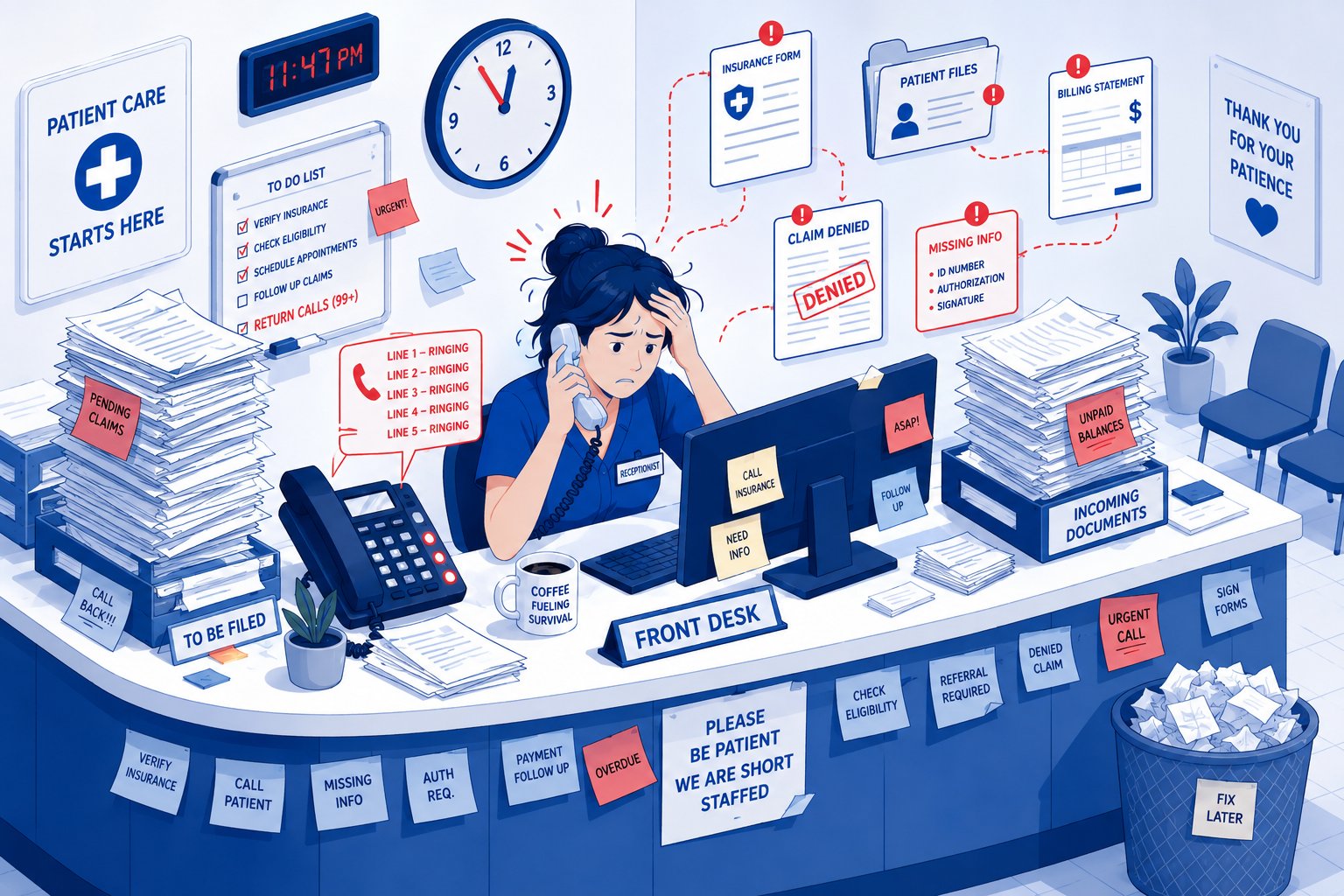
A typical practice day involves appointment scheduling, insurance verification, patient callbacks, prior authorizations, EHR documentation, billing follow-up, referral coordination, and about a dozen other tasks that all feel urgent simultaneously. In a hospital system, each of those functions has a dedicated team behind it. In a small or medium-sized independent practice, they’re usually landing on two or three people who are also trying to manage the front desk and answer the door.
The math doesn’t work. And the consequences are predictable — claims go out with errors, patients wait too long for callbacks, scheduling gaps don’t get filled, and documentation piles up until someone is entering notes at 9pm on a Tuesday.
Research published through the National Library of Medicine found physicians spend close to two hours doing administrative work for every hour of direct patient care. That number has stayed stubborn for years despite all the technology supposedly making things easier.
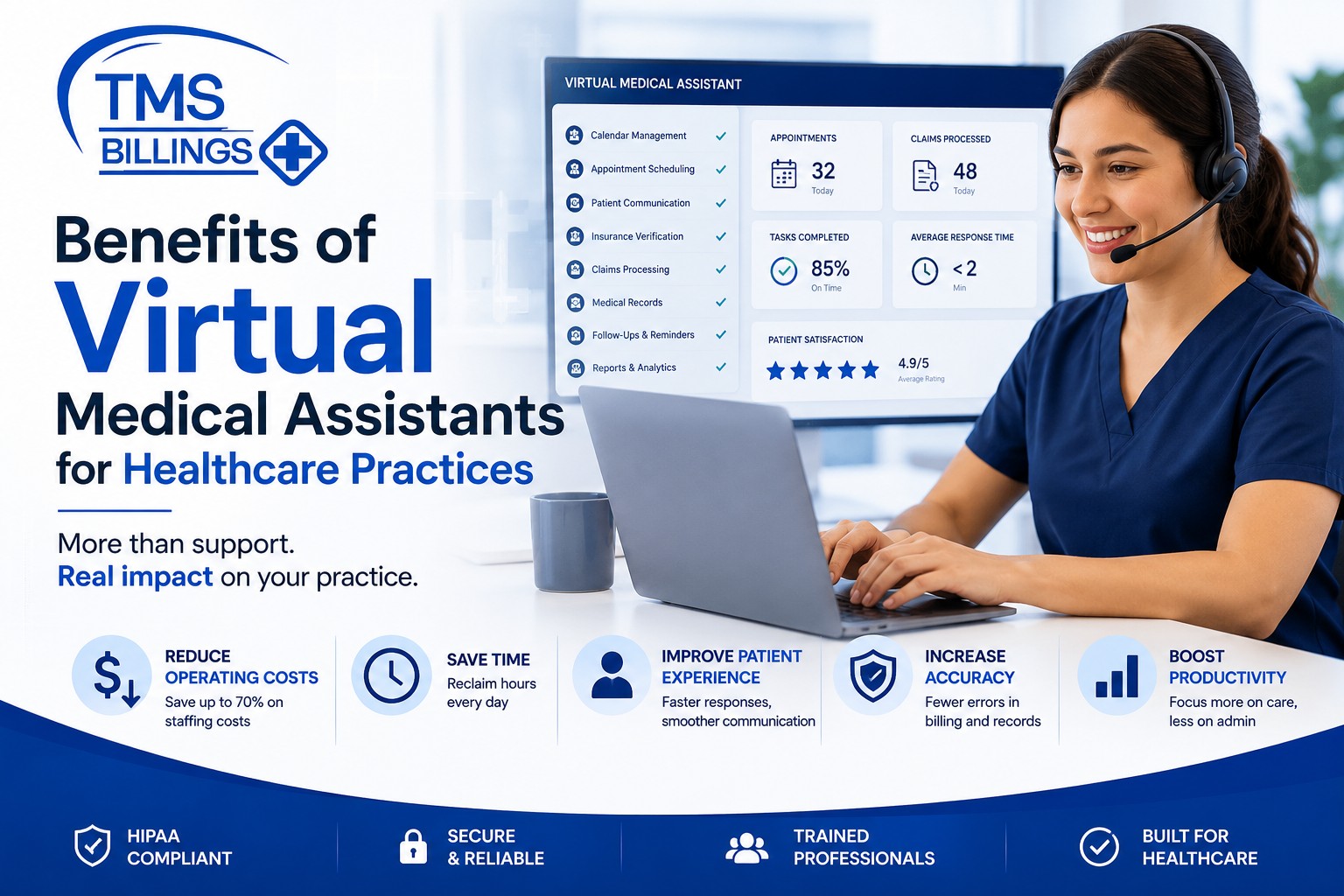
A healthcare virtual assistant doesn’t make the work disappear. But having a trained person whose entire focus is handling those administrative tasks — remotely, consistently, reliably — changes the equation significantly.
Clearing the Air: What a Medical Virtual Assistant Actually Is
People hear “virtual assistant” and picture someone answering generic emails from a laptop in a coffee shop. A medical virtual assistant is something much more specific than that.
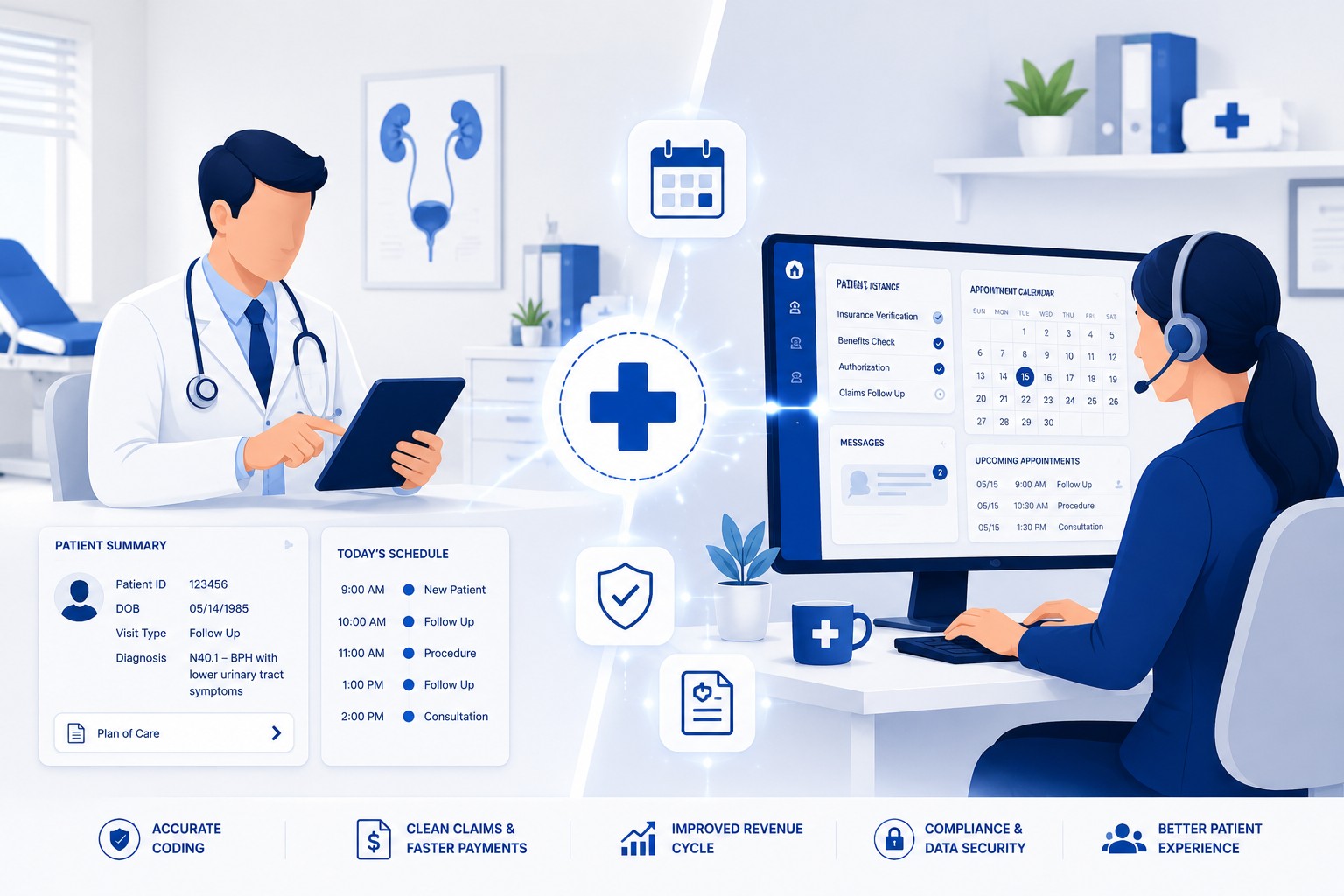
These are trained professionals who understand healthcare workflows — not just administratively, but contextually. They know how insurance verification services work. They understand HIPAA compliance requirements and why they matter. They can navigate EHR systems, handle patient scheduling support, process billing documentation, and coordinate referrals without needing to be walked through every step.
A remote medical assistant working inside your practice operates as an extension of your team, just not a physical one. They log into your systems securely, handle their assigned responsibilities, and communicate with your staff the way any remote employee would. From the patient’s perspective — and often from your staff’s — the work just gets done.
That’s the simplest way to describe it. The work that was piling up starts getting done. Consistently.
The Benefits of Virtual Medical Assistants That Actually Move the Needle
Let’s talk about what practices actually experience when they bring virtual healthcare support into their operations. Not the theoretical list — the things that matter to people running a real practice.
Workload Drops in Places You Feel It Most
How virtual medical assistants reduce administrative workload is a phrase worth unpacking, because the impact isn’t evenly distributed across every task. It tends to hit hardest in the areas that were causing the most friction.
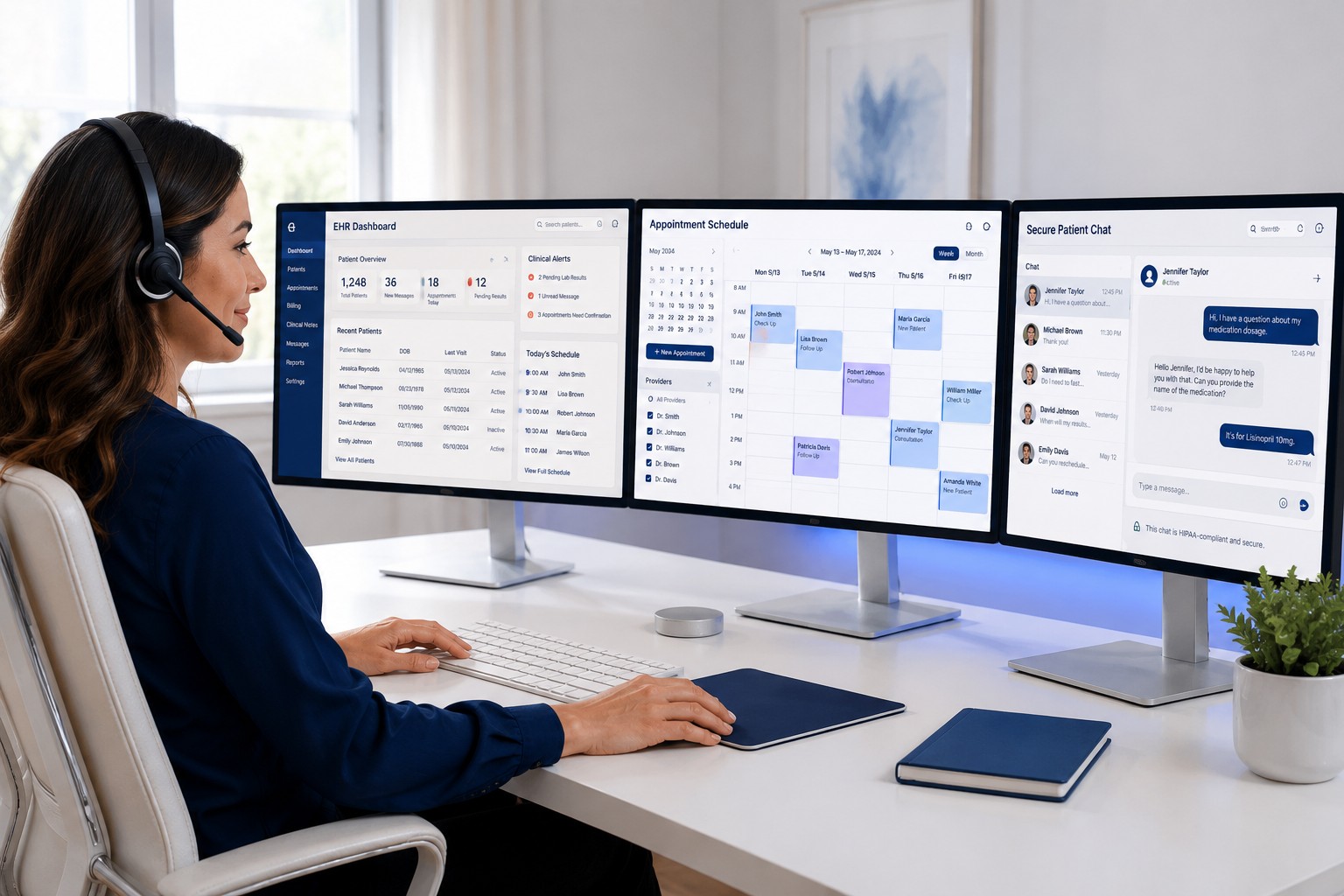
Patient communication is usually the first place people notice a difference. When there’s a dedicated person handling inbound calls, appointment confirmations, follow-up reminders, and patient questions — and that’s their only job — the front desk stops being a bottleneck. Staff who were previously splitting their attention between a waiting room full of patients and a ringing phone can actually focus on the people standing in front of them.
Insurance verification is another area where the relief is immediate. Getting insurance verified before patients arrive instead of scrambling at check-in sounds simple, but it changes the whole flow of your day. Fewer surprises. Fewer delays. Fewer awkward conversations at the front desk about coverage that turned out to be inactive.
EHR management is where physicians tend to feel the impact most personally. Pre-visit chart prep, post-visit documentation entry, records updates — when a virtual assistant takes on a meaningful portion of that documentation load, the physicians who benefit from it often say it’s the single biggest quality-of-life change they’ve made in years.
The American Academy of Family Physicians has documented the connection between EHR burden and physician burnout in detail worth reading if you haven’t yet: https://www.aafp.org/journals/fpm/blogs/inpractice/entry/ehr_burden.html
Patient Satisfaction Goes Up — and It Shows in Your Numbers
How virtual medical assistants improve patient satisfaction isn’t mysterious. Patients are more satisfied when their calls get answered, when their questions get resolved without three transfers, and when someone actually follows up after their visit like they said they would.
Most of that sounds basic. And it is — in theory. In practice, it requires dedicated bandwidth that a lot of practices just don’t have. When you’re short-staffed and overwhelmed, patient communication becomes reactive instead of proactive. You’re responding to complaints instead of preventing them.
A virtual healthcare support professional focused on patient communication changes that dynamic. Appointment reminders reduce no-shows. Post-visit follow-ups improve care compliance and show patients you actually care what happens to them after they leave. Pre-procedure instructions sent proactively reduce day-of confusion and callbacks.
The Beryl Institute has done consistent research showing that patient experience directly ties to loyalty and referrals. This is good for patients and it’s good for your practice financially: https://www.theberylinstitute.org
Revenue Cycle Management Is Where the Financial Case Gets Undeniable
Let’s talk about money, because this is where a lot of practice managers need convincing — and where the numbers are hardest to argue with.
Claim denials cost practices a lot. Not just in the revenue that gets delayed or lost, but in the staff time required to manage, appeal, and resubmit claims that should have gone through cleanly the first time. A practice without dedicated medical billing support is almost certainly losing revenue it doesn’t know it’s losing.
Medical billing support from a trained remote medical assistant means someone is watching the revenue cycle full-time. Charge entry happens correctly. Claims go out clean. Denials get caught quickly and addressed before they age into uncollectible accounts. Outstanding balances get followed up consistently instead of being left on a to-do list nobody has time for.
This is revenue cycle management as an active process, not a passive one. And for small to mid-sized practices especially, having that active oversight makes a meaningful difference in collections.
The American Medical Association has a solid practice management resource library worth bookmarking: https://www.ama-assn.org/practice-management/sustainability/practice-management
For practices already using virtual medical assistance, the billing efficiency piece often ends up being where the ROI is most clearly visible. And for practices still on the fence, it’s frequently the argument that tips the decision.

Why Medical Practices Are Hiring Virtual Medical Assistants Right Now
Why medical practices are hiring virtual medical assistants at an accelerating pace comes down to a few things converging at the same time.
The remote work infrastructure is genuinely solid now. HIPAA-compliant communication tools, cloud-based EHR platforms with secure remote access, encrypted file-sharing — none of this is experimental anymore. Practices can give a remote medical assistant the access they need to do their job well without creating meaningful security exposure.
The training pipeline for healthcare administrative roles has also deepened. People entering the virtual healthcare support field now have access to specialized training in medical terminology, EHR platforms, insurance verification, billing workflows, and HIPAA compliance. This isn’t a general administrative pool anymore — it’s a specialty.
And the cost math is where most practice managers eventually land. When you add up salary, benefits, payroll taxes, equipment, workspace, and turnover costs for in-house administrative staff, the number is significantly higher than what most people instinctively estimate. Virtual staffing removes a large portion of that overhead while still delivering the work that needs to get done.
For small practices especially — the ones where a single admin departure creates a crisis — having virtual staff who aren’t physically dependent on your location creates a stability that in-office-only staffing can’t match.
HIPAA Compliance Isn’t Optional — and Good VMA Providers Know That
The most common hesitation when practices first consider virtual healthcare support is data security. And honestly, that’s the right thing to be careful about. Healthcare data is sensitive, the regulations are strict, and the consequences of a breach run the full spectrum from reputational damage to serious legal exposure.
Good virtual medical assistant services treat HIPAA compliance as a foundation, not a feature. That means Business Associate Agreements in place before anyone touches patient data. It means encrypted communications, role-based access permissions, and regular compliance training for virtual staff. It means documented policies for what happens if something goes wrong.
When you’re evaluating any provider of remote medical assistant services, ask specifically about their BAA process, their data handling documentation, and their incident response procedures. The HHS Office for Civil Rights publishes the requirements for what those agreements must cover: https://www.hhs.gov/hipaa/for-professionals/covered-entities/sample-business-associate-agreement-provisions/index.html
A practice with a properly structured virtual staffing arrangement can actually have better compliance documentation than one relying on informal in-office processes that were never formally written down.

Virtual Medical Assistant Benefits for Small Medical Practices
Small practices face a version of the administrative burden problem that’s particularly acute. The complexity is the same as a large group — insurance verification, appointment scheduling, billing, patient communication, EHR documentation — but the staff resources to handle it are a fraction of what a large system has.
The virtual medical assistant benefits for small medical practices show up directly in this gap. Instead of hiring multiple full-time employees to cover different administrative functions, a small practice can bring in trained virtual support that covers the same ground at a significantly lower total cost.
There’s also a flexibility angle that matters at this scale. A solo practitioner who needs to increase scheduling support during a busy period — or reduce it during a slow one — has almost no ability to do that with traditional employment. Virtual staffing adjusts. That kind of operational agility is genuinely valuable for practices that can’t afford to carry excess capacity.
The Medical Group Management Association has practical resources for small and independent practices on workflow efficiency and staffing models worth exploring: https://www.mgma.com/resources
If you’re running a small practice and wondering whether this works at your scale, the honest answer is that it often works better at smaller practices than larger ones, because the administrative chaos is more visible and the impact of fixing it is more immediate.
For U.S.-based practices interested in exploring what tailored support could look like, TMS Billings offers virtual medical assistance services built specifically for the American healthcare market: https://tmsbillings.com/services/virtual-medical-assistance-services-usa/
Medical Practice Efficiency Is a System, Not a One-Time Fix
One thing that doesn’t get talked about enough when practices are evaluating virtual support is what happens after the first 90 days. Because the initial transition — learning each other’s workflows, establishing communication rhythms, figuring out which tasks the virtual assistant handles best — that’s one chapter. What comes after it is where medical practice efficiency really starts to compound.
When your staff isn’t constantly buried in healthcare administrative tasks they don’t have enough bandwidth for, something else happens: they start to notice other things that could work better. Scheduling patterns that could be tightened. Communication workflows that could be improved. Revenue cycle gaps that were always there but never had anyone looking at them.
The best virtual healthcare support arrangements don’t just offload tasks — they create space for the practice to operate more intentionally. And for most practices that have been in reactive mode for years, that shift feels significant.
What Making the Switch Actually Looks Like
The most common thing practices say after making this transition is that they wished they’d done it sooner. But before that, the most common thing they say is that they’re not sure where to start.
Start with an honest look at your current administrative workflows. Where is the most time going? Where are errors most common? What keeps getting pushed to tomorrow because today was too busy? Those answers tell you which functions to hand off first.
Most practices start with patient scheduling support and communication, because these have the most immediate and visible impact. From there, insurance verification and billing support are natural second steps that tend to generate measurable financial return quickly.
Getting the infrastructure right matters — confirm remote EHR access, set up HIPAA-compliant communication channels, define access permissions carefully. Then onboard your virtual assistant with a real orientation: your systems, your patients, your preferences, your workflows. The upfront investment in that orientation pays back quickly.
For a closer look at what a tailored virtual support arrangement could look like for your practice, the team at TMS Billings works specifically with healthcare practices across the U.S.: https://tmsbillings.com/services/virtual-medical-assistance-services-usa/

The Bigger Picture
Healthcare practices are under real pressure — financially, operationally, and on the clinical side. The administrative side of that pressure has been building for years, and the traditional approach of hiring more in-office staff to absorb it isn’t sustainable for most practices anymore.
The benefits of virtual medical assistants aren’t abstract. They show up in schedules that run on time. In billing that doesn’t leak. In patients who actually get called back. In physicians who aren’t documenting at midnight. In staff who aren’t burning out because they’re asked to do too many things at once.
None of that is small. And for the practices that have made this shift, it’s become hard to imagine going back.
This article is for general informational purposes. Every practice’s situation is different — consult a qualified healthcare operations specialist before making staffing changes.