
What Happens to Your Cash Flow When Claims Get Denied in Florida?
Every denied claim is a disruption your practice cannot afford to ignore. Medical claim denials cash flow Florida practices experience can ripple through your entire revenue cycle — stalling payments, inflating accounts receivable, and ultimately costing your practice thousands of dollars in preventable losses. Whether you run a cardiology clinic in Tampa or an orthopedic practice in Orlando, understanding what happens to cash flow when claims are denied in Florida is the first step toward fixing it. Our medical billing services in Florida are built around helping practices do exactly that.
The Real Cost of a Denied Claim
When medical claim denials hit, cash flow in Florida practices doesn’t just slow — it stalls. A denied claim triggers rework, delays reimbursement by 30–90+ days, and risks permanent write-off if appeals deadlines are missed. Understanding why denials happen is the first step to protecting your revenue cycle.
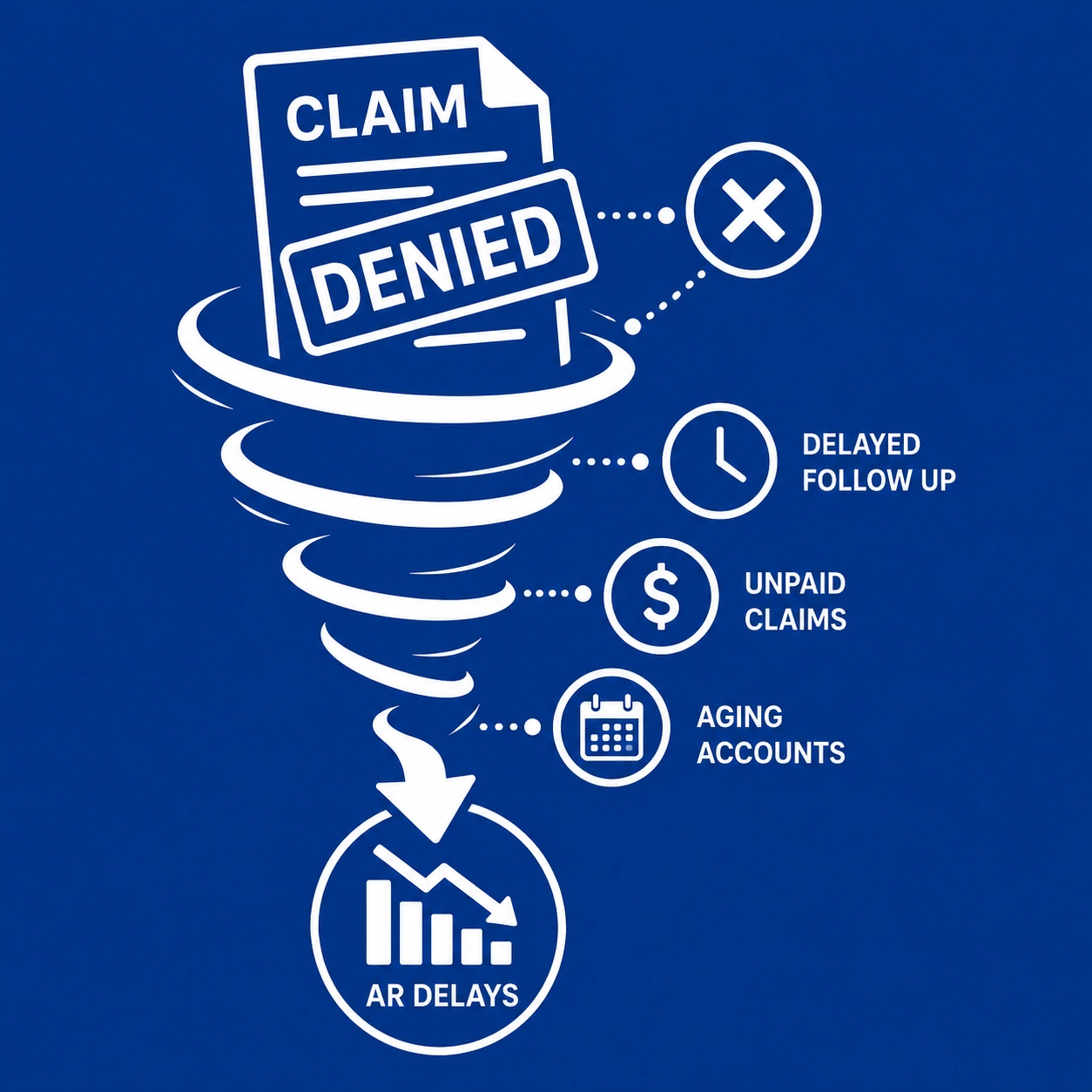
A denied claim is not a billing inconvenience. It is a financial event. When a payer returns a claim unpaid, your billing team must identify the denial reason, gather supporting documentation, correct the claim, and resubmit — all within the payer’s appeals window. That process takes time, staff, and money. According to MGMA benchmarks (mgma.com), reworking a single denied claim costs a practice between $25 and $118, depending on denial complexity. Multiply that across dozens of denials per month and the denied claims revenue impact becomes a serious threat to your bottom line.
The real danger is compounding. A claim denied today doesn’t just delay payment — it ages into your accounts receivable (AR), consumes staff hours, and risks becoming a permanent write-off if the appeals window closes without action.
Why Medical Claims Get Denied in Florida
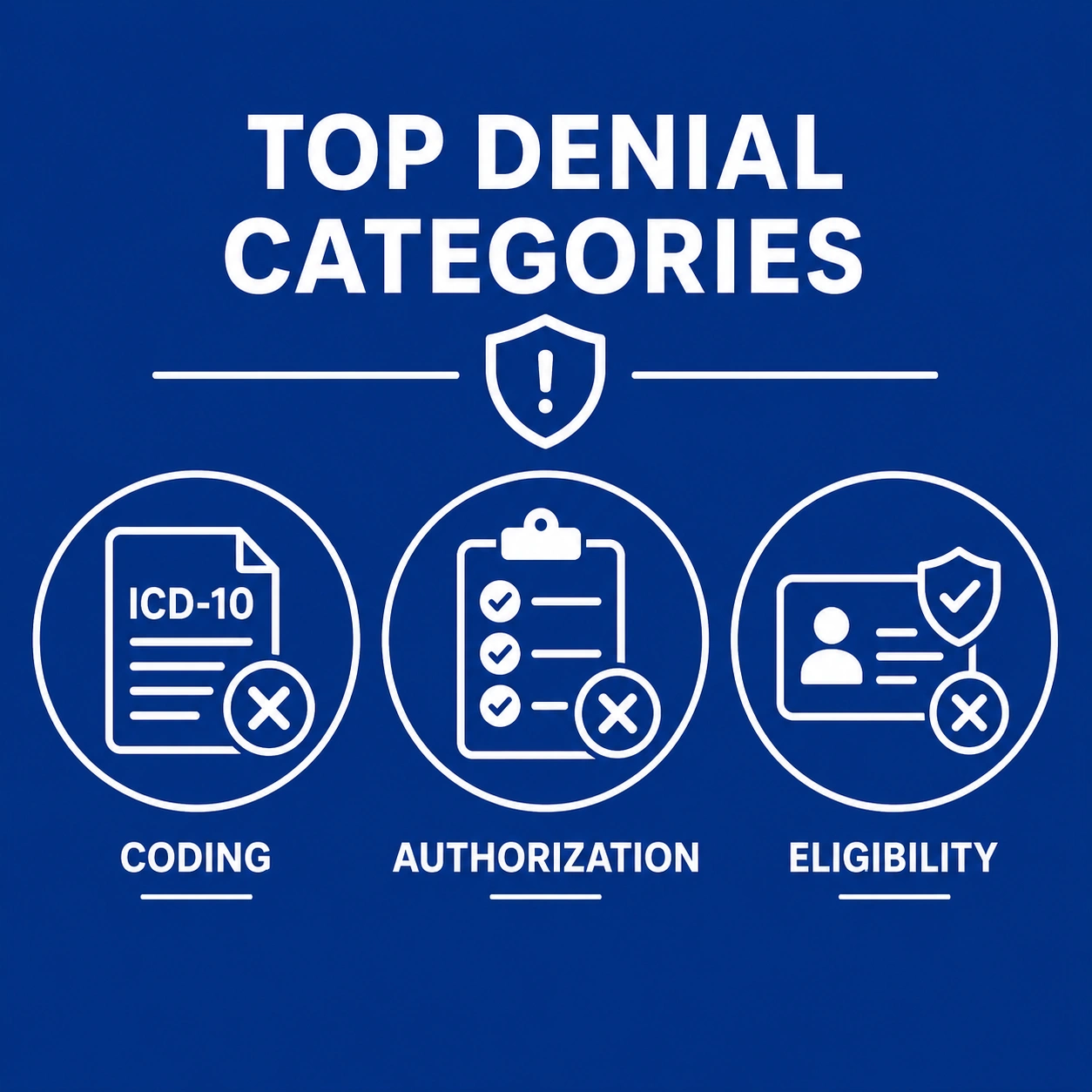
Florida’s payer environment is genuinely complex. Practices deal with Medicare Advantage plans, Medicaid managed care organizations, and commercial carriers — each with its own submission rules, credentialing requirements, and prior authorization protocols. That variety creates multiple points of failure. The most common medical claim denial reasons in Florida trace back to four core categories: coding errors, eligibility issues, authorization failures, and documentation gaps.
Identifying which category triggered a denial determines how quickly you can recover — and how much the cash flow disruption will ultimately cost your practice.
Common Denial Codes Florida Practices See Most
Two of the most frequent denial codes in Florida — and across the country — are CO-4 and CO-16.
A CO-4 denial indicates that the modifier billed is inconsistent with the procedure. This typically occurs when a modifier is applied without meeting payer-specific criteria or when NCCI edits flag an unbundling conflict. A CO-16 denial signals that the claim is missing required information or has incomplete documentation. Both codes point directly to preventable errors at the point of coding or claim submission.
Other commonly seen codes include CO-97 (service included in a previously adjudicated claim), CO-11 (diagnosis inconsistent with procedure), and CO-57 (prior authorization not obtained). Each creates a different cash flow disruption pattern and requires a targeted correction strategy. Medical billing accuracy at the claim level is the most direct defense against all of them.
Medical Claim Denials Cash Flow Florida — How the Damage Spreads
Understanding how medical claim denials damage cash flow in Florida means following the money — or rather, tracing exactly where it stops moving.
How Medical Claim Denials Cash Flow Florida Creates an Accounts Receivable Ripple Effect
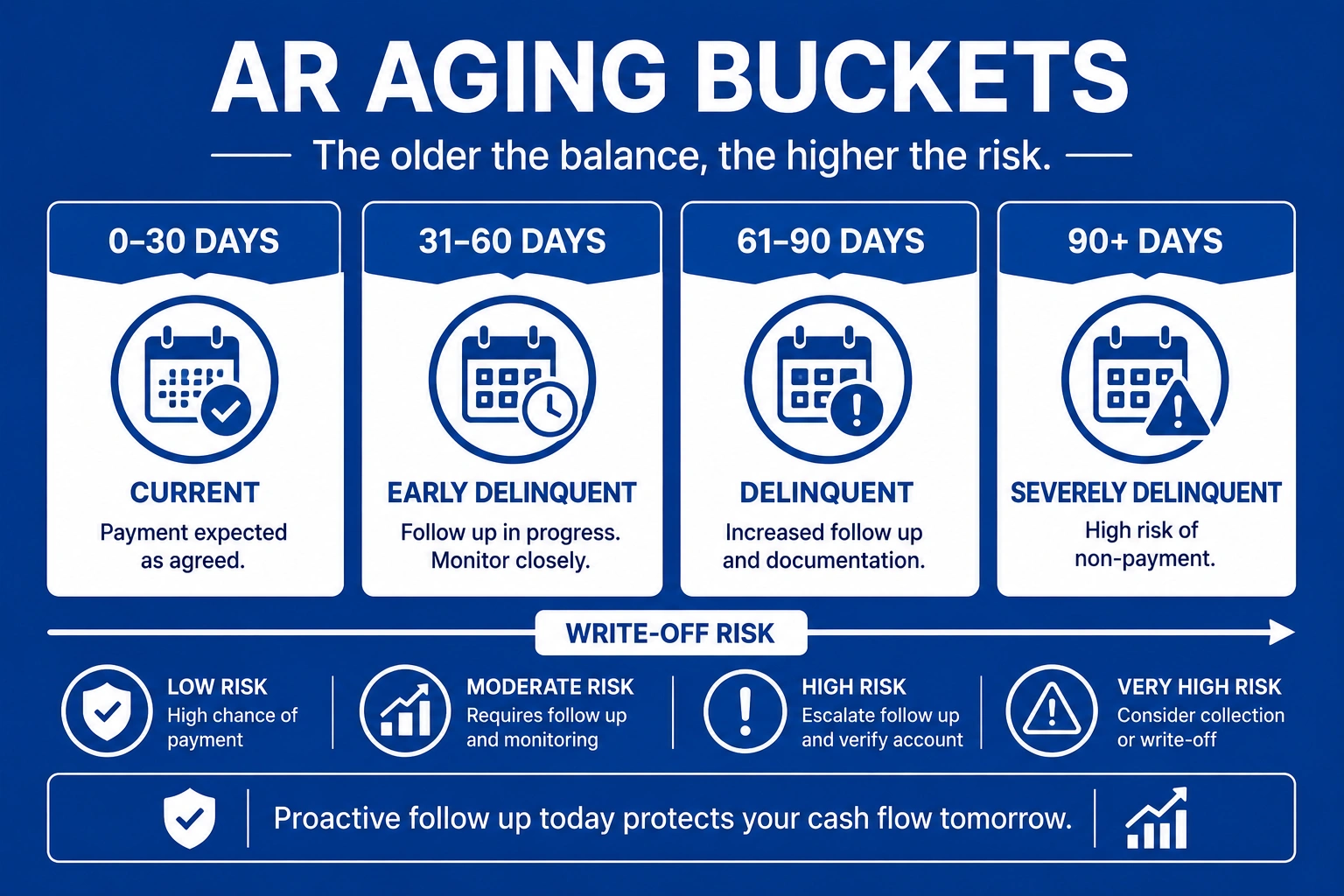
When a claim is denied, it doesn’t disappear. It moves into your AR as an outstanding balance. If your billing team doesn’t catch it promptly, that balance ages — moving from 30 days past due to 60, then 90, then beyond. MGMA data shows that denied claims add an average of 16–45 additional days to the AR cycle per occurrence. For high-volume practices, that means tens of thousands of dollars sitting in limbo at any given moment.
As AR ages, the likelihood of collection drops sharply. Claims in the 90–120-day bucket have significantly lower recovery rates than those addressed within 30 days. That’s why denial management response speed is directly tied to how well your practice protects its cash flow.
Hidden Revenue Leakage from Write-Offs
Revenue leakage is one of the most damaging — and least visible — consequences of poor denial management. When payer appeals deadlines pass without action, the denied amount becomes uncollectable. Many practices write off these balances as contractual adjustments or bad debt. This is preventable revenue loss that never appears as a clean line item in your financial reports — it simply disappears from your receivables.
Clinical documentation errors are a leading contributor to write-offs. When a note doesn’t support the level of service billed, payers deny the claim, and without adequate documentation, the appeal fails. Learn more about how clinical documentation errors drive denial risk and what your clinical team can do to reduce it starting today.
Medical Claim Denials Cash Flow Florida — Denial Trends in 2026
The impact of claim denials on practice revenue in Florida has intensified in recent years. Here is what current data reveals about the denial landscape your practice is navigating.
Industry-Average Denial Rates
The average initial claim denial rate across U.S. healthcare practices sits between 10% and 15%, according to MGMA’s Practice Operations Report (mgma.com). Final denial rates — claims that are denied and never successfully overturned — average approximately 3–4%, representing a category of pure, permanent revenue loss.
Denied Claims That Are Never Resubmitted
MGMA data consistently shows that 50–65% of denied claims are never resubmitted. For many practices, this means a substantial portion of earned revenue is simply abandoned. At an average claim value of $150–$300, even a moderate denial volume translates to tens of thousands of dollars in annual losses that never make it into your bank account.
Days Added to the AR Cycle
A single denied claim adds an average of 16–45 additional days to your AR cycle, depending on payer responsiveness and correction complexity. For practices carrying high denial volumes month after month, this can mean hundreds of thousands of dollars in delayed cash flow at any point in the year.
Estimated Annual Revenue Loss from Preventable Denials
MGMA estimates that preventable denials — those stemming from coding errors, eligibility failures, and missing authorizations — account for $50,000 to $250,000 in annual lost revenue for mid-size practices. For larger Florida multi-specialty groups in dermatology, orthopedics, or cardiology, that number climbs substantially higher.
Top Denial Categories for Florida Payers
Based on CMS guidance (cms.gov) and AAPC coding standards (aapc.com), the distribution of denials by category in Florida generally looks like this:
- Coding errors — approximately 30% of all initial denials
- Eligibility and coverage issues — approximately 27%
- Prior authorization failures — approximately 20%
- Documentation deficiencies — approximately 14%
- Duplicate billing and NCCI edit conflicts — approximately 9%
Florida’s heavy concentration of Medicare Advantage plans and Medicaid managed care organizations — both known for stricter authorization requirements than traditional Medicare — pushes prior authorization denials higher than the national average. Understanding these trends is central to addressing the impact of claim denials on practice revenue in Florida.
Most Common Claim Denial Reasons in Florida
Knowing the most common claim denial reasons in Florida gives your billing team a precise target for prevention. These are the categories that drive the largest share of denied claims revenue impact in Florida practices.
Coding Errors and Modifier Misuse
Coding errors are the single largest source of claim denials Florida practices face. This includes incorrect CPT code selection, missing or insufficiently specific ICD-10 codes, and modifier misuse. NCCI edits — published by CMS to prevent improper code combinations — flag many of these issues automatically before a human adjudicator ever reviews the claim. Medical billing accuracy at the code level is the first and most effective line of defense.
Modifier misuse is a particularly costly subset. Applying Modifier 25 without adequate documentation of a separate, significant E&M service, or using Modifier 59 without confirming an applicable NCCI edit, triggers immediate CO-4 denials and can raise compliance flags with your payer.
Prior Authorization Failures
Prior authorization is one of the most complex and most costly denial triggers in Florida. Commercial plans and Medicare Advantage carriers require authorization for a wide range of services — imaging, surgical procedures, specialty referrals, and durable medical equipment. When authorization is not obtained, has expired, or was obtained for the wrong procedure, the claim is denied. In many cases, the denial cannot be appealed successfully without documented pre-approval on file.
The authorization process itself creates significant administrative burden. Florida practices dealing with multiple payers often track dozens of open authorizations simultaneously. A single missed auth is a missed payment. Our Revenue Cycle Management Services include authorization tracking built to prevent these failures before they ever reach the claim stage.
Eligibility and Credentialing Issues
Eligibility denials occur when a patient’s insurance coverage is inactive, their plan has changed, or the rendering provider is not credentialed with the payer at the time of service. In Florida’s high-turnover payer environment — particularly with annual Medicaid managed care plan changes — eligibility verification at the point of scheduling is non-negotiable.
Credentialing lapses are equally damaging. If a provider is not properly enrolled with a payer, every claim they submit will deny — often for months before the issue is identified. That’s a volume-level cash flow problem, not just an isolated billing error.
Medical Claim Denials Cash Flow Florida — Side-by-Side Impact Table
| Metric | Clean Claim | Denied Claim |
|---|---|---|
| Time to Payment | 14–21 days | 45–120+ days |
| Staff Time Required | Minimal — submission only | High — research, rework, resubmission, appeals |
| Cost to Process | $7–$12 per claim | $25–$118 per claim after rework |
| Risk of Non-Payment | Very low | Moderate to high |
| Impact on AR | Moves to paid bucket | Ages into 60–90+ day bucket |
| Write-Off Risk | Negligible | Significant if appeals deadline is missed |
| Cash Flow Outcome | Positive within 30 days | Delayed 30–90+ days or permanent loss |
A clean claim moves through the system predictably. A denied claim introduces cost, delay, and risk at every step. Improving your clean claim rate is the fastest, most direct way to stabilize your practice’s monthly cash flow.
How to Recover Denied Claims and Restore Cash Flow
Knowing how to recover denied medical claims in Florida requires both speed and a structured strategy. Here is the process your billing team should apply to every denial, without exception:
- Identify the denial reason immediately. Pull the Explanation of Benefits (EOB) or Electronic Remittance Advice (ERA) within 24–48 hours of receipt.
- Classify the denial type. Is it clinical (medical necessity), administrative (eligibility, authorization), or coding-related? Each requires a different correction path.
- Determine appealability. Weigh the claim value against the cost and realistic likelihood of a successful appeal before investing staff time.
- Gather supporting documentation. For clinical denials, pull relevant notes, lab results, or imaging reports. For coding denials, review AAPC guidelines and payer-specific coverage policies.
- Submit the appeal within the payer’s window. Florida commercial payers typically allow 30–180 days to appeal. Medicare Advantage plans follow contracted timelines. Missing the deadline means losing the claim permanently.
- Track appeal status actively. Don’t file and forget. Follow up at regular intervals and escalate to peer-to-peer review when necessary.
Payer appeals are winnable — but only when pursued correctly and on time. Our medical billing services include end-to-end appeals management so your team doesn’t have to carry that burden alone.
Best Practices to Reduce Claim Denials in Florida
Learning how to reduce the claim denial rate in Florida starts before the claim is ever submitted. These prevention strategies deliver the highest impact for Florida practices across all specialties.
Front-End Eligibility Verification
- Verify patient eligibility at every visit — not just at the time of scheduling
- Confirm active coverage, plan type, copay, and deductible status in real time
- Check provider credentialing status with each payer before billing begins
Authorization Management
- Build a tracking system that flags expiring authorizations 5–7 business days in advance
- Document every authorization number and approved service scope before the appointment
- Never assume a prior auth transfers across facilities, payers, or rendering providers
Coding Accuracy and NCCI Compliance
- Conduct regular internal audits using AAPC coding standards
- Run claims through payer-specific edit tools to catch NCCI edit conflicts before submission
- Train clinical staff on documentation requirements for E&M service levels and procedure justification
Documentation Standards
- Align clinical notes directly with the CPT codes billed — specificity matters at every level
- Ensure every procedure carries a supporting ICD-10 code at the highest level of specificity available
- Address recurring CO-16 denial patterns with targeted documentation education for providers
Denial Tracking and Reporting
- Review denial patterns weekly, not monthly — delays compound losses
- Track denial rates by payer, rendering provider, and denial category separately
- Use denial data to train front-end staff on recurring failure patterns
Understanding the right medical billing pricing models for your practice size also matters — a percentage-based billing model aligns your billing partner’s incentives directly with your collection outcomes.
How TMS Billings Helps Florida Practices Protect Cash Flow

At TMS Billings, our coding and compliance team works with Florida practices daily to address the root causes of medical billing Florida challenges — not just the symptoms. Here is what that looks like in practice:
Denial Root Cause Analysis: We don’t just rework denied claims. We track denial patterns across payers, providers, and procedure categories to identify systemic issues in your coding, documentation, or authorization workflows before they compound.
Real-Time Eligibility Verification: Every patient, every visit. We verify coverage before service is rendered, eliminating eligibility denials from the point of origin.
Prior Authorization Tracking: Our team manages the full authorization lifecycle — submission, follow-up, documentation, and renewal — so your clinical staff can focus on patients.
Payer-Specific Appeal Strategies: We understand how Florida’s major payers — including Medicaid managed care plans, Medicare Advantage carriers, and commercial insurers — review and adjudicate appeals. We build every appeal argument accordingly, with supporting documentation matched to payer criteria.
AR Monitoring and Escalation: We review your accounts receivable (AR) aging weekly and escalate any claim approaching a payer’s appeals deadline. Revenue leakage from aging AR stops with active, real-time oversight.
Compliance-Driven Coding: Our team applies AAPC-standard coding practices, screens for NCCI edit conflicts, and validates modifier usage and diagnosis specificity before every submission — delivering a higher clean claim rate and fewer write-offs per billing period.
Revenue cycle management Florida practices can depend on starts with prevention and ends with full recovery. That is the standard we hold ourselves to at TMS Billings.
Key Takeaways
- Medical claim denials cash flow Florida practices face can delay reimbursement by 30–90+ days per denied claim
- Coding errors, prior authorization failures, and eligibility issues are the top three denial drivers across Florida payers
- Between 50–65% of denied claims are never resubmitted — that is permanent, avoidable revenue loss
- CO-4 and CO-16 denials are among the most correctable and most common codes Florida practices encounter
- A clean claim costs $7–$12 to process; a denied claim costs $25–$118 after rework and appeals
- Denial management speed directly determines how much cash flow your practice recovers
- Prevention at the front end — eligibility, authorization, and coding accuracy — is always cheaper than rework
Final Thoughts
Medical claim denials cash flow Florida practices experience is not an abstract billing problem — it is a direct and measurable threat to your financial stability. Every denial that goes unaddressed ages in your AR, consumes staff resources, and risks becoming an uncollectable write-off. The good news is that denials are preventable. With the right denial management processes, payer-specific appeal strategies, and a billing partner who understands the nuances of Florida’s payer environment, your practice can significantly reduce denial volume and protect the revenue you have earned.
If your practice is losing cash flow to denied claims, TMS Billings is ready to help. Contact our team today to schedule a denial audit and find out exactly where your revenue is leaking — and how to stop it permanently.