AI in Medical Billing: How Automation Is Transforming Revenue Cycle Management
Written by the TMS Billings Coding & Compliance Team | Reviewed by [Jacob White]
Your phone rings between patient visits, and it’s another vendor pitching AI in medical billing as the fix for your denial rate, your slow reimbursements, and your stretched-thin front office — all inside 90 days, guaranteed. It’s an easy pitch to nod along to, because the underlying promise is genuinely appealing: fewer denials, faster payments, less time spent re-keying data. What’s harder to get from a 20-minute demo is a straight answer about what the software actually does, versus what the slide deck implies it does.
That gap matters, because AI in medical billing isn’t one product. It’s a set of tools layered into different points in the revenue cycle — claims scrubbing, coding assistance, denial prediction, eligibility checks — and each one carries a different mix of real benefit and real risk. Some of it meaningfully cuts administrative work. Some of it still needs a trained biller or coder checking the output before a claim goes anywhere near a payer.
This guide walks through what AI in medical billing actually does, how it compares to traditional billing workflows, where the compliance risks sit, and what it means for behavioral and mental health practices specifically — a specialty most generic AI-billing content skips entirely.
AI in medical billing uses machine learning and natural language processing to automate claims scrubbing, medical coding, denial prediction, and eligibility verification — helping healthcare practices submit cleaner claims, get paid faster, and reduce staff workload, with human review still required for compliance.
What Is AI in Medical Billing?
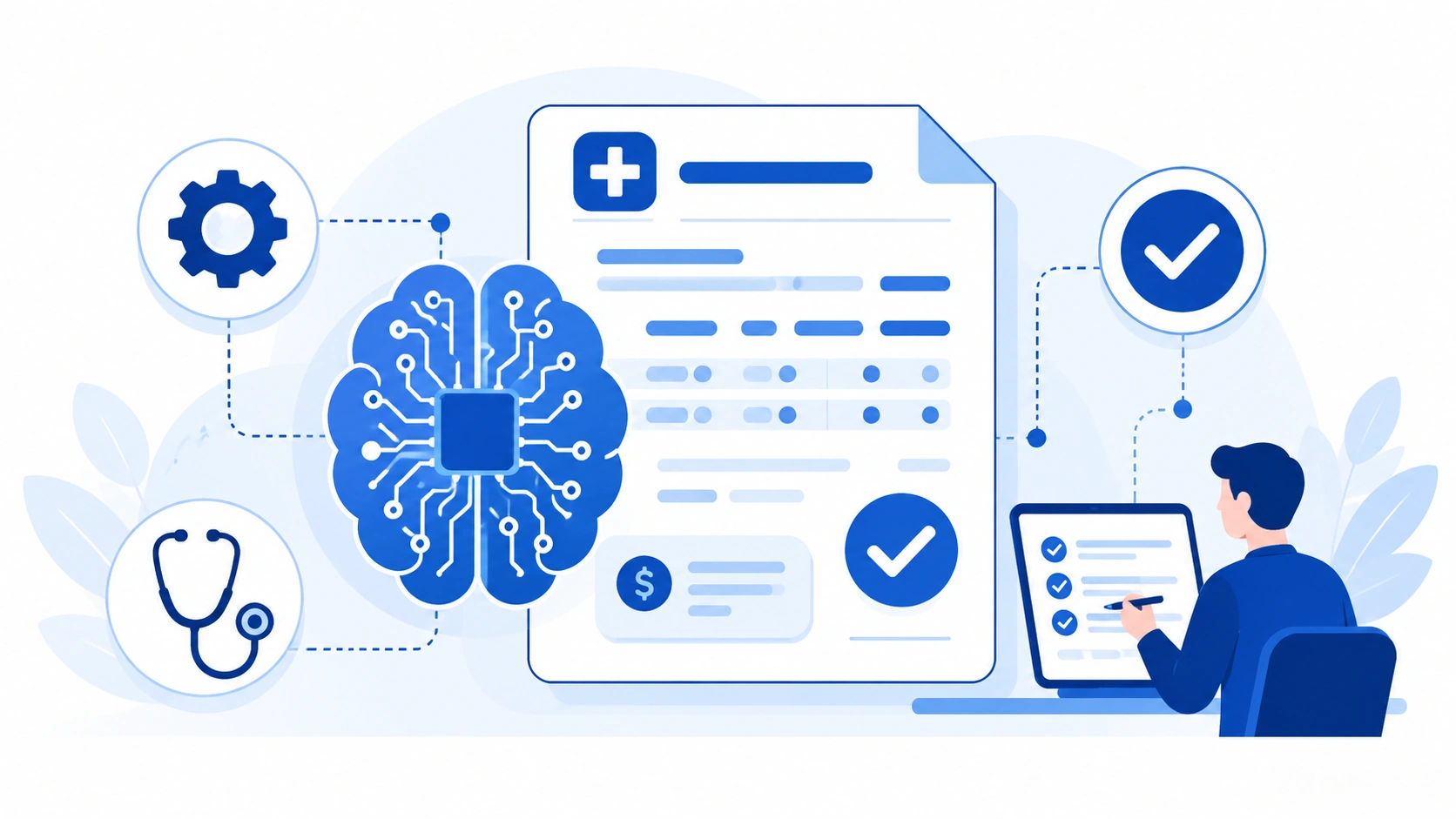
AI in medical billing refers to software that uses machine learning (ML), natural language processing (NLP), and robotic process automation (RPA) to handle tasks that used to require a person reading every line of a claim by hand. Instead of a biller manually checking each CPT and ICD-10 code against payer rules one claim at a time, algorithms trained on historical claims data flag likely errors, suggest codes, and predict which claims are at risk of denial before submission.
The technology typically sits on top of, or connects into, your existing EHR/EMR integration and practice management system — it isn’t usually a standalone platform you run separately. It doesn’t replace the billing team; it changes what the team spends time on. Routine, repetitive checks move to software. Judgment calls — an ambiguous modifier, appeals language, a payer’s unwritten documentation preference — still go through a person.
In practice, “AI in medical billing” shows up as a feature inside AI medical billing software: claims-scrubbing engines, coding-assist tools, and denial-prediction dashboards, often layered on top of the clearinghouse a practice already uses. Done well, the result is fewer clean-but-flawed claims sitting in a queue for a human to catch — not an unsupervised billing department running itself.
Traditional vs. AI-Powered Medical Billing at a Glance
The practical difference between traditional and AI revenue cycle management comes down to when a problem gets caught. Traditional billing is largely reactive — issues surface after a claim is denied, and someone has to work the denial after the fact. AI-powered billing shifts more of that work earlier, flagging likely problems before a claim leaves the building, though a person still has to review what it flags.
| Factor | Traditional Billing | AI-Powered Billing |
|---|---|---|
| Claims review | Manual, line-by-line | Automated pre-submission scrubbing |
| Coding | Fully manual coder assignment | AI-suggested codes, human-reviewed |
| Denial management | Reactive, after denial occurs | Predictive — flags high-risk claims pre-submission |
| Eligibility verification | Phone/portal checks, staff-run | Real-time automated verification |
| Turnaround time | Days | Hours |
| Staffing model | Scales with claim volume | Scales with oversight, not headcount |
| Compliance monitoring | Periodic manual audits | Continuous rule-based monitoring + human review |
Turnaround and staffing patterns above reflect general industry trends, not a guarantee — actual results vary by payer mix, claim complexity, and how a given tool is implemented.
How AI in Medical Billing Works
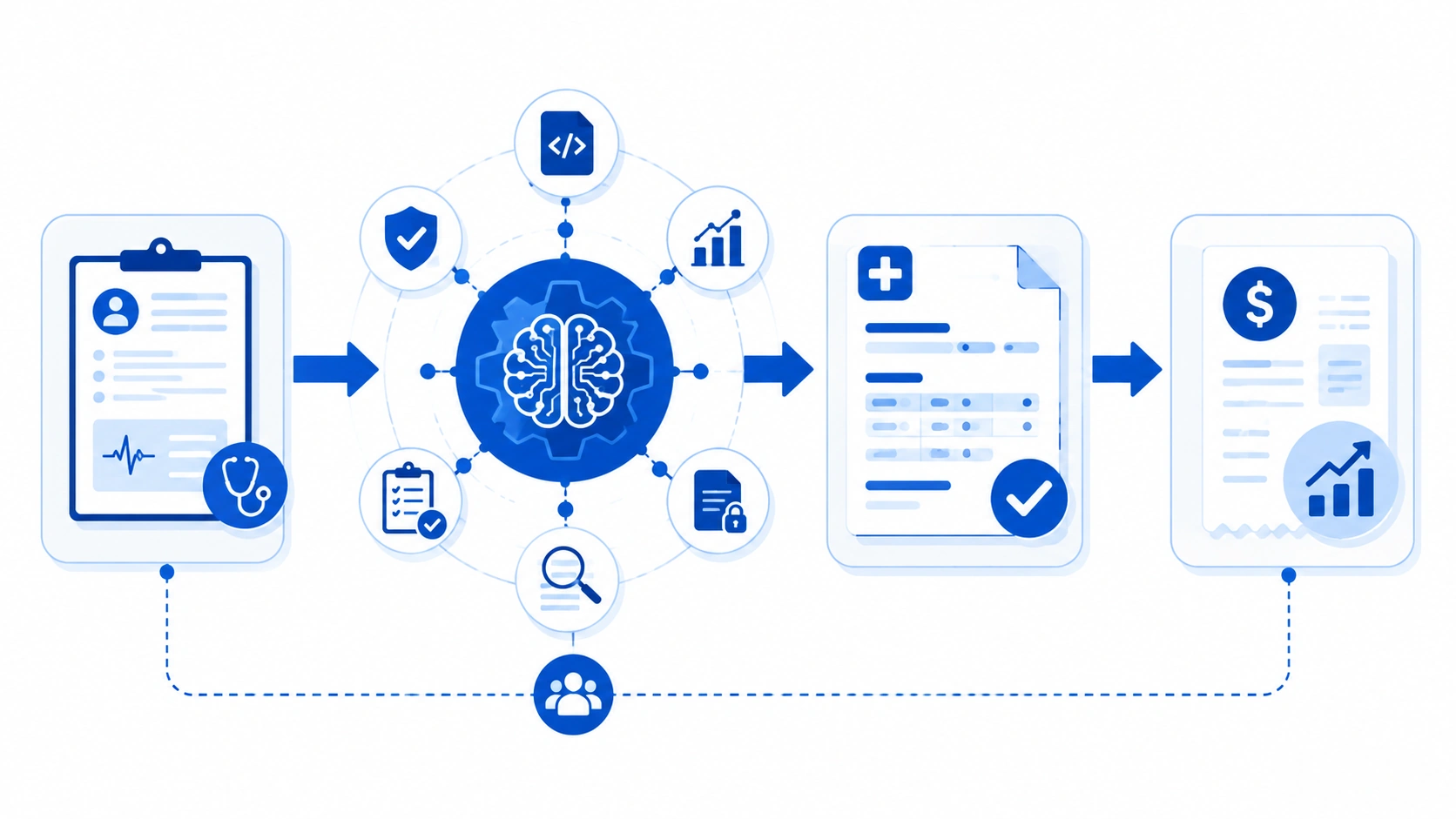
How AI in medical billing works comes down to five connected use cases that touch a claim from the moment a visit is documented to the moment it’s paid. Understanding how AI is used in medical billing — rather than just knowing it exists — is what actually helps you evaluate a vendor’s pitch. Recent HFMA analysis points to automation increasingly touching multiple stages of the reimbursement process rather than just one isolated task.
Claims Scrubbing & Pre-Submission Error Detection
Claims scrubbing is usually the first place AI shows up, because it’s the easiest use case to prove out without changing how coders already work. The software checks each claim against payer-specific rules, coding edits, and formatting requirements before submission, catching mismatches a person might miss at 4:45 on a Friday.
This is the most common entry point for AI claims processing, since it plugs into an existing workflow rather than replacing it. A biller still reviews anything flagged. The software just narrows down which claims need a second look, instead of requiring every claim to get the same level of manual scrutiny.
Automated Medical Coding
Automated medical coding tools read clinical documentation — visit notes, orders, diagnostic results — and suggest CPT, ICD-10, and HCPCS codes based on what’s actually documented. Some vendors call this autonomous coding when the system generates a code without a human draft first, though most practices still route every suggested code through a certified coder before it’s finalized.
The value here isn’t that the software codes “better” than a person in isolation — it’s speed and consistency. A coder reviewing and confirming a suggested code moves faster than one building a claim from a blank template, especially on high-volume, lower-complexity visit types.
Denial Prediction & Prevention
Denial prediction is where predictive denial analytics comes in: the system compares an outgoing claim against patterns from past denials — for that payer, that code combination, that documentation gap — and flags anything with a high likelihood of rejection. That flag happens before submission, not after.
This matters because reworking a denied claim costs more staff time than getting it right the first time. A predictive flag gives a biller the chance to fix a documentation gap or add a missing modifier before the claim ever reaches the payer, rather than starting an appeal weeks later.
Eligibility Verification & Prior Authorization
Eligibility verification used to mean a staff member on hold with a payer or digging through a portal before every visit. AI-driven tools pull real-time eligibility data directly from payer systems, confirming active coverage, plan details, and benefit limits in seconds instead of a phone call.
Prior authorization automation extends the same idea further upstream — checking whether a service requires authorization, and in some cases submitting the request, before the appointment happens. Anything incomplete or unusual still routes to staff, since payer authorization rules change often enough that full automation isn’t realistic yet.
Accounts Receivable & Collections Prioritization
Once a claim is paid or partially paid, AI tools can rank the remaining accounts receivable (A/R) by how likely each one is to be collected and how responsive the specific payer tends to be. Instead of working every open account in the order it landed in the queue, staff work the accounts most likely to pay first.
This doesn’t eliminate collections work — it sequences it. Complex appeals and low-probability accounts still need a person’s judgment about whether continued pursuit is worth the staff time it takes.
Benefits of AI in Medical Billing for Healthcare Practices
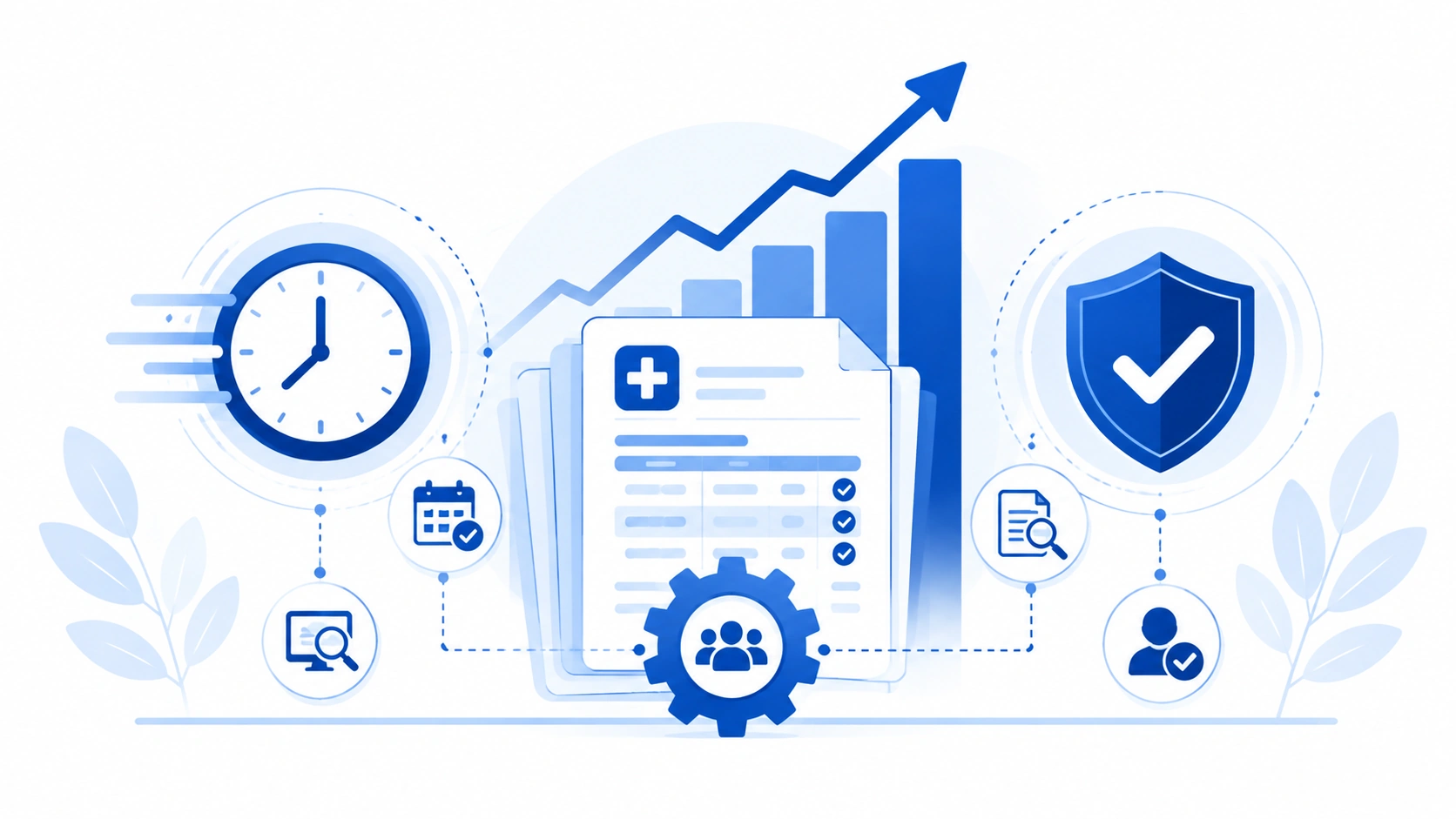
The benefits of AI in medical billing show up most consistently in three places: fewer denials, faster payment cycles, and less staff time spent on repetitive, claim-level tasks. None of that is automatic — it depends on how well the tool is configured and how much human review stays in place — but the pattern holds across most well-implemented systems.
Cleaner claims going out the door means fewer claims coming back. That’s the direct effect of claims scrubbing and coding accuracy checks working together: the software catches mismatches between documentation and code selection before a human ever signs off, so fewer claims bounce for preventable reasons.
The second benefit is speed. Real-time eligibility checks and automated pre-submission review shorten the gap between a visit and a clean claim leaving the building, which shortens the gap before payment arrives. Practices using automated medical coding also tend to free up coder time that used to go toward routine, low-complexity charts, redirecting it toward claims that actually need a coder’s judgment.
The third benefit is staffing flexibility. Instead of adding headcount every time claim volume grows, a practice using AI medical billing software can often absorb more volume with the same team, because the software handles first-pass review and the team focuses on exceptions. That’s the net effect of revenue cycle automation: not fewer people, necessarily, but fewer manual touches per claim — which is also what people mean when they talk about AI revenue cycle management as a whole, rather than any single tool.
None of this replaces a well-run billing operation. It supports one.
Risks and Compliance Considerations for AI in Medical Billing
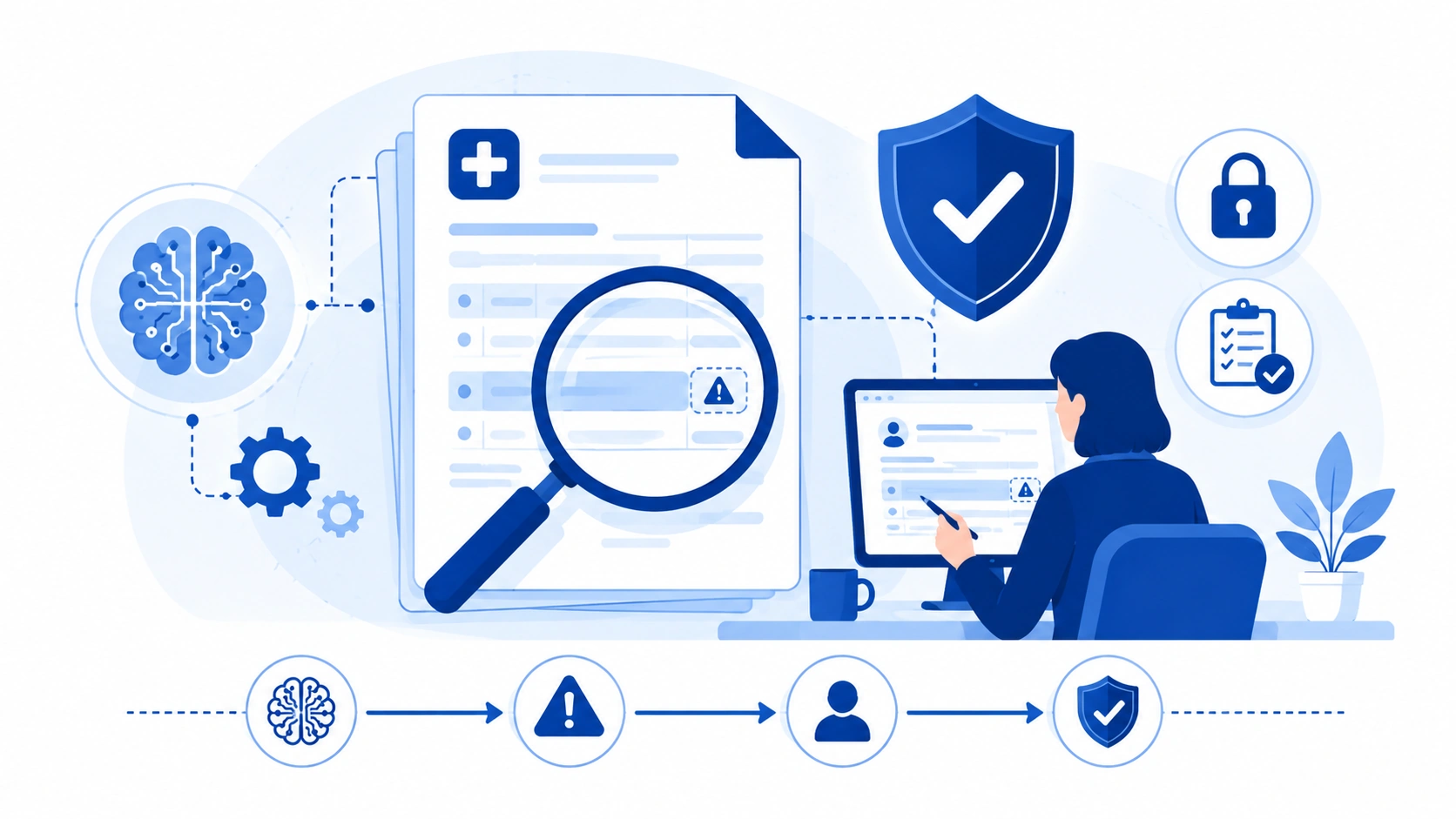
The risks of AI in medical billing center on one theme: the software is only as reliable as the human oversight built around it. An algorithm trained on historical claims data can still suggest an incorrect code, misread ambiguous documentation, or apply a rule that’s since changed — and if nobody catches it, that mistake goes out on every similar claim after it, not just one.
Regulators are paying closer attention to artificial intelligence in healthcare billing than they were even a year ago. Several states have introduced AI-disclosure requirements for healthcare technology, and federal guidance has started cautioning specifically against letting AI assign diagnosis codes without a qualified person reviewing them first. That’s not a reason to avoid the technology — it’s a reason to build human review into the process from day one rather than treating it as optional.
Any AI tool touching protected health information needs to meet HIPAA compliance requirements, including a signed business associate agreement with the vendor and clear documentation of how patient data is stored, used, and secured. That’s true whether the tool is scrubbing claims or drafting codes — anywhere PHI passes through the system, the same privacy obligations apply.
This is why every credible AI billing tool is built around human-in-the-loop review, not full autonomy. AAPC’s guidance on AI in medical coding reinforces the same point: AI-suggested codes still require review by a certified coder before a claim is finalized, since coding-compliance risk sits with the practice, not the software vendor.
Practices considering an AI billing tool should ask upfront who’s accountable when the software gets something wrong — the vendor, the practice, or the biller who approved the claim. If a vendor can’t answer that clearly, that’s worth treating as a warning sign about the partnership generally, not just the technology.
AI in Medical Billing for Behavioral and Mental Health Practices
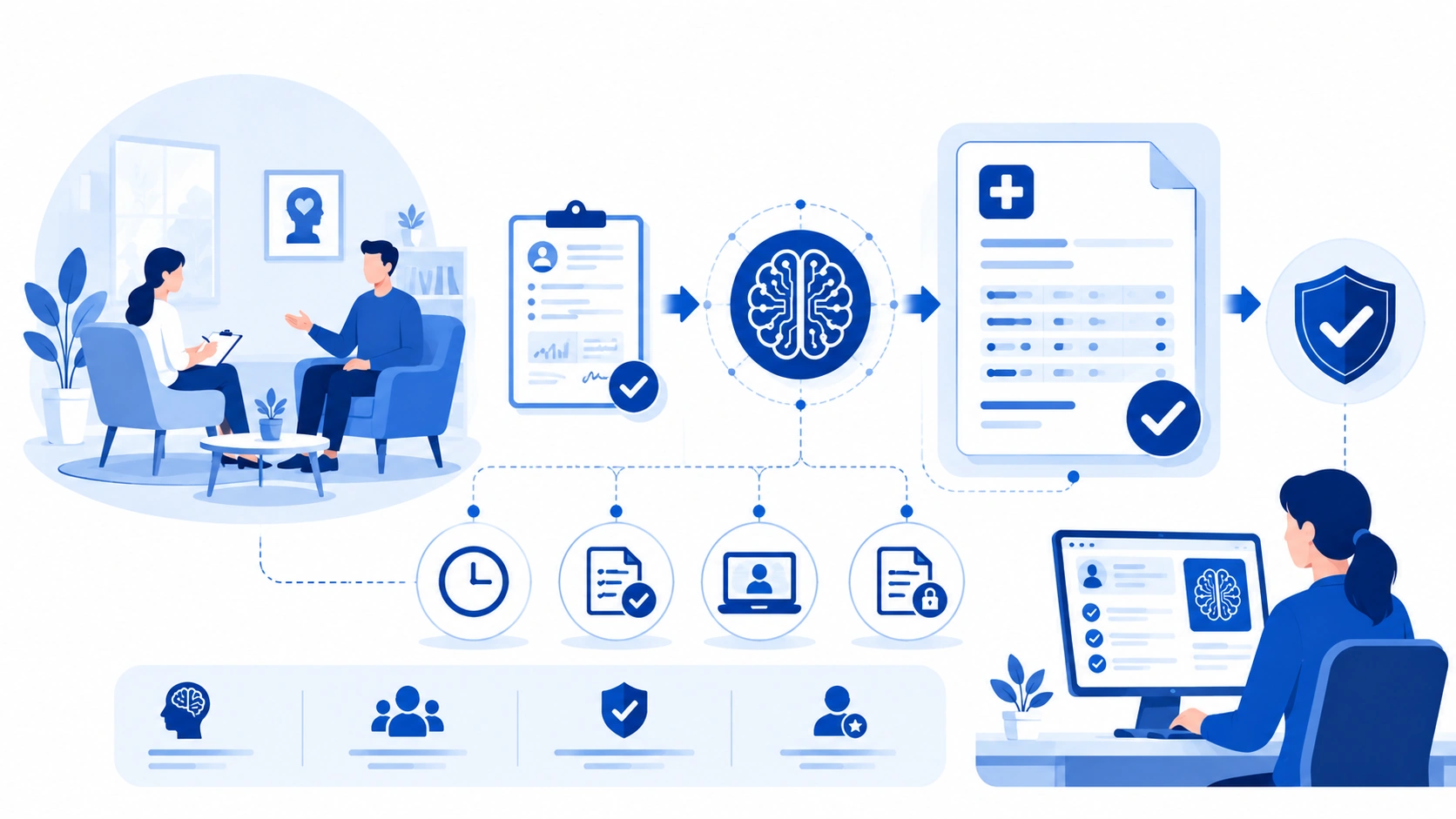
AI in medical billing for behavioral and mental health practices has to account for rules that don’t apply cleanly to most other specialties. Time-based CPT codes, add-on codes for extended sessions, telehealth modifiers that vary by payer and by state, and documentation standards tied to treatment plans all make generic, one-size-fits-all AI billing tools a poor fit out of the box.
A claims-scrubbing tool trained mostly on primary care or surgical claims may not recognize the coding logic behind a 60-minute psychotherapy session with crisis add-on time, or flag a telehealth modifier mismatch specific to a given state’s payer requirements. That’s exactly where AI medical billing for mental health practices needs to be evaluated differently than generic revenue cycle software — the algorithm is only as good as the specialty-specific data and rules it was built on.
Denial prediction is especially useful here, since behavioral health claims are denied for very specific, recurring reasons: missing treatment plan documentation, session-length mismatches, or authorization limits that cap the number of covered sessions. A tool trained to recognize those specific patterns catches far more than one applying general medical-claim logic to a therapy note.
None of this replaces specialty billing expertise — it’s a reason to pair automation with it. Practices exploring AI-assisted billing for behavioral health should look for tools built around, or configured for, specialty billing for behavioral health practices specifically, rather than assuming a general medical billing tool will handle mental health nuances correctly by default.
How to Choose an AI-Enabled Medical Billing Partner
Choosing an AI-enabled medical billing partner starts with understanding that there’s no single “best AI medical billing software” for every practice — the right fit depends on specialty, claim volume, and how much oversight your current team can realistically provide. A tool built for high-volume primary care claims won’t necessarily handle behavioral health’s coding nuances well, and vice versa.
Ask any prospective partner these questions directly: How does the AI-suggested output get reviewed before submission, and by whom? What’s their process for EHR/EMR integration with your specific system? How do they handle HIPAA compliance and vendor accountability if the software makes an error? A partner unwilling to give specific answers to these questions is telling you something, regardless of how polished the demo was.
Look for partners who position AI as a support layer for medical billing services delivered by trained billers and coders — not as a replacement for them. The strongest setups pair automated claims scrubbing and coding assistance with certified staff who understand payer-specific and specialty-specific rules, so nothing goes out the door on software judgment alone.
Finally, ask for references from practices in your specialty, not just general case studies. A vendor’s results in orthopedics or primary care tell you very little about how their tool performs on behavioral health claims with time-based codes and session limits.
The Future of AI in Medical Billing
The future of AI in medical billing is likely to be shaped as much by regulation as by better algorithms. As more states introduce AI-disclosure requirements and federal guidance sharpens around AI-assisted coding, practices should expect documentation and transparency standards — not just accuracy — to become a bigger part of how vendors are evaluated.
Expect AI revenue cycle management to keep moving further upstream, touching scheduling and prior authorization earlier in the process rather than starting only at claim submission. AI claims processing is also likely to get more specialty-aware over time, with vendors building separate models trained on behavioral health, primary care, or surgical claims instead of one generic engine applied everywhere.
What isn’t likely to change is the need for human review. As oversight requirements tighten rather than loosen, the practices that benefit most from AI in medical billing will be the ones that treat it as a tool their trained staff uses — not a replacement for the staff itself.
The Bottom Line on AI in Medical Billing
AI in medical billing isn’t a switch you flip to fix denials and cash flow overnight — it’s a set of tools that, layered correctly onto a well-trained billing team, catch more errors earlier and free up staff time for the claims that actually need a person’s judgment. The practices that get the most out of it are the ones that treat it as support for their team, not a substitute for one.
AI can speed up claims and catch errors before submission, but it doesn’t replace the specialty knowledge behavioral and mental health billing requires — from CPT code nuances to payer-specific documentation rules. TMS Billings pairs AI-assisted efficiency with hands-on, specialty-trained oversight, so nothing gets submitted without a human who understands mental health billing checking it first.