
Virginia medical practices are under growing financial pressure. Reimbursement rates continue to tighten, staffing costs keep rising, and the payer mix your front-desk team manages every day has grown more complex, especially with Cardinal Care, Virginia’s Medicaid managed care program, now central to daily claims work.
TMS Billings’ Medical Billing Services team works alongside practices across the Commonwealth to manage exactly this kind of complexity, and the pattern is consistent: in-house billing staff, however skilled, struggle to keep pace working alone against rising claim volume and shifting payer rules. For a growing number of practices, outsourced medical billing Virginia solutions have become the practical response. This article explains what outsourced billing involves, why it matters specifically for Virginia healthcare practices, the six core benefits your practice can expect, how to evaluate a potential billing partner, and what working with TMS Billings actually looks like.
What Is Outsourced Medical Billing, and Why Are Virginia Practices Choosing It?
Outsourced medical billing Virginia solutions transfer claims submission, coding review, payment posting, and denial follow-up to a dedicated third-party billing partner instead of an in-house team. Virginia practices choose this approach to reduce administrative burden, improve cash flow, and stay current with federal and state billing requirements without adding internal staff.
In practical terms, outsourcing means your practice hands claims submission, medical coding review, payment posting, denial follow-up, and patient statement generation to a partner who specializes in this work. That partner submits claims under your practice’s National Provider Identifier (NPI) through a claims clearinghouse, tracks each claim through to payment, and flags denials for correction before they turn into lost revenue.
Outsourced partners also help practices stay current on federal rules that apply nationwide, including the No Surprises Act, which sets billing and estimate requirements for self-pay and uninsured patients. The Centers for Medicare & Medicaid Services maintains official guidance on these billing-related patient protections. Staying ahead of rules like these is part of why medical billing compliance has become a genuine differentiator between billing partners, not just a back-office detail.

Why Outsourced Medical Billing Matters for Virginia Practices in 2026
Several forces are converging on Virginia healthcare practices in 2026. Hiring and retaining experienced in-house billers has grown more expensive, and turnover often leaves claims unworked for weeks at a time. Layered on top of that is Cardinal Care, Virginia’s Medicaid managed care program administered by the Virginia Department of Medical Assistance Services, which brings its own claims formatting rules, authorization requirements, and managed care organization contacts to track.
Virginia practices must also navigate two related but distinct sets of billing protections. The federal No Surprises Act requires good-faith estimates for self-pay and uninsured patients nationwide. Separately, Virginia’s own Balance Billing Protection Act, effective since January 1, 2021 and administered by the State Corporation Commission’s Bureau of Insurance, protects insured patients from certain out-of-network surprise bills for emergency and specific non-emergency services. These are not interchangeable, and a billing team that confuses them risks compliance gaps.
Slow or denied claims compound the problem, tightening cash flow at exactly the moment staffing costs are rising. This is why the cost of outsourcing medical billing has become a serious line-item conversation for Virginia healthcare practices weighing a dedicated billing partner against continuing to manage everything internally.
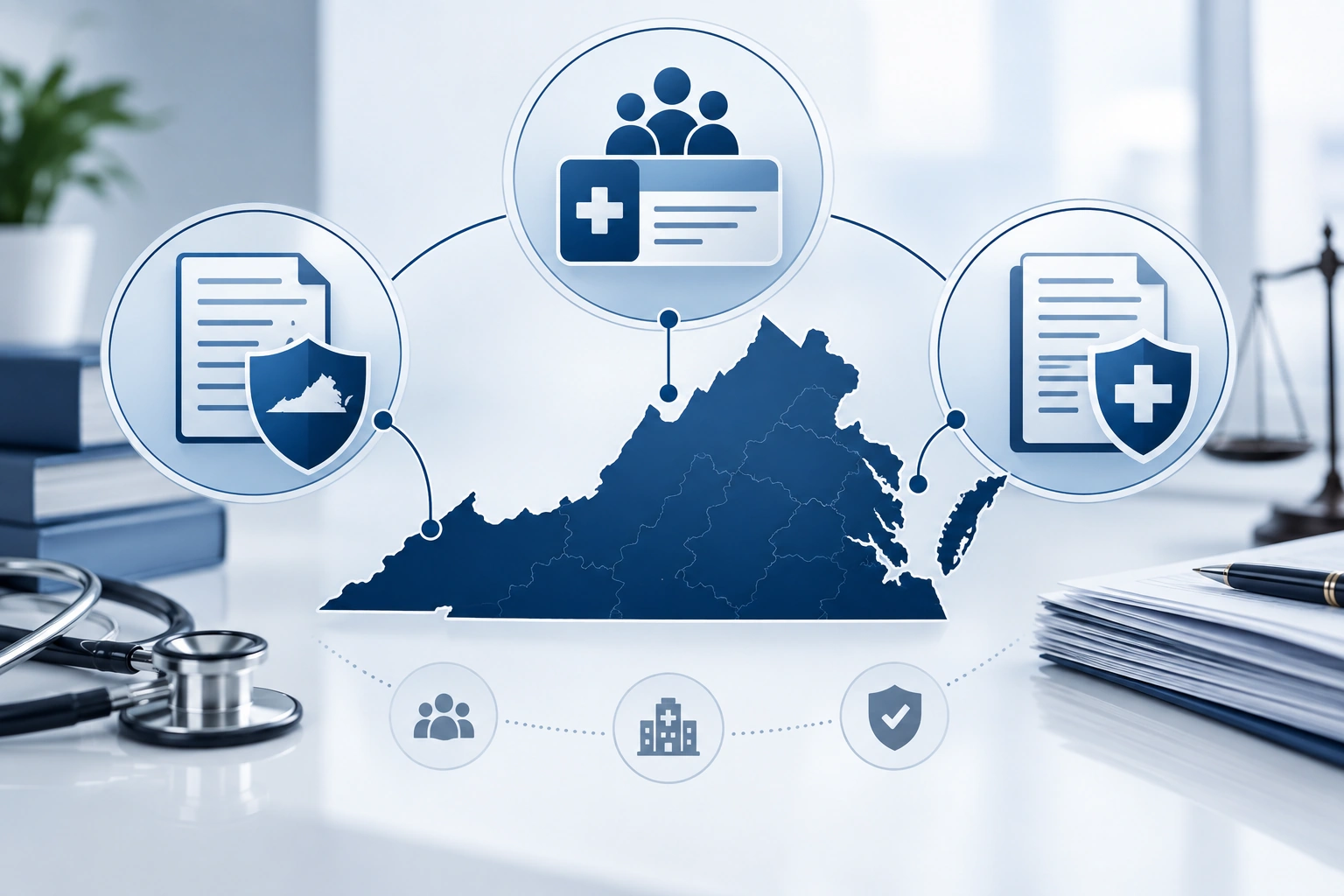
6 Benefits at a Glance
| Benefit | What It Means | Practice Impact |
|---|---|---|
| Lower administrative burden | No in-house hiring, training, or turnover risk | Reduced overhead and staffing costs |
| Faster claims turnaround | Dedicated daily coding and submission review | Stronger clean claims rate |
| Built-in compliance | Continuous tracking of federal and Virginia rules | Fewer compliance gaps |
| Payer expertise | Deep familiarity with Cardinal Care and commercial payers | Fewer denials |
| Revenue cycle visibility | Real-time dashboards and denial-trend reporting | Faster problem detection |
| Scalability | Billing capacity that grows with your practice | Easier expansion |
Outsourced Medical Billing Virginia — 6 Benefits Every Practice Should Know
The sections above outline why outsourcing has become a serious option for Virginia healthcare practices. The following six benefits are the practical core of that decision — covering cost, speed, compliance, payer expertise, visibility, and scalability — and each one reflects what practices consistently report after making the switch.
1. Reduced Administrative Burden and Staffing Costs
Recruiting, training, and retaining an in-house billing team is expensive and time-consuming, and turnover frequently leaves claims sitting untouched for weeks. Provider credentialing alone can absorb significant staff time before a new hire ever touches a claim. Among the most immediate benefits of outsourcing medical billing is removing that burden entirely: your practice pays a billing partner for defined services instead of carrying salary, benefits, training, and software costs for an internal department. Front-desk and clinical staff can refocus on patients rather than claim status calls and payer portals. For many small and midsize Virginia practices, this shift changes outsourcing medical billing from a defensive move into a straightforward operational upgrade.
2. Faster, More Consistent Claims Turnaround
Outsourced medical billing teams work claims daily, not as one task among many front-desk responsibilities. Dedicated coders review each claim against current CPT codes and ICD-10 codes before submission through a claims clearinghouse, which raises first-pass acceptance and produces a stronger clean claims rate than most in-house teams sustain on their own. Fewer claims bounce back for correction, and the ones that do get reworked faster, because tracking and follow-up are built into daily workflow rather than squeezed between other duties. That consistency shows up directly in accounts receivable: claims move through practice management software and into payment on a predictable cycle instead of stalling in a queue. For AR Recovery Services, that speed compounds month over month.
3. Built-In Compliance With Federal and Virginia-Specific Billing Rules
Billing compliance spans several layers at once. HIPAA compliance governs how patient data moves between your practice, the billing partner, and payers. The federal No Surprises Act sets estimate and billing requirements for self-pay and uninsured patients nationwide. Virginia’s Balance Billing Protection Act separately protects insured patients from certain out-of-network surprise bills for emergency and specified non-emergency services — a distinct state-level protection, not a restatement of the federal rule. A qualified billing partner tracks all three continuously, so your practice does not have to monitor every regulatory update alone.
Compliance gaps rarely announce themselves; they surface later as denied claims, patient complaints, or audit findings. Building this monitoring into daily operations, rather than treating it as a periodic review, is one of the clearest arguments for outsourcing medical billing in a state with layered federal and state requirements.
4. Expertise Across Virginia’s Medicaid Managed Care and Commercial Payer Landscape
Cardinal Care’s managed care organizations each carry their own claims formatting rules, prior authorization requirements, and timely filing windows, layered on top of the commercial payers your practice already bills. A billing partner with genuine Virginia payer experience recognizes these differences immediately, instead of learning them claim by claim through denials. That payer-specific knowledge is often the difference between a claim that clears on first submission and one that cycles through correction and resubmission for weeks.
Consider a small Northern Virginia primary care practice that struggled with a wave of denials during its local Cardinal Care managed care transition, as new authorization requirements caught its in-house team off guard. After moving to outsourced billing, the practice’s first-pass clean claims rate improved within a few months, as claims were coded and submitted correctly against the updated managed care requirements from the outset rather than corrected after rejection.
5. Improved Revenue Cycle Visibility and Reporting
Spreadsheets maintained by an overextended in-house team rarely keep pace with actual claim activity. Outsourced billing partners typically provide dashboards that track denial trends, days in accounts receivable (AR), and payer performance in real time, giving your practice a clear, current picture instead of a monthly guess. That visibility lets you spot a payer’s shifting denial pattern early, before it accumulates into a larger revenue problem. TMS Billings’ Billing Reporting & Analytics gives practice owners exactly this kind of transparency, built around what actually needs attention rather than raw data dumps. For owners who have never had reliable visibility into where claims stall, this alone often justifies the switch.
6. Scalability for Growing and Multi-Location Practices
Adding a provider, or opening a second location in Northern Virginia, Richmond, or Hampton Roads, traditionally means rebuilding billing capacity from scratch: hiring, training, and new software licenses. An outsourced partner scales with your practice instead, absorbing added claim volume without a proportional increase in internal overhead. This is particularly relevant for a medical billing company for small practices in Virginia to get right early, since the billing structure a two-provider practice sets up often has to support five providers within a few years. Building around a scalable partner from the outset avoids a disruptive rebuild later, when growth is already straining every other part of the practice.

How to Choose an Outsourced Medical Billing Partner in Virginia
Knowing how to choose a medical billing company in Virginia starts with specialty fit. Ask any prospective partner how many practices in your specialty they currently bill for, and request references from other Virginia practices they serve, ideally ones navigating a similar payer mix. A partner unfamiliar with your specialty’s coding nuances will cost you time in denials regardless of how polished their pitch sounds.
Next, ask specifically how the partner handles Cardinal Care claims and Virginia’s broader commercial payer mix, not just billing in general terms. Confirm reporting frequency and transparency in writing before signing anything: how often you will see denial data, days in AR, and collection trends, and whether that reporting is available on demand or only on request.
For practices still weighing in-house vs outsourced medical billing, industry benchmarking from the Medical Group Management Association offers useful context on typical billing costs and outsourcing trends across practice sizes — treat any percentage-of-collections figure as a general range to confirm with a practice-specific quote, not a guaranteed rate. Reviewing patient collections processes with any prospective medical billing company in Virginia is also worth doing early, since patient-facing collections often reveal how a vendor actually operates day to day.

How TMS Billings Supports Virginia Practices
Every claim TMS Billings submits is built on accurate CPT and ICD-10 coding, reviewed before submission rather than corrected after a denial arrives. Each claim carries a documented audit trail for claims denial management, so if a denial or appeal does occur, your practice has a clear record of what was submitted, when, and why, rather than starting from scratch. That documentation matters as much for a routine payer audit as it does for a disputed claim.
Transparent monthly reporting is built into the relationship from day one, flagging underpayments and denial trends before they compound into a larger revenue problem. This is the kind of revenue cycle management Virginia practices need to actually see and act on, not a static report filed away unread. As a long-standing provider of Virginia medical billing services, TMS Billings’ Revenue Cycle Management approach is built around this ongoing visibility.
A multi-location Hampton Roads specialty practice recently consolidated billing across its sites after outsourcing to TMS Billings, replacing fragmented, site-specific spreadsheets with a single reporting dashboard and one consistent claims process applied at every location, regardless of which office originated the claim.
Key Takeaways
- Outsourced medical billing shifts claims submission, coding review, payment posting, and denial follow-up to a dedicated partner, reducing your practice’s staffing and administrative load.
- Cardinal Care’s managed care claims and Virginia’s Balance Billing Protection Act both require ongoing attention that a specialized partner tracks continuously.
- Dedicated coding review and daily claims monitoring typically produce a stronger clean claims rate and faster payment cycles than most in-house teams sustain alone.
- Transparent monthly reporting and AR-aging visibility let practice owners catch denial trends early instead of discovering them months later.
- Medical billing outsourcing in Virginia scales with your practice, supporting new providers or locations without rebuilding a billing department each time.
- Choosing the right billing partner means confirming specialty experience, Virginia payer expertise, and reporting transparency before signing an agreement.
Final Thoughts
Billing complexity in Virginia is not going away. Between Cardinal Care’s managed care requirements, the federal No Surprises Act, and Virginia’s own Balance Billing Protection Act, the administrative load on your practice will likely keep growing rather than ease on its own. Outsourced medical billing Virginia partnerships exist precisely to absorb that load, so your staff can focus on patients instead of claim status calls and payer correspondence.
If your practice is weighing this decision, or already outsourcing but unhappy with denial rates, reporting, or responsiveness from a current vendor, the next step is a direct conversation about your specific payer mix and claims history. Book a Free Consultation with the TMS Billings team to see what a dedicated Virginia billing partnership could look like for your practice.