
Neurology medical billing refers to the process by which neurologists create codes for the services they provide and file claims to insurance companies. Sounds complex? Yes, it is. And it grows even more complicated when you are dealing with an intricate nervous system. Of course, neurologists cannot maintain the cash flow when they are juggling so much simultaneously. This is where neurology medical billing helps a practice for a streamlined revenue cycle. Want to know more? Let’s talk about it in detail.
What Is Neurology Medical Billing?

Credit: ucontrolbilling.com
It is the process by which healthcare providers submit claims for services rendered in neurology practices. This process includes everything from coding errors and assigning correct billing codes to submitting the claim to insurance companies and following up until the claim is paid.
Neurology billing is a highly specialized field with various complex services, such as EEGs, EMGs, MRIs, and long consultation times. It requires specific knowledge of the neurology billing guidelines and rules governing the treatment of neurological conditions. Neurology medical billing & coding services include the following essential steps:
- Assigning the Correct Codes: Proper CPT code assignment for diagnostic tests, treatments, and consultations.
- Claims Submission: Submitting the claims to insurance companies for reimbursement.
- Follow-Up and Payment Posting: Following up with insurance payers to resolve issues and posting payments when claims are paid.
- Denial Management: Handling denied claims and claims submission issues, filing appeals, and resubmitting claims when necessary.
Without accurate neurology medical billing, practices can face delays, errors, and unnecessary complications that ultimately affect patient care.
Causes of Claim Denials in Neurology Practices

Credit: portiva.com
Understanding the root causes of claim denials is the first step in reducing them. In the world of neurology billing, denied claims often happen due to common mistakes that can easily be avoided. Here are some of the most common causes of claim denials:
Incorrect or Missing Codes
Billing codes are highly specific. A slight mix-up in the code for a test or procedure can lead to a denied claim.
For example, if an incorrect code is used for an MRI or EEG, the insurance company may reject the claim for reimbursement. This is where neurology billing services become critical in ensuring accurate coding.
Insufficient or Poor Documentation
Insurance companies often request detailed documentation to prove that the services rendered were medically necessary. If your practice fails to provide adequate notes that explain why a service was provided or how it relates to the patient’s diagnosis, the insurance company may refuse to pay. This is one of the most common reasons for claims denials in neurology practices.
Example: If a neurologist performs a nerve conduction study but fails to document why the study is necessary for diagnosis, the insurance payer might consider the procedure unnecessary.
Lack of Prior Authorization
Many advanced neurology medical billing services, like imaging tests or certain types of therapy, require prior authorization.
If your practice does not obtain the required prior authorization from the insurance provider before performing the procedure, claims are often denied.
Misunderstanding of Payer Policies
Different insurance companies have different rules for what they will and will not cover. Neurology medical services, due to their complexity, are often subject to stringent and varying policies. If your billing team isn’t up to date on each payer’s specific policy for neurology treatments, claims could be denied.
Administrative Errors
Errors in patient information, such as incorrect insurance numbers or missing data in the claim, can result in automatic denials. These errors are often simple to fix, but they still cause delays in the reimbursement process.
Strategies for Denial Reduction in Neurology Billing

Credit: collaboratemd.com
Now that we know what causes denials in neurology medical billing, let’s talk about how to minimize them.
The goal is to streamline your neurology billing process so that the claims are accurate and complete from the start. Here are strategies that can significantly reduce denials:
Use Specialized Neurology Coders
One thing that we should not miss is that neurology billing requires specialized coding knowledge, and having coders who are trained in billing is critical.
Coders who are familiar with the types of tests, treatments, and conditions unique to neurology will ensure that each claim is submitted with the correct codes. This reduces errors, leading to fewer denied claims.
Ensure Thorough Documentation
Documentation is essential for a clean claim submission. Neurologists should always make detailed notes that clearly explain why each service was provided.
The more comprehensive and precise your documentation is, the easier it is to prove the medical necessity of your services, which helps prevent denials for lack of supporting evidence.
Implement a Prior Authorization Process
Ensure that any procedures requiring prior authorization are handled ahead of time. This involves verifying the insurance company’s requirements before the patient is treated and obtaining approval as necessary. A well-organized authorization workflow ensures that your claims are more likely to be approved.
Regularly Review and Analyze Denial Trends
By monitoring which claims are frequently denied and understanding the reasons behind them, you can identify patterns. For example, if a particular code or service gets denied often, it’s an indication that either the code or the documentation needs to be revised. Continuous review and analysis of denial trends will help you improve your billing practices over time.
Common Coding Examples in Neurology Billing

Credit: ucontrolbilling.com
Let’s make this real. Here are some examples of neurology-specific codes that practices use, and how mistakes in these codes can lead to denials:
E/M Codes (Evaluation and Management Codes)
Neurologists often use E/M codes for consultations and patient evaluations. These codes are divided based on the complexity of the visit:
- 99202–99205: New patient visit codes
- 99212–99215: Established patient visit codes
Mistakes in the level of service documentation can result in incorrect code assignment, leading to denial.
Electroencephalography (EEG) Codes
- 95816–95819: EEG services
- Requires documentation showing the indication and interpretation
Electromyography (EMG) Codes
- 95860–95864: EMG
- 95905–95913: Nerve conduction
These procedures demand precise notes showing clinical necessity.
Neuromuscular Testing
- 95907–95913: often denied when notes lack justification
When your team knows these neurology billing codes and their requirements, denial risk drops dramatically.
Steps to Streamline Neurology Medical Billing
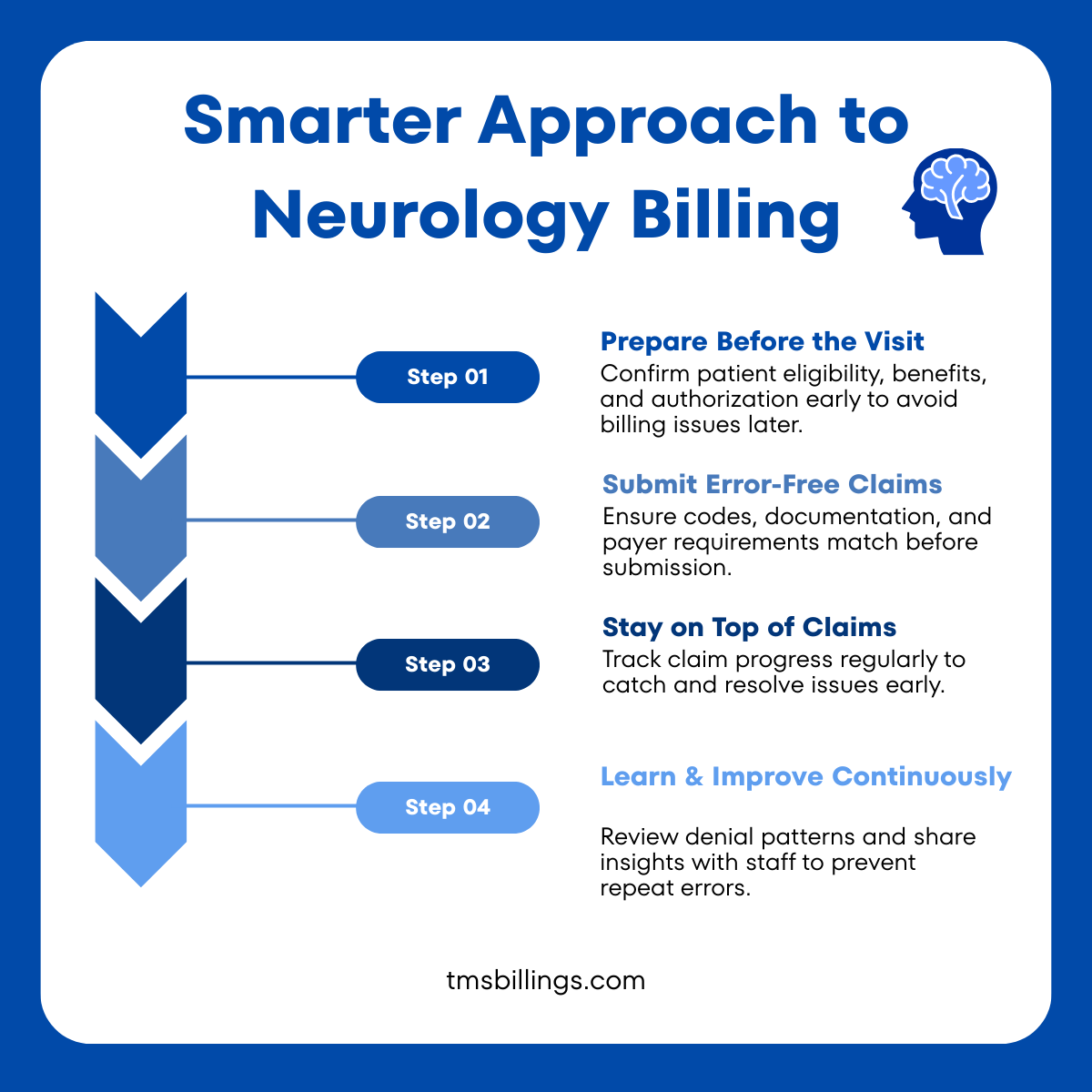
To reduce denials and improve your practice’s revenue cycle, follow these actionable steps:
Verify Insurance and Eligibility in Advance
Before performing any services:
-
Verify patient eligibility
-
Confirm benefits
-
Check for prior authorization requirements
This reduces surprises later.
Submit Clean, Complete Claims
Before submitting:
-
Confirm correct billing codes
-
Ensure documentation supports billed items
-
Match payer rules
Monitor Claim Status Regularly
Track your claims and monitor their status. Knowing where each claim stands helps you address any issues before they escalate into denials.
Address Denials Promptly
When a claim is denied, don’t delay in resolving the issue. Have a dedicated team for handling denials and resubmitting claims with the correct information.
Feedback Loop
Share denial trends with clinicians and coders so the same mistakes aren’t repeated.
Best Practices for Neurology Billing
Here are some best practices that can help optimize neurology billing:
- Use a Coding Specialist: Specialized coders ensure accuracy in submitting neurology claims.
- Utilize Electronic Billing: Using electronic billing systems ensures faster and more accurate submission of claims.
- Implement Regular Training: Continuous staff training on coding, payer policies, and documentation will keep your team prepared and efficient.
- Audit Your Claims: Conduct regular internal audits to catch errors early.
- Stay Up-to-Date on Coding: Ensure that your practice keeps up with changes in the ICD, CPT, and HCPCS codes used in neurology.
The Role of Technology and Outsourcing
Technology
With the rise of technology, the process of neurology billing has become more efficient. Software and billing services can automatically update codes, track claim status, and identify common errors that may lead to denials. By automating these tasks, your practice can reduce human error and speed up the billing process.
Outsourcing
An interesting fact is that outsourcing neurology billing services can be a game-changer. With specialists handling your billing, you can focus on patient care rather than chasing after insurance companies. Plus, outsourcing can help reduce denials, speed up reimbursements, and optimize revenue cycle management.
Ending Remarks
It all comes down to the fact that neurology medical billing plays a critical role in ensuring the financial stability of your practice. By focusing on accurate coding, detailed documentation, and proactive claim management, you can significantly reduce the risk of claim denials.
Frequently Asked Questions
We’ve compiled answers to the questions you ask the most.
What is neurology medical billing?
It’s the process of coding and submitting claims for neurology services to insurance companies, ensuring proper reimbursement.
Why do neurology claims get denied?
Common causes include incorrect coding, insufficient documentation, lack of prior authorization, and errors in patient information.
How can I reduce claim denials in my neurology practice?
Use specialized coders, ensure thorough documentation, streamline your prior authorization process, and regularly monitor and resolve denials.
Should I outsource my neurology medical billing?
If your internal team is struggling, outsourcing neurology billing often improves denial rates, speeds up reimbursements, and allows your staff to focus more on patient care.
How can technology help in reducing denials?
Technology can automate code updates, track claims, and catch errors before submission, significantly reducing the chances of denial.