
Everything has its own set of challenges, and medical billing is no exception. It can definitely feel like navigating a maze – confusing, time-consuming, and often full of roadblocks. Many healthcare providers find themselves tangled in the complexity of billing, trying to balance accurate records with the push for proper reimbursement. These challenges in medical billing can suck up valuable time and energy that could be better spent on what really matters: patient care.
But here’s the good news – technology is here to save the day! With the right tools and specialized medical billing services, overcoming these challenges is more doable than ever. Let’s take a closer look at the biggest hurdles in medical billing and how technology can help you tackle them head-on.
Complex and Ever-Changing Regulations
One of the biggest challenges in the medical billing process is keeping up with the constantly changing regulations and requirements. From billing codes to government regulations such as HIPAA, the landscape is always shifting. Healthcare providers must ensure they’re up-to-date to avoid costly mistakes and claim denials.
How Technology Helps?
- Automated Updates: Software tools automatically update billing codes and regulations to ensure compliance.
- Integrated Systems: Advanced billing software integrates seamlessly with your practice’s existing management tools, reducing manual input and human error.
Denial Management and Claim Denials
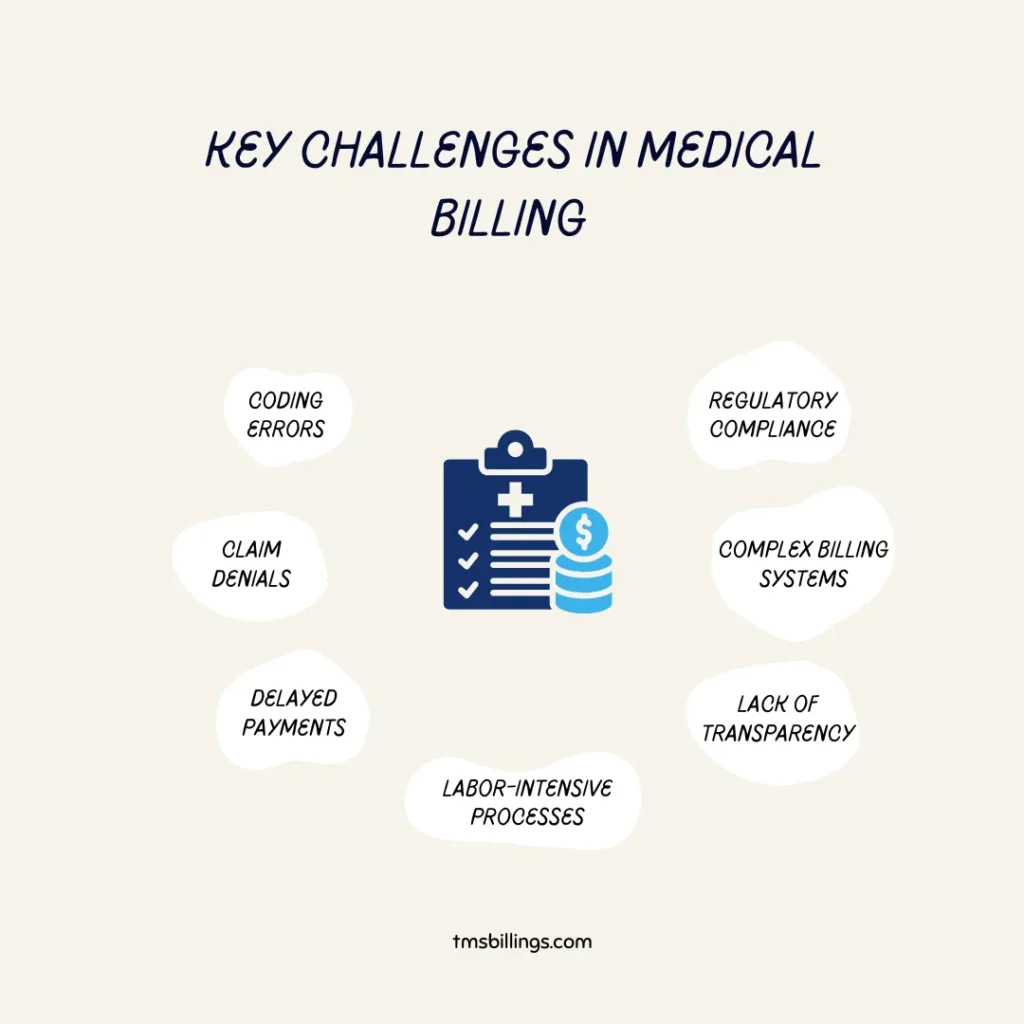
Claim denials are a common and frustrating part of medical billing. If claims are not submitted correctly or miss certain required documentation, they get denied. Handling these denials manually can be incredibly time-consuming and can delay payments, impacting your cash flows.
What’s the Role of Technology?
- Faster Claim Resubmission: A medical billing company with integrated tools can automatically flag and resubmit denied claims, reducing delays.
- Automated Denial Analytics: Technology can analyze why claims are denied and help pinpoint patterns, making it easier to prevent future issues.
Challenges in Recurring Billing for Subscription-Based Businesses
For medical practices that offer subscription services, managing recurring billing can be especially tricky. Missed payments, failed payments, and issues with recurring invoices can lead to involuntary churn and disruptions in revenue cycles.
How Technology Helps?
- Subscription Billing Solutions: Modern billing systems can handle recurring payments automatically and securely, preventing missed payments and improving cash flow.
- Payment Gateway Integration: By integrating payment gateways with billing software, payments are processed faster and more reliably.
Inconsistent Cash Flows and Failed Payments

Credit: business.com
Maintaining a consistent cash flow can be one of the most significant challenges for healthcare providers, especially small practices. Whether it’s due to failed payments, patient misunderstandings, or delayed insurance payments, poor cash flow can disrupt operations.
What’s the Role of Technology?
- Payment System Integration: Integrated payment systems allow for quicker payments and offer patients multiple ways to pay (online, in-office, etc.).
- Proactive Payment Reminders: Technology can send automatic payment reminders to patients to reduce overdue payments.
Billing for Medicaid and Insurance Complexities
Billing for Medicaid and insurance companies can often be complex and require a deep understanding of different payer requirements. For small practices, it’s easy to miss vital details in the claims process, which can result in errors and delays in payments.
How Technology Helps?
- Automated Medicaid Billing: Billing systems specifically designed for Medicaid can automate the submission of claims, reducing errors and increasing efficiency.
- Payer Rule Mapping: Technology can map the payer’s rules, ensuring that all claims are submitted correctly based on the specific insurance provider’s requirements.
Increased Administrative Burden and Paperwork

Credit: cato.org
Managing the billing process for medical practices requires an incredible amount of paperwork, especially when multiple procedures and visits are involved. These tasks are often repetitive and take up valuable administrative time.
What’s the Role of Technology?
- Electronic Claim Submission: Electronic submission eliminates the need for paper forms, reducing administrative workload.
- Digital Record Keeping: The ability to store records digitally ensures quicker access and much better management of patient billing information.
Focus on Patient Care Over Administrative Work
The goal of any healthcare provider should always be to prioritize patient care. However, medical billing often takes up so much time that it can detract from this focus. If your staff is bogged down with billing tasks, they have less time to focus on patient care.
How Technology Helps?
- Medical Billing Outsourcing: By outsourcing your medical billing services, you can free up your in-house team to focus entirely on patient care while ensuring that billing is managed efficiently.
- Automated Workflows: Automated billing workflows reduce the time spent on administrative tasks, allowing staff to focus on the patient experience.
Medical Billing Services for Small Practices
Small practices face unique challenges in managing billing. With limited staff and resources, smaller healthcare providers may struggle to keep up with the complexity of medical billing and coding. A small mistake could result in lost revenue or claim rejections.
What’s the Role of Technology?
- Affordable Billing Solutions: With the rise of cloud-based billing software, even small practices can access cutting-edge billing solutions without breaking the bank.
- Customized Billing Services: Tailored billing solutions, like those offered by a medical billing specialist, allow small practices to focus on their core operations while leaving billing to the experts.
Challenges in Billing for Specialties: Cardiology, Dermatology, and More

Credit: mbwrcm.com
Specialties like cardiology and dermatology have their own unique billing requirements. For example, cardiology procedures often require a specific set of billing codes, and dermatology medical billing has distinct rules. Missteps in billing for these specialties can result in denials and lost income.
How Technology Helps?
- Specialty-Specific Billing: Medical billing companies that specialize in cardiology medical billing services or dermatology medical billing can ensure the right codes are used, improving reimbursement rates.
- Automated Coding: Advanced coding software for cardiology practices and other specialties ensures that procedures are billed accurately and in compliance with industry standards.
Bottom Line
In summary, the challenges in medical billing can be overwhelming, but they’re not insurmountable. By adopting modern billing solutions and leveraging technology, medical practices can ease their billing process, reduce administrative burdens, and improve cash flows. Whether it’s managing billing for Medicaid, handling recurring payments, or optimizing denial management, technology offers the tools necessary to tackle these challenges head-on.
Incorporating technology into your medical billing process isn’t just an option; it’s a necessity for staying ahead in today’s fast-paced healthcare industry. Let technology do the heavy lifting so you can focus on what matters most – your patients!
FAQ’s
To help you navigate the complexities of medical billing, here are the top five frequently asked questions:
What is a medical billing company?
A medical billing company manages billing tasks for healthcare providers, including claim submissions, payment tracking, and insurance follow-ups.
How does medical billing outsourcing work?
Outsourcing medical billing means hiring a third-party company to handle coding, claims, denial management, and payment collections.
Why are my insurance claims getting denied?
Claims are often denied due to incorrect coding, missing information, or unmet payer requirements. Denial management helps fix these issues.
What are recurring billing challenges?
Recurring billing challenges include failed payments, missed renewals, and involuntary churn, especially for subscription-based businesses.
How do payment systems affect revenue cycles?
Efficient payment systems speed up claim processing and payments, improving cash flow and reducing delays.