If you’ve ever felt like medical billing compliance is complex, you’re not alone. With a mix of coding, regulations, and deadlines, it’s easy to get lost in the shuffle. But here’s the truth: you can work with that. Think of compliance as your safety net; it helps protect your practice from costly errors, payment delays, and even legal issues. Once you understand the core principles of billing compliance, it becomes just another part of your routine. No stress, no mess. In this blog, we’re going to break down what medical billing compliance is, why it matters, and how you can easily implement it in your practice. Ready to get started? Let’s jump in!
What Is Medical Billing Compliance?
So, medical billing compliance refers to following the rules, regulations, and guidelines set by the government and insurance companies when submitting medical claims. These guidelines cover everything from the coding process to accurate claim submissions.
You might be thinking, “Why does this matter so much?” Well, non-compliance can lead to:
- Claim rejections
- Financial penalties
- Fraud charges
- Legal consequences
- Revenue cycle delays
And that’s just the tip of the iceberg. Compliance in medical billing isn’t just about avoiding penalties; it’s about making sure your practice operates smoothly and gets paid for the services provided. It ensures that your medical billing and coding compliance process is tight and error-free, which is essential for your practice’s financial health.
Why Is Medical Billing Compliance So Important?
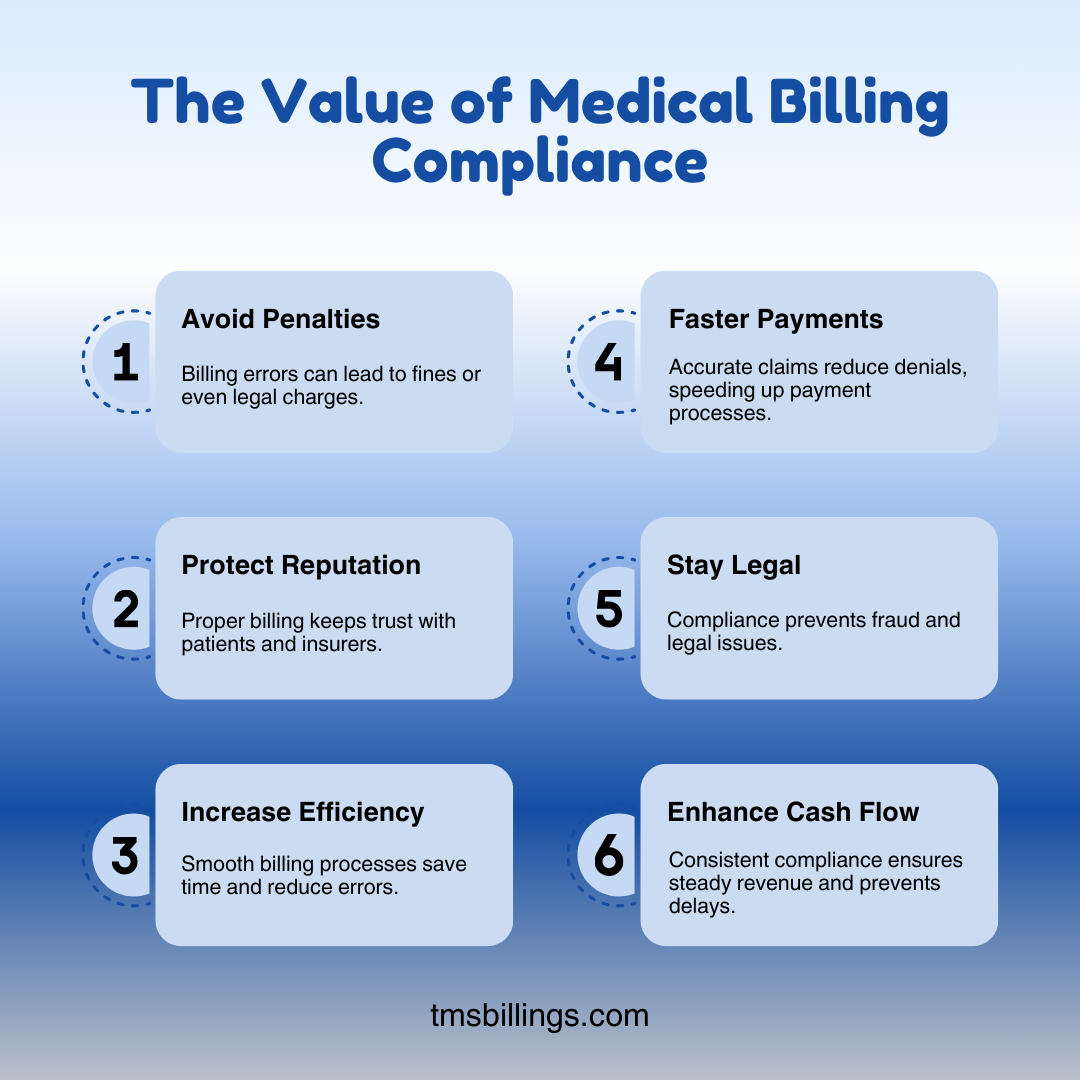
You might wonder, “Is it really that important?” Here’s the thing: the healthcare industry is heavily regulated. Billing mistakes can lead to financial losses, damage to your reputation, or even legal action. By focusing on medical billing compliance, you protect your practice from these risks.
Avoid Financial Penalties
Insurance companies and the government are strict about billing accuracy. Errors, whether intentional or not, can result in fines, repayment of overpaid claims, or even criminal charges. A medical billing compliance policy helps you steer clear of these risks.
Ensure Timely Payments
Compliance ensures that your claims are accurate, which leads to fewer rejections and delays. When claims are denied, it can take weeks or even months to resolve. Timely claims mean quicker payments, which keep your cash flow healthy and your revenue cycle on track.
Maintain Your Reputation
If you don’t follow billing practices properly, it can damage your reputation. Insurance companies and patients alike expect high standards. If you fail to meet these, it could lead to fewer patients or partnerships.
Avoid Legal Trouble
Healthcare fraud is taken seriously. Inaccurate billing can be seen as fraudulent, which could land you in serious legal trouble. Compliance helps you stay on the right side of the law. A medical billing compliance consultant can help ensure your team is compliant with all necessary regulations.
Boost Your Efficiency
When you adhere to best practices in medical billing, everything runs more smoothly. You’ll spend less time fixing mistakes and more time helping patients. It’s a win-win for your practice’s management solution.
Key Elements of Medical Billing Compliance
So, how do you achieve medical billing compliance? Here are the key elements that will guide you:
Understand the Billing Codes

Credit: sybridmd.com
In medical billing and coding compliance, the billing codes you use matter, big time. You have to use the right codes for diagnoses, treatments, and procedures. This is where the ICD (International Classification of Diseases), CPT (Current Procedural Terminology), and HCPCS (Healthcare Common Procedure Coding System) codes come into play.
- Make sure your team is trained on how to use these codes correctly for ICD-10 coding services.
- Regularly update your knowledge, as codes change over time.
- Use the correct codes to avoid rejected claims.
Stay Up to Date with Regulations
Laws and regulations in medical billing compliance change frequently. The most well-known is the Health Insurance Portability and Accountability Act (HIPAA), which governs patient privacy and HIPAA OSHA compliance.
- Keep track of changes in billing guidelines from insurance companies and government bodies.
- Participate in regular training on medical billing and coding compliance regulations.
- Use reliable resources to stay updated on the latest medical billing compliance plan.
Correct Documentation

Credit: outsourcestrategies.com
Medical billing compliance is based on documentation. Each service provided needs to be backed by accurate and detailed records. If your documentation doesn’t match the claim, it could be rejected or flagged as fraudulent.
- Ensure all services are properly documented and supported by appropriate codes.
- Keep your records organized for audits, reducing risk in the billing compliance process.
Regular Audits
Performing regular audits of your billing process is key to ensuring compliance. By reviewing your claims and records regularly, you catch mistakes before they become bigger problems.
- Audit claims to identify errors and correct them before submission.
- Use internal audits as part of your “medical billing compliance consulting.”
- You can use audits to improve your “medical management, billing, and compliance” practices.
Employee Training

Credit: linkedin.com
Your billing team needs to be on the same page when it comes to medical billing compliance. Continuous training on the latest billing compliance standards and best practices is essential.
- Offer ongoing training sessions for your billing staff.
- Include compliance as part of your team’s performance evaluation.
- Make sure everyone knows their role in maintaining a compliance plan for a medical billing company.
How to Achieve Medical Billing Compliance in Your Practice
Now that we understand what medical billing compliance is and why it’s important, let’s discuss how to make it happen in your practice. Achieving compliance may take some effort, but it’s worth it.
Invest in the Right Tools
There’s a lot of software out there that can help you maintain medical billing compliance. These tools can automatically check for coding errors, track regulations, and ensure your claims meet all the necessary criteria.
- Consider investing in practice management software that includes medical billing compliance features.
- Use coding software that automatically updates with the latest billing codes and compliance regulations.
Hire a Compliance Officer
In larger practices or organizations, it may be beneficial to hire a dedicated compliance officer. This person’s job is to oversee billing practices, ensure compliance with regulations, and stay on top of audits and updates.
- A medical billing compliance consultant can help streamline your billing processes and reduce errors.
- They’ll also ensure that all team members are following the necessary billing procedures.
Develop Clear Billing Policies
Clear and well-communicated billing policies help ensure that your team stays aligned with medical billing compliance. These policies should cover everything from coding practices to documentation requirements.
- Create a medical billing compliance policy that outlines all your practice’s procedures.
- Ensure that your team understands and follows these policies.
Implement a Compliance Checklist
A simple checklist can be a lifesaver. It ensures that each step in your billing process is followed correctly. By using a compliance checklist, you can catch mistakes early and avoid missing any important steps.
- Create a checklist that includes verifying patient information, using the correct codes, and ensuring all documentation is complete.
- Use this checklist as part of your regular billing process.
Monitor and Improve
The world of medical billing compliance is always changing. Stay proactive and continuously improve your processes. Keep track of your compliance efforts and adjust as needed.
- Regularly review your policies, tools, and training sessions to ensure they are up to date.
- Track performance and identify areas for improvement.
Ending Remarks
Achieving and maintaining medical billing compliance isn’t just a matter of following the rules; it’s about ensuring that your practice runs smoothly, gets paid fairly, and stays on the right side of the law. By staying up to date with regulations, using the right tools, and training your staff, you’ll set yourself up for success.
Frequently Asked Questions
Let’s wrap up our discussion by talking about a few FAQs.
What is medical billing compliance?
Simply put, medical billing compliance refers to following the rules and regulations set by the government and insurance companies when submitting medical claims.
Why is medical billing compliance important?
It helps avoid financial penalties, ensures timely payments, maintains a good reputation, and reduces the risk of legal trouble.
How can I stay updated on billing regulations?
Stay updated by attending training sessions, using compliance solutions, and regularly reviewing resources from insurance companies and regulatory bodies.
What happens if we don’t comply with medical billing regulations?
Non-compliance can lead to rejected claims, financial penalties, fraud charges, and damage to your reputation.
How can we improve our medical billing compliance?
Invest in the right tools, hire a compliance officer, develop clear policies, implement checklists, and monitor your processes regularly.